


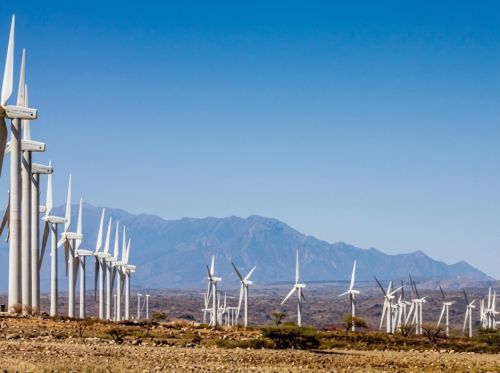
The African Export-Import Bank (Afreximbank) is considering participating in the financing of Zimbabwe’s proposed US$300 million Guruve-Mazowe hybrid energy project, a development that would combine 228 megawatts (MW) of wind and solar generation capacity with battery energy storage as the country seeks to diversify its electricity supply. The bank has issued indicative financing terms for a debt package being arranged by Standard Bank and Stanbic Bank Zimbabwe, with financial close targeted for mid-2027.
According to a statement published by project developer Modaso Energy on 10 November 2026, Afreximbank is evaluating participation in the financing structure after issuing indicative terms to join the package. Standard Bank and Stanbic Bank Zimbabwe have been appointed as lead debt arrangers, placing regional financial institutions at the centre of efforts to mobilise capital for the development.
The Guruve-Mazowe project is being developed by Modaso Energy in partnership with Tatanga Energy. With a planned combination of wind and solar generation, supported by battery storage, the project is intended to provide a more diversified source of electricity while improving the flexibility of supply to Zimbabwe’s national power system.

Most of the electricity generated is expected to be sold to state-owned power utility ZESA, while ZimGreenCo has expressed interest in purchasing a portion of the output. The proposed arrangements point to a commercial structure involving both the national utility and an additional electricity buyer, although the specific volumes, contractual terms and pricing arrangements have not been disclosed.
The involvement of Afreximbank could strengthen the project’s financing prospects by bringing additional institutional capital into a transaction already being structured by Standard Bank and Stanbic Bank Zimbabwe. However, the issuance of indicative terms represents an expression of financing interest rather than a completed commitment. The project must still progress through the remaining financing, contractual and development requirements before construction can proceed.
Ramy Lotfy, co-founder and chief executive officer of Modaso Energy, said the company welcomed Afreximbank’s participation in the financing process, describing the bank’s support as a further validation of the project and its commercial partnerships. He said the involvement of a continental financial institution brought the development closer to realisation.
The proposed investment comes as Zimbabwe continues to face the challenge of reducing its dependence on coal and hydropower while expanding alternative sources of electricity. Wind and solar currently account for marginal shares of the country’s generation mix, leaving the electricity system heavily reliant on established generation sources.
The Guruve-Mazowe project is expected to contribute to Zimbabwe’s target of increasing the combined share of wind and solar power in its electricity mix to 29% by 2030. Achieving that ambition will require substantial investment in new generation capacity, alongside improvements in transmission infrastructure, storage and the commercial arrangements needed to connect privately developed projects to the national grid.
The project’s hybrid structure is significant because wind and solar generation have different production patterns. Solar power is concentrated during daylight hours, while wind generation depends on prevailing wind conditions. Combining the two technologies can create opportunities to diversify generation profiles, although the extent of that benefit depends on the project’s location, resource assessments and operating arrangements.
Battery energy storage adds another dimension to the proposed development. Storage systems can absorb surplus electricity when generation exceeds immediate demand and release it when production falls or consumption increases. This flexibility can help manage fluctuations from renewable energy sources and support grid stability as the proportion of variable generation grows.
For Zimbabwe, the ability to integrate storage with new renewable generation could become increasingly important as the country seeks to reduce its exposure to fluctuations in hydropower availability and reliance on coal-fired electricity. However, the project’s contribution will depend on the technical design, storage duration, grid connection arrangements and the capacity of the electricity system to accommodate the additional output.
Afreximbank’s interest also reflects its broader involvement in financing energy infrastructure across the continent. In 2025, the bank signed preliminary terms for a US$4.4 million project preparation facility intended to support a floating solar power project on Lake Kariba. The proposed facility points to the bank’s interest in supporting renewable energy development at different stages, from project preparation to potential construction financing.
Standard Bank’s involvement in Guruve-Mazowe also follows its recent financing activities elsewhere in Southern Africa. The bank structured a financing facility of up to US$370 million for Solarcentury Africa, comprising an initial committed tranche of US$86.2 million, with participation from Dutch development bank FMO. The facility demonstrates the role of commercial banks and development finance institutions in mobilising capital for renewable energy projects across regional markets.
The participation of African financial institutions in projects such as Guruve-Mazowe is particularly relevant given the scale of investment required to expand electricity generation across the continent. Development banks can help mobilise long-term capital, while commercial lenders provide financing expertise and access to broader debt markets. Their involvement can also help structure transactions around the regulatory, payment and construction risks that often affect infrastructure projects.
Nevertheless, financing interest does not automatically translate into completed power infrastructure. Zimbabwe’s experience with privately developed electricity projects has highlighted the difficulty of moving from project registration and development agreements to financial close, construction and commercial operation. The success of Guruve-Mazowe will therefore depend on whether the developers can secure the full financing package, finalise electricity purchase arrangements and meet the technical and regulatory requirements for implementation.

The proposed mid-2027 financial close target provides a timeline against which the project’s progress can be assessed. Until then, the financing package remains under development, and the extent of Afreximbank’s eventual participation has yet to be confirmed.
If delivered, the 228 MW hybrid development would add a substantial block of wind and solar capacity to Zimbabwe’s electricity system, supported by battery storage. Its significance would extend beyond the project’s generation capacity, offering a further test of the country’s ability to attract institutional capital and translate renewable energy ambitions into operating infrastructure.
For Zimbabwe, the central measure of progress will be whether projects of this scale can move beyond financing discussions and become reliable sources of electricity. Guruve-Mazowe’s development will provide an indication of how effectively partnerships between local developers, regional banks and continental financial institutions can support that transition.


