


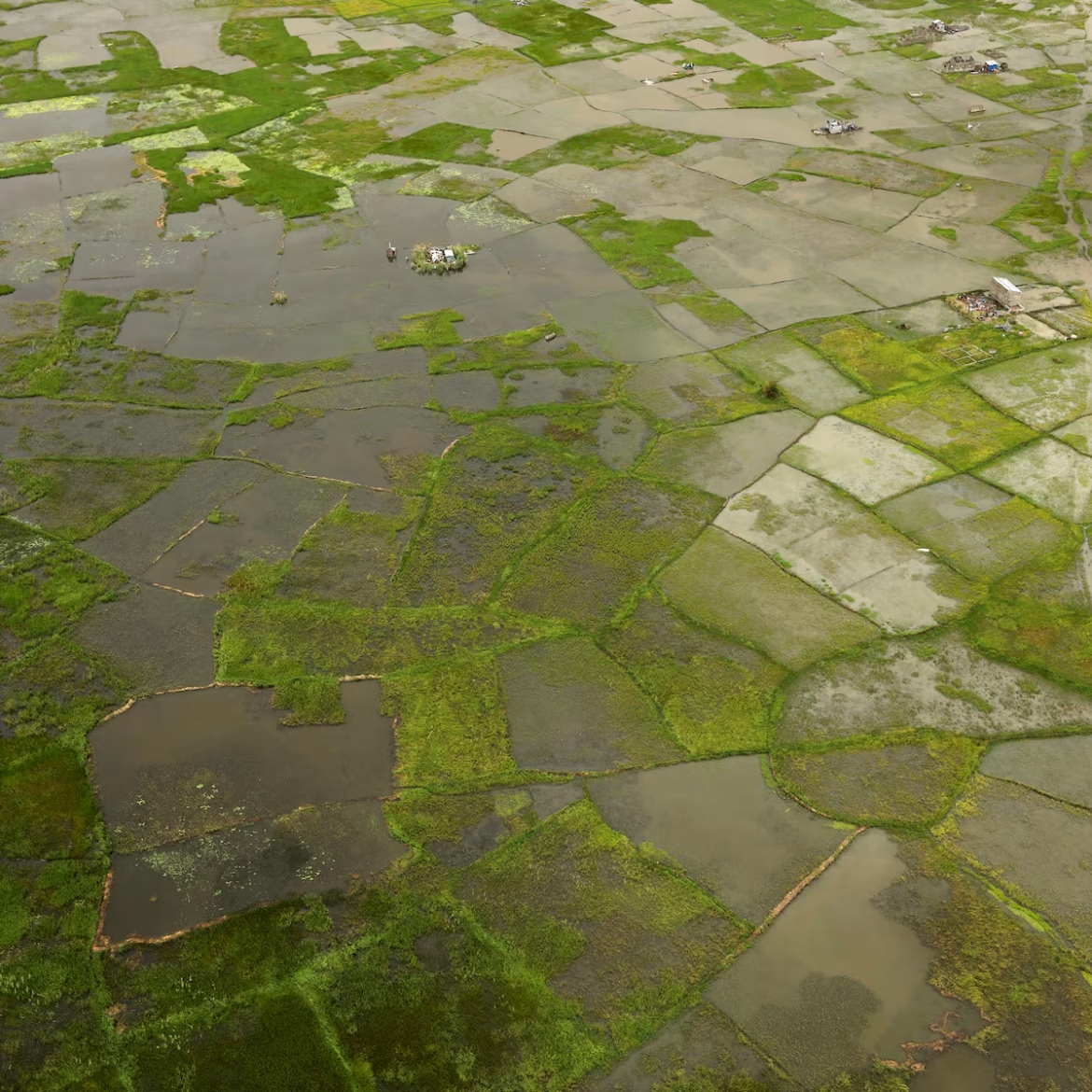
Africa could face economic losses of between $10 billion and $20 billion if an anticipated “super” El Niño develops as forecast, with agriculture, infrastructure, public finances and regional stability likely to come under severe pressure, according to the African Development Bank (AfDB). The warning comes as climate scientists monitor conditions that could trigger one of the strongest El Niño events in recent years, raising concerns over widespread drought, flooding and population displacement across vulnerable regions of the continent.
The assessment, delivered by the AfDB’s chief climate expert, underscores the growing economic consequences of climate variability for African economies that remain heavily dependent on rain-fed agriculture, hydropower generation and climate-sensitive infrastructure. According to the Bank, the projected financial losses could be accompanied by significant humanitarian impacts, including food insecurity, disruption of livelihoods and increased migration from areas most severely affected by extreme weather conditions.
El Niño is a naturally occurring climate phenomenon characterised by unusually warm ocean temperatures in the Central and Eastern Pacific Ocean. Although it originates thousands of kilometres from Africa, its effects are transmitted through changes in global atmospheric circulation, altering rainfall patterns across large parts of the continent. Southern Africa typically experiences below-average rainfall and prolonged drought during strong El Niño episodes, while parts of East Africa may experience excessive rainfall and flooding, although impacts vary by season and geography.
The anticipated economic losses extend far beyond agricultural production. Reduced rainfall can diminish hydroelectric generation capacity, forcing governments and utilities to rely on more expensive fossil fuel-based electricity generation while disrupting industrial output. Water shortages can constrain manufacturing, mining and urban water supplies, while floods damage transport infrastructure, roads, bridges and public facilities, increasing reconstruction costs and disrupting domestic and regional trade.
According to the African Development Bank, climate-related disasters increasingly expose structural vulnerabilities within African economies, where limited fiscal space restricts governments’ ability to respond effectively to successive shocks. Many countries are already managing elevated debt burdens and constrained public budgets, leaving fewer resources available for emergency response, infrastructure rehabilitation and social protection programmes when extreme weather events occur.
Agriculture remains particularly exposed. The sector employs a substantial share of Africa’s workforce and contributes significantly to national GDP across many countries. Prolonged droughts can reduce crop yields, weaken livestock production and accelerate food price inflation, while excessive rainfall can destroy harvests, damage storage facilities and increase the spread of crop diseases and livestock pests. These disruptions reverberate throughout food systems, affecting household incomes, inflation and broader economic stability.
The warning also highlights growing concerns over climate-induced migration. As agricultural productivity declines and water resources become increasingly unreliable, households may be forced to relocate in search of alternative livelihoods. Internal migration toward urban centres can place additional pressure on housing, employment, healthcare and public infrastructure, while cross-border displacement may introduce new regional humanitarian and governance challenges.
Read also: https://www.reuters.com/sustainability/sustainable-finance-reporting/
Climate events of this scale also influence financial markets and investment decisions. Insurance losses tend to increase following major weather disasters, while lenders and investors may reassess exposure to sectors and regions considered highly climate vulnerable. Infrastructure projects, particularly those with long investment horizons, increasingly require climate resilience assessments to reduce future operational and financial risks.
The projected losses reinforce broader calls for accelerated investment in climate adaptation across Africa. According to development finance institutions, strengthening early warning systems, expanding climate-resilient agriculture, improving water resource management and modernising infrastructure are becoming increasingly important economic priorities rather than solely environmental interventions. Investments in resilient transport networks, irrigation systems, flood management infrastructure and diversified energy systems can reduce future economic losses while improving long-term productivity.
The warning also arrives as international discussions continue over climate finance and loss-and-damage support for developing countries. African governments have consistently argued that despite contributing only a small share of historical global greenhouse gas emissions, the continent bears a disproportionate share of climate-related economic losses. The financing required to strengthen resilience therefore remains central to international climate negotiations and development policy.
 For businesses operating across Africa, the projected impacts underscore the importance of integrating climate risk into strategic planning. Companies in agriculture, finance, energy, logistics, manufacturing and telecommunications increasingly face operational disruptions linked to extreme weather events. Climate scenario analysis, supply chain diversification, resilient infrastructure investments and improved disaster preparedness are becoming essential components of corporate risk management rather than optional sustainability initiatives.
The African Development Bank’s warning illustrates how climate variability has become a macroeconomic issue with implications extending well beyond environmental management. As extreme weather events become more frequent and more costly, the resilience of African economies will increasingly depend on the ability of governments, financial institutions and the private sector to anticipate climate risks, strengthen adaptive capacity and mobilise investment that protects both economic growth and human development against an increasingly uncertain climate future.


