


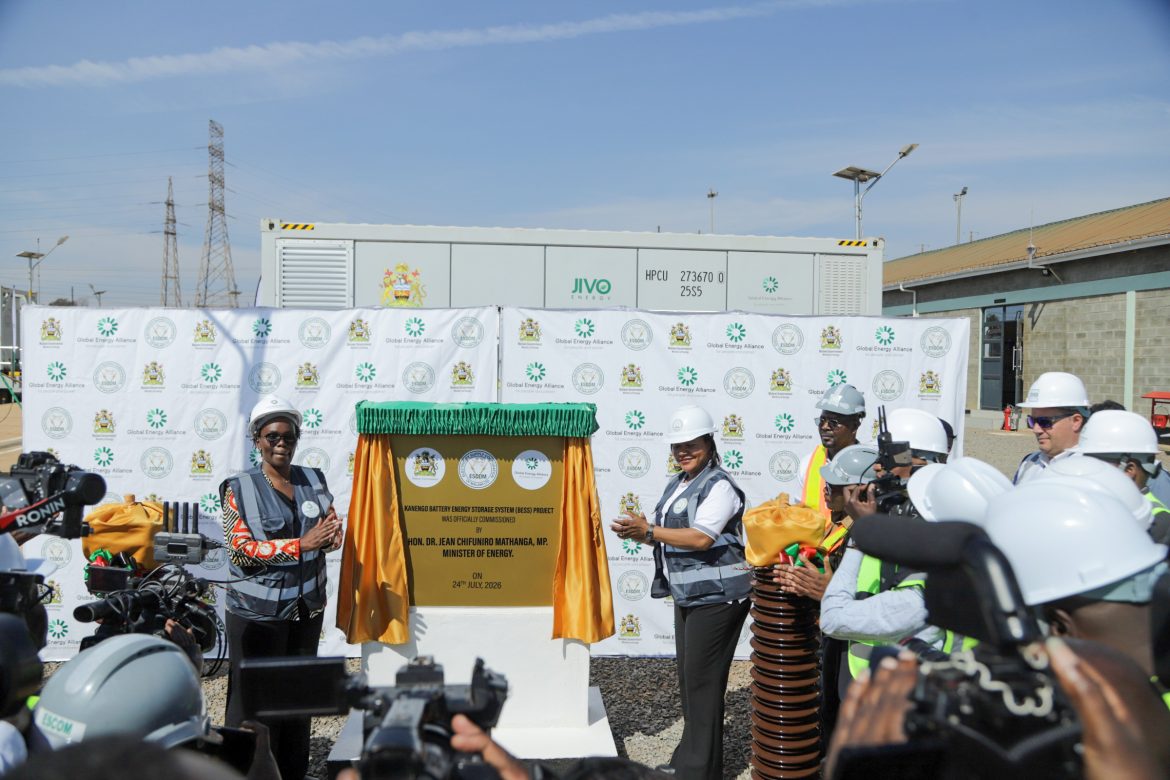
Malawi has commissioned its first large-scale standalone battery energy storage system (BESS), marking a significant milestone in the country’s efforts to modernise its electricity infrastructure, improve grid reliability and accelerate the integration of renewable energy. The 20-megawatt (MW), 40-megawatt-hour (MWh) facility, inaugurated in Kanengo, Lilongwe, by the Electricity Supply Corporation of Malawi (ESCOM) and the Global Energy Alliance for People and Planet (GEAPP), is expected to reduce reliance on expensive diesel generation while unlocking approximately 100 MW of renewable electricity that has previously been constrained by grid limitations.
The project, commissioned on 24 July, was financed through a US$20 million grant from GEAPP and represents one of the first utility-scale battery storage systems deployed in Southern Africa specifically to improve grid stability. As Malawi seeks to increase electricity access from 25.9% to 70% by 2030 under its National Energy Compact, the battery system highlights the growing role of energy storage in strengthening African power systems that are increasingly integrating variable renewable energy sources.
For Malawi, the investment addresses one of the country’s most persistent electricity challenges. While new renewable energy projects have expanded generation capacity in recent years, limitations within the transmission network have frequently prevented available electricity from reaching consumers. Grid instability has forced utilities to curtail renewable power generation while continuing to rely on costly diesel-powered backup plants to maintain system reliability.
“Today marks far more than the switch-on of a battery system – it marks the moment Malawi’s grid became smarter, stronger and future-ready. For years, grid instability forced us to curtail renewable energy we had already generated and to fall back on costly diesel at the expense of our consumers and our climate commitments,” ESCOM Chief Executive William Kayipa said during the commissioning ceremony.
Battery energy storage systems are increasingly becoming a critical component of modern electricity networks. Unlike conventional power plants that generate electricity continuously, batteries store excess electricity generated during periods of high renewable output and release it when demand increases or renewable generation declines. This flexibility helps stabilise grid frequency, smooth fluctuations in electricity supply and reduce dependence on fossil fuel-powered backup generation.
According to the International Energy Agency (IEA), battery storage has become one of the fastest-growing clean energy technologies globally, driven by declining battery costs and the rapid expansion of solar and wind generation. The agency notes that energy storage will play an increasingly important role in enabling countries to integrate larger shares of renewable energy while maintaining secure and reliable electricity systems.
The Malawi project illustrates this transition.
According to GEAPP and ESCOM, the new battery system will enable the country to utilise approximately 100 MW of renewable generation that had previously been underutilised due to network constraints. The project is also expected to reduce diesel consumption and prevent more than 10,000 metric tonnes of carbon dioxide emissions annually, contributing to Malawi’s broader climate objectives while lowering operational costs for the national utility.
The commissioning comes as Malawi pursues ambitious reforms under its National Energy Compact, launched in 2025 through the Mission 300 initiative led by the World Bank Group and the African Development Bank (AfDB). Mission 300 seeks to expand electricity access to 300 million people across sub-Saharan Africa by 2030 through coordinated investments in power generation, transmission, distribution and off-grid energy solutions.
Malawi’s targets are particularly ambitious.
According to the National Energy Compact, only 11.3% of Malawi’s population is currently connected to the national electricity grid, while rural electrification remains exceptionally low at just 3.8%. Although the country’s overall electricity access rate has improved through off-grid technologies such as solar home systems and mini-grids, millions of Malawians continue to lack reliable access to modern electricity services.
To address this gap, the government plans to deliver approximately 1.15 million new grid connections alongside 1.55 million off-grid connections by 2030. Authorities are also targeting an additional 848 MW of generation capacity during the same period, with approximately 714 MW expected to come from private sector investment.
Achieving these objectives will require more than new power plants.
According to the African Development Bank, strengthening transmission infrastructure, improving distribution networks and deploying grid-balancing technologies such as battery storage are becoming increasingly important as African electricity systems diversify beyond traditional hydropower and thermal generation.
Hydropower currently accounts for the majority of Malawi’s electricity generation, leaving the country vulnerable to droughts and fluctuating water levels associated with climate change. Expanding solar energy while incorporating battery storage offers an opportunity to diversify the national energy mix, improve resilience and reduce exposure to climate-related disruptions.
Across Africa, battery storage is emerging as a strategic investment supporting the continent’s broader energy transition.
South Africa has launched one of the continent’s largest battery energy storage programmes to improve grid reliability and facilitate renewable energy integration. Kenya is incorporating battery technologies into several utility-scale renewable energy projects, while countries including Zambia, Namibia and Morocco are evaluating storage solutions to strengthen increasingly diversified electricity systems.
The International Renewable Energy Agency (IRENA) notes that declining battery costs have significantly improved the economics of storage technologies over the past decade, making them an increasingly viable option for emerging electricity markets seeking to improve reliability without expanding fossil fuel generation.

For Malawi, reducing dependence on imported diesel also carries important macroeconomic implications.
Diesel generation has historically imposed considerable financial pressure on ESCOM due to volatile international fuel prices and foreign exchange requirements for fuel imports. By replacing part of this generation with stored renewable electricity, the utility could improve operational efficiency while reducing exposure to global energy price fluctuations.
The investment also aligns with Malawi’s commitments under the Paris Agreement and its broader objective of building a more climate-resilient energy sector. Although the country contributes only a small share of global greenhouse gas emissions, it remains among the nations most vulnerable to climate change, with increasingly frequent floods, droughts and extreme weather events affecting economic activity and infrastructure.
Development partners increasingly view investments in battery storage as an important complement to renewable energy deployment because they enhance grid resilience while improving the utilisation of existing generation assets.
According to GEAPP, battery storage technologies can help African countries maximise returns from renewable energy investments by reducing curtailment, improving power quality and strengthening electricity system flexibility without requiring additional fossil fuel capacity.
For Africa more broadly, Malawi’s battery storage project reflects the continent’s evolving approach to energy infrastructure. Rather than focusing exclusively on expanding electricity generation, governments are increasingly recognising that resilient, modern power systems also require investments in transmission, digital grid management and energy storage technologies capable of supporting higher shares of renewable electricity.
As countries pursue universal electricity access alongside ambitious climate and industrial development goals, battery storage is likely to become an increasingly important component of Africa’s power sector transformation. Malawi’s first utility-scale battery system therefore represents more than a technological milestone; it illustrates how strategic investments in grid flexibility can improve energy security, enhance renewable energy utilisation and strengthen the foundations for long-term economic development.


