


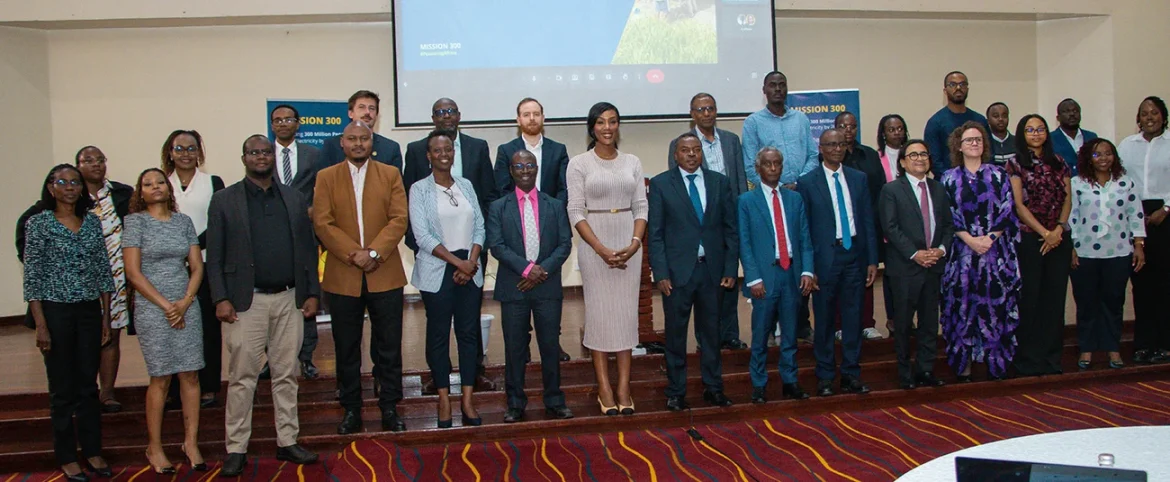
Kenya has moved to accelerate implementation of its Mission 300 National Energy Compact, bringing together government agencies, development finance institutions, private sector stakeholders and technical partners to establish a coordinated roadmap aimed at delivering universal electricity access, expanding renewable energy generation and strengthening energy infrastructure by 2030. The implementation support workshop, jointly convened by the Government of Kenya and the African Development Bank Group on 8–9 July 2026, marks a significant transition from policy commitments to structured execution under one of Africa’s most ambitious energy access programmes.
The two-day workshop, facilitated by Sustainable Energy for All (SEforALL), focused on converting Kenya’s National Energy Compact into an operational framework capable of delivering measurable outcomes. Participants reviewed implementation bottlenecks, financing requirements, regulatory reforms, institutional responsibilities and monitoring mechanisms designed to ensure that the country’s energy commitments are translated into projects that can attract investment and deliver tangible results.
Mission 300, a joint initiative of the African Development Bank Group and the World Bank Group, supported by the Rockefeller Foundation, Sustainable Energy for All and the Global Energy Alliance for People and Planet, seeks to connect an additional 300 million Africans to electricity by 2030. National Energy Compacts form the implementation backbone of the initiative, while country-level Compact Delivery and Monitoring Units coordinate execution across government institutions and development partners.
Kenya’s targets illustrate both the scale of the opportunity and the complexity of implementation. Under the Compact, the country intends to increase electricity access from 75% to full national coverage by 2030 while achieving universal access to clean cooking technologies. The programme also seeks to more than double installed renewable energy capacity from approximately 2,627MW to 5,952MW, construct an additional 8,000 kilometres of electricity transmission infrastructure and attract significantly higher levels of private investment into the energy sector.
According to the Ministry of Energy and Petroleum, the workshop centred on developing Kenya’s Compact Implementation Support Document, a country-owned planning instrument that translates broad policy commitments into sequenced reforms, financing priorities, institutional responsibilities and measurable implementation milestones over a rolling 12-month period. The document is expected to provide greater clarity for government agencies, financiers and investors seeking alignment around Kenya’s long-term energy transition.
Secretary for Renewable Energy Isaac Kiva said the implementation framework would provide a practical roadmap for delivering Kenya’s universal energy access ambitions. According to him, the Compact Implementation Support Document establishes the coordination arrangements and implementation priorities that will guide the operationalisation of the National Energy Compact under the oversight of the Compact Delivery Secretariat.
For investors, this structured implementation approach addresses one of the longstanding constraints affecting infrastructure financing across Africa: the gap between policy ambition and project execution. Renewable energy investment increasingly depends not only on resource availability but also on regulatory certainty, institutional coordination and bankable project pipelines capable of attracting commercial capital alongside concessional finance.
African Development Bank Director for Energy Financial Solutions Wale Shonibare described implementation as the defining measure of Mission 300’s success. According to him, translating policy commitments into clearly prioritised reforms, defined institutional responsibilities and investment partnerships will be essential for accelerating sustainable energy access while mobilising greater private sector participation.
Kenya enters this implementation phase from a relatively strong position compared with many African countries. The country already derives a substantial share of its electricity from renewable sources, particularly geothermal, hydro and wind generation, making it one of the continent’s leading clean energy producers. However, expanding transmission infrastructure and improving electricity access remain essential if renewable generation is to support industrial growth, regional trade and inclusive economic development.
The workshop also highlighted several implementation milestones already achieved since the National Energy Compact was launched in 2025. These include transaction advisory services for major hydropower and transmission projects, technical assistance supporting competitive solar and wind energy auctions and the establishment of Kenya’s Country Platform, an initiative designed to convert development priorities into investment-ready infrastructure projects through dedicated technical coordination.
Participants identified ten priority reform actions considered critical to accelerating implementation. These reforms are expected to strengthen the policy and regulatory environment, improve coordination among implementing institutions and create conditions capable of attracting larger volumes of domestic and international capital into Kenya’s energy sector.
The broader significance of Kenya’s implementation effort extends beyond national electricity access. Across Africa, energy shortages continue to constrain industrialisation, regional integration and economic competitiveness despite the continent possessing some of the world’s largest renewable energy resources. According to the African Development Bank, achieving universal energy access requires not only increased generation capacity but also transmission infrastructure, policy reforms, financial innovation and institutional capacity capable of sustaining long-term investment.
Mission 300 reflects an emerging shift within African energy policy away from isolated infrastructure projects towards integrated national delivery frameworks that combine financing, regulation, institutional reform and private sector participation. As countries seek to meet rapidly growing electricity demand while pursuing lower-carbon development pathways, implementation capacity is increasingly becoming as important as financial resources.
Kenya’s experience may therefore provide an important reference point for other African governments preparing similar implementation frameworks. National workshops are scheduled to follow in Sierra Leone, Ghana, Senegal, Côte d’Ivoire and Botswana as participating countries translate their respective National Energy Compacts into operational investment roadmaps.
 For Africa, the implications reach beyond expanding household electricity access. Reliable and affordable energy remains a prerequisite for industrialisation, digital transformation, healthcare delivery, agricultural value addition and climate resilience. Successfully implementing programmes such as Mission 300 could strengthen regional energy markets, attract greater infrastructure investment and improve the competitiveness of African economies while supporting broader sustainable development objectives.
As implementation begins, the effectiveness of Kenya’s National Energy Compact will ultimately be judged not by the ambition of its targets but by its ability to mobilise investment, complete infrastructure projects, expand reliable electricity access and create an enabling environment capable of supporting long-term economic transformation across one of Africa’s fastest-growing energy markets.


