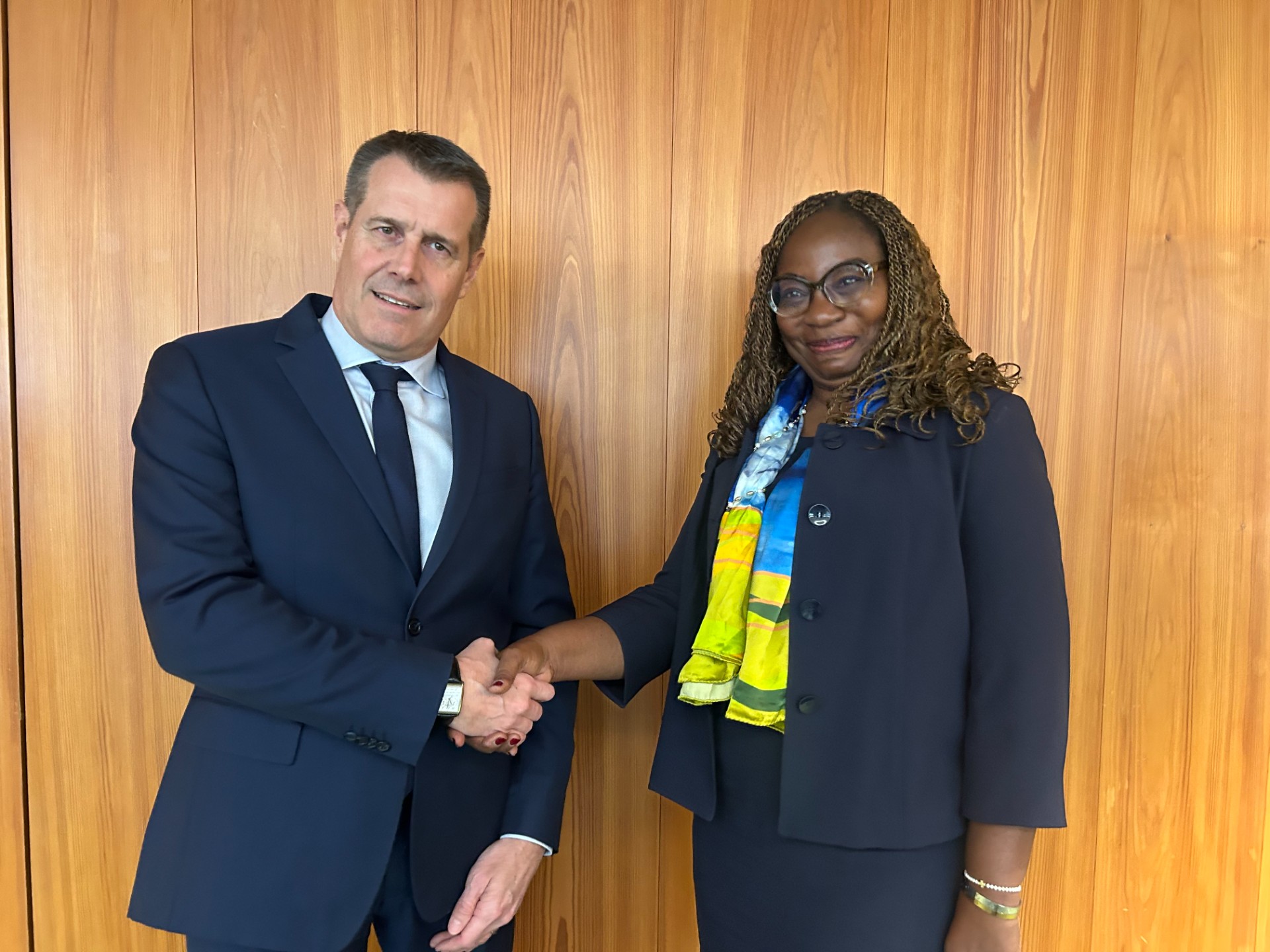

Senior Vice President of the African Development Bank Group, Marie-Laure Akin-Olugbade, presented a strategic framework for stabilizing fragile African economies through targeted private-sector partnerships during the fifth Geneva International Cooperation Forum on February 27.
Speaking on a high-level panel regarding humanitarian contexts, Akin-Olugbade argued that multilateral development banks must move beyond traditional aid cycles to sustain local markets and employment during periods of conflict and displacement.
The intervention comes at a critical juncture for African public finances, as the continent’s development institutions grapple with a global decline in humanitarian funding and an increasing need to de-risk investments in high-fragility zones such as the Sahel and the Horn of Africa.
The Bank’s approach, as detailed in the Swiss-hosted forum, focuses on the “humanitarian-development-peace nexus,” a policy shift that treats economic activity as a form of crisis prevention rather than a secondary concern.
In many African jurisdictions, where the private sector accounts for nearly 80% of total employment, the collapse of small and medium-sized enterprises (SMEs) during a crisis often exacerbates the duration of the instability.
According to Akin-Olugbade, the strategic objective is not to replace humanitarian agencies like the International Committee of the Red Cross (ICRC), but to provide the technical and financial instruments required to prevent the total disintegration of domestic value chains.
Evidence of this model’s fiscal and operational utility is increasingly visible in the Bank’s recent deployments through its Transition Support Facility. In Madagascar, the facility has enabled over 300 micro, small, and medium-sized enterprises to access formal bank financing that was previously unavailable due to the country’s high-risk profile.
For national treasuries and regional regulators, such interventions are vital; they maintain the tax base and reduce the long-term cost of post-conflict reconstruction. In Sudan, despite ongoing internal conflict, the Bank has partnered with the DAL Group to stabilize agricultural production, a move designed to mitigate food insecurity and prevent the collapse of essential rural economies.
The forum, moderated by Ambassador Pietro Lazzeri of the Swiss State Secretariat for Economic Affairs, highlighted a consensus that the private sector must be viewed as an expert partner in innovation rather than a mere source of capital. This shift has significant implications for African infrastructure and governance.
For example, in the Sahel region, the Bank’s collaboration with the ICRC combines the multilateral lender’s financial structuring with the humanitarian organization’s ground-level access. This synergy allows for the restoration of essential services; such as water and electricity, using market-based solutions that can survive the withdrawal of emergency aid.
From an African development perspective, these partnerships are a pragmatic response to the reality of finite global resources. By integrating businesses into the stabilization phase of a crisis, development banks can help insulate national markets from the inflationary shocks often associated with prolonged conflict.
According to the Bank’s latest findings, reviving local economies early in the crisis cycle significantly reduces the statistical risk of a country relapsing into instability. This logic treats sustainability and ESG compliance not as abstract goals, but as governance realities that dictate the creditworthiness and resilience of African states.
Ultimately, the Geneva discussions signal a move toward a more structured and responsible engagement with the private sector in fragile settings.
For African policymakers, the successful implementation of this “complementary” approach will depend on the ability of regional institutions to harmonize financial instruments with the immediate needs of local communities.
As the African Development Bank scales these models, the focus will remain on ensuring that private-sector involvement does not fuel conflict, but instead creates the economic independence necessary for long-term regional stability.
Engage with us on LinkedIn: Africa Sustainability Matters