


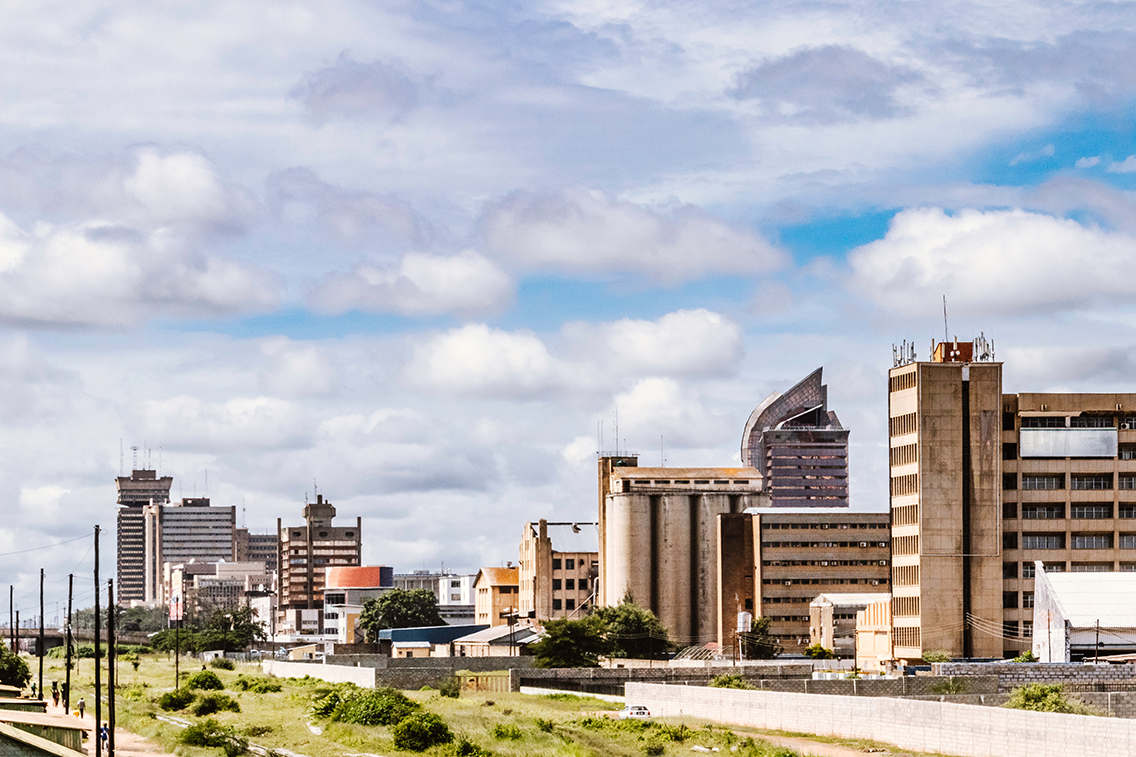
African governments are increasingly turning to debt swaps and other structured financing arrangements to reduce debt-service pressures while directing savings towards infrastructure, climate resilience and social development, as high borrowing costs and constrained public budgets limit conventional financing options. From Zambia’s debt-for-development transaction and Kenya’s geothermal financing to debt-for-nature arrangements in Gabon, the emerging approach is linking sovereign debt management more closely with specific development outcomes. The expansion of these instruments, however, is also placing greater emphasis on transparency, fiscal oversight, and the ability of governments to demonstrate that financial savings translate into productive investment.
The trend reflects a difficult financing environment for many African economies. International borrowing remains expensive for sovereigns perceived as carrying elevated credit and currency risks, while governments face growing demands for electricity, transport, water, education, climate adaptation and other infrastructure. In this context, debt swaps can alter the structure or cost of existing liabilities and, in some cases, create fiscal savings that are earmarked for agreed development projects.
According to African Business, one increasingly used structure involves governments buying back expensive commercial debt using new financing supported by multilateral development banks through guarantees or concessional lending. The resulting reduction in interest costs can then generate savings that are placed in dedicated funds for specific projects, with external trustees or other monitoring arrangements used to oversee their deployment.
Zambia provides one of the clearest recent examples. In June 2026, the African Development Bank Group backed a $1.36 billion debt-for-development transaction through which Zambia used a $600 million AfDB loan alongside its own resources to buy back a portion of its outstanding Eurobond. The government committed $275 million of the resulting savings to the energy sector, including investments intended to strengthen electricity infrastructure.
The significance of the transaction extends beyond the immediate reduction in debt-service costs. Zambia’s electricity system has been exposed to fluctuations in hydropower generation, making investment in grid infrastructure and diversification increasingly important for economic activity. The AfDB said the savings would support energy investments aimed at improving reliability and affordability, while strengthening the system’s capacity to accommodate additional generation, including renewable sources.
For African governments, this connection between debt management and infrastructure is important because fiscal pressure often forces capital expenditure to compete directly with debt servicing and other recurrent obligations. A financing structure that lowers the cost of existing liabilities can potentially create room for investment without relying entirely on additional conventional borrowing. The World Bank describes debt-for-development swaps as instruments that can provide debt reduction or debt-service savings while directing resources towards sectors such as education, health, nutrition and nature conservation.
Angola offers another example of how the mechanism can be connected to social infrastructure. A World Bank-backed debt-for-development transaction enables the country to use financing on more favourable terms to prepay higher-cost commercial debt, with much of the resulting savings directed towards the construction of 30 secondary schools expected to benefit more than 32,000 students. The operation is also designed to support debt sustainability.
Elsewhere, the mechanism is being adapted to climate and environmental priorities. Kenya agreed with Germany in January 2025 to cancel €60 million of debt on the condition that an equivalent amount would be invested in clean-energy infrastructure, with the freed capital supporting the 300MW Bogoria-Silale geothermal project. Geothermal power is particularly relevant to Kenya’s electricity system because it can provide relatively consistent renewable generation alongside more variable wind and solar resources.
Gabon has taken the model into the conservation space through a $500 million debt-for-nature transaction. The structure involved refinancing part of the country’s commercial debt through a lower-cost blue bond supported by a U.S. Development Finance Corporation political-risk guarantee, with savings linked to the management and expansion of marine protected areas.
These transactions illustrate why debt swaps are attracting attention across the continent. They can potentially combine several objectives: lowering the cost of sovereign liabilities, extending maturities, protecting foreign-exchange resources and directing capital towards projects that governments might otherwise struggle to finance from constrained budgets. They can also bring development banks and private investors into transactions where sovereign borrowing costs would otherwise make projects difficult to structure.
But the economics depend heavily on the quality of the transaction. Debt swaps do not eliminate underlying fiscal pressures, and the reduction in debt service must be weighed against the cost, conditions and risks attached to the replacement financing. The World Bank’s Global Hub on Debt for Development Swaps has consequently focused on improving the design and execution of such transactions and helping governments assess when and how they should be used.
Transparency is becoming a central issue, particularly where derivatives or complex financing structures are used outside conventional bond markets. Nigeria’s proposed $5 billion total-return swap illustrates the concern. The IMF’s 2026 Article IV assessment says the arrangement carries collateral and margin-call risks linked to movements in the naira and domestic government securities. IMF directors have also called for stronger fiscal reporting, public financial management and transparency around complex financing instruments.
That distinction matters because not every innovative financing transaction is a development-oriented debt swap. Structures that refinance expensive liabilities while clearly identifying the projects to be financed can be assessed against tangible development outcomes. More complex arrangements, particularly those involving contingent liabilities or limited disclosure, can make it harder for parliaments, investors and citizens to understand the true scale and cost of sovereign obligations.
For Africa, the question is therefore not simply whether debt swaps can create fiscal space, but whether that space is converted into assets and services that strengthen long-term economic capacity. Electricity networks, geothermal plants, schools, climate-resilient infrastructure and protected natural assets can generate economic and social value beyond the initial financing transaction. Conversely, weak project selection, inadequate monitoring or poorly disclosed liabilities could reduce the development benefit while leaving governments exposed to new financial risks.
The growing interest in these instruments also comes as African countries seek to mobilise more domestic and international capital for development. In September 2026, the United Nations Economic Commission for Africa convened a workshop in Mozambique focused on creditworthiness and innovative financing, including thematic bonds, debt-for-nature and debt-for-climate swaps, blended finance and biodiversity-related instruments. The emphasis reflects a wider effort to expand the range of financing tools available to governments while strengthening their ability to manage debt sustainably.
For development finance institutions, the challenge will be to provide the guarantees, concessional capital and technical capacity needed to make viable transactions possible without encouraging excessive complexity. For governments, the test will be stronger fiscal governance: clear disclosure of liabilities, credible project pipelines, independent monitoring and measurable development outcomes.
 Debt swaps are therefore becoming part of a broader restructuring of African development finance rather than a replacement for conventional debt management. Their value will ultimately depend on whether lower financing costs and redirected debt-service savings produce productive infrastructure, stronger public services and greater economic resilience without creating less visible risks on sovereign balance sheets. As African governments search for financing beyond traditional borrowing, the quality of institutions governing these transactions may prove as important as the financial engineering itself.


