


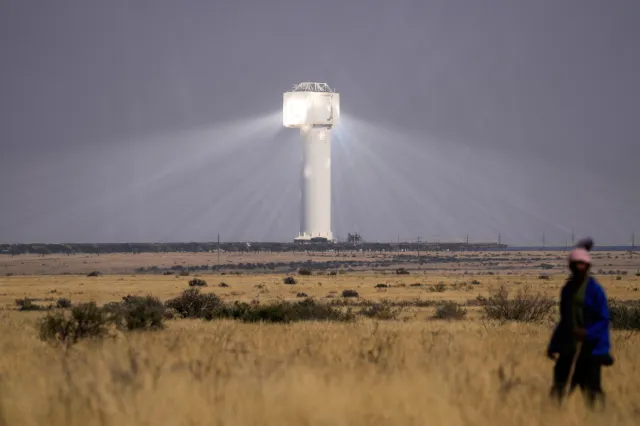
Africa’s transition to renewable energy is entering a new phase in which the continent’s greatest challenge is no longer deploying clean energy technologies but strengthening the institutions, regulatory systems and electricity markets required to deliver them at scale. The shift comes as renewable energy surpassed coal as the world’s largest source of electricity generation in 2025, prompting renewed attention to the governance, financing and market reforms needed to accelerate Africa’s energy transition while expanding electricity access for the approximately 600 million Africans who still lack reliable power.
Renewable energy generated 34 per cent of global electricity in 2025, overtaking coal’s 33 per cent share for the first time. According to international projections, renewables, together with nuclear power, are expected to supply half of global electricity generation by 2030. As industrialisation, electrification and the rapid expansion of artificial intelligence increase global electricity demand, policymakers and investors argue that the primary constraint has shifted from technological capability to the institutional frameworks needed to support deployment.
 That changing landscape is influencing how climate finance is being allocated. Bloomberg Philanthropies recently announced a US$285 million initiative aimed at strengthening clean energy industries across emerging and developing economies. Rather than financing individual renewable energy projects, the programme will support market design, regulatory capacity, technical expertise and industry institutions that can create conditions for sustained private investment.
Michael R. Bloomberg, the United Nations Secretary-General’s Special Envoy on Climate Ambition and Solutions, said renewable energy technologies are now economically competitive with fossil fuels in most parts of the world. According to Bloomberg, the remaining obstacles are largely institutional, with regulatory and administrative barriers slowing deployment despite rapidly growing global energy demand.
For Africa, this distinction is significant. The continent possesses some of the world’s most abundant solar, wind, hydro and geothermal resources, yet continues to face one of the largest electricity access deficits globally. Limited grid infrastructure, fragmented electricity markets, inconsistent regulatory frameworks and lengthy permitting processes continue to delay projects that are otherwise commercially viable.
Energy specialists increasingly argue that institutional capacity has become the decisive factor determining whether renewable energy investments reach financial close, connect to national grids and deliver affordable electricity to consumers. While technology costs have fallen substantially over the past decade, project developers continue to cite regulatory uncertainty, weak transmission planning and limited technical capacity within public institutions as major investment risks.
According to Saliem Fakir, Executive Director of the African Climate Foundation, Africa’s energy transition has never been constrained by a lack of renewable resources. Instead, he argues that stronger institutional infrastructure is required to convert that potential into functioning electricity systems capable of supporting industrial growth, economic diversification and climate resilience. Targeted investments in governance, regulation and market development, he suggests, could fundamentally alter the trajectory of the continent’s energy sector.
This emerging consensus reflects a broader evolution in development finance. Increasingly, international partners are prioritising investments that improve the enabling environment for renewable energy rather than focusing solely on physical infrastructure. Strengthening electricity regulators, improving procurement systems, modernising market rules and enhancing technical expertise are now viewed as essential components of building financially sustainable energy sectors.
Across Africa, governments are attempting to balance rapidly rising electricity demand with fiscal constraints, population growth and climate-related pressures. Reliable energy systems are becoming central to broader development objectives, including industrialisation, digital transformation, agricultural productivity and regional trade integration. Without stronger institutions capable of planning, regulating and financing energy systems effectively, renewable energy expansion may struggle to keep pace with economic demand.
According to Wangari Muchiri, Founder and Chief Executive Officer of RE.Think Energy, the next phase of Africa’s renewable energy transition will be defined less by proving that clean energy technologies are viable and more by removing the structural barriers preventing widespread deployment. She argues that the success of future investments will depend on whether countries can establish predictable regulatory environments capable of attracting long-term private capital.
The emphasis on institutional reform also reflects growing recognition that infrastructure alone cannot guarantee energy security. Renewable energy projects require coordinated grid planning, effective licensing procedures, financially viable utilities and transparent governance to operate efficiently over their full lifecycle. Weaknesses in any of these areas increase project risks, discourage investors and slow the pace of electrification.
The implications extend beyond the energy sector. Expanded electricity access has been consistently linked to higher industrial productivity, improved healthcare delivery, better educational outcomes and increased economic competitiveness. Strengthening institutional capacity therefore represents not only an energy policy priority but also a broader development strategy that can support inclusive economic growth while advancing climate objectives.
The Bloomberg initiative also highlights the increasingly important role of philanthropic capital in addressing market failures that conventional project finance often overlooks. By supporting regulatory institutions and technical capacity, philanthropic funding can reduce investment risk, improve project pipelines and create conditions under which larger pools of commercial capital become more willing to finance renewable infrastructure.
 As Africa seeks to position itself within the global transition toward cleaner energy systems, institutional quality is becoming as important as natural resource availability. Countries that establish transparent regulation, strengthen electricity markets and improve governance are likely to be better positioned to mobilise investment, accelerate electrification and build resilient energy systems capable of supporting long-term economic transformation.
The continent’s renewable energy future will therefore depend not only on the number of solar parks, wind farms or transmission lines constructed, but also on the strength of the institutions responsible for planning, regulating and sustaining them. As global clean energy deployment accelerates, Africa’s ability to build those institutions may prove decisive in determining whether its abundant renewable resources translate into inclusive growth, energy security and long-term development.


