


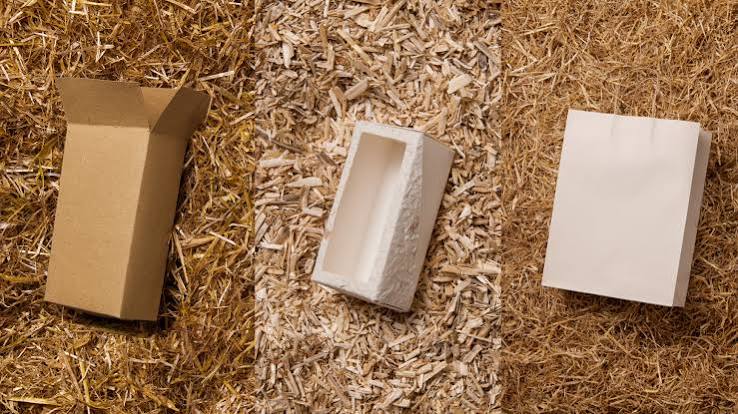
Agricultural residues such as wheat straw and sugarcane bagasse could provide paper packaging manufacturers with a commercially viable alternative to a portion of virgin wood pulp, helping mills diversify fibre sourcing and reduce exposure to volatile raw material prices, according to new economic modelling released by environmental organisation Canopy in November 2026.
The report, Seeing the Field and the Forest, finds that replacing 5–10% of virgin wood pulp with so-called Next Gen pulp could be commercially practical for paperboard producers at delivered prices of approximately US$345–380 per air-dry tonne. The analysis suggests that agricultural-residue pulp can compete with the wood fibre it replaces while offering mills an additional source of raw material as demand for paper-based packaging increases.
The findings come as consumer goods companies and packaging manufacturers face growing pressure to reduce plastic use and expand paper-based alternatives. That transition is increasing demand for wood pulp, exposing producers to fluctuations in energy and raw material costs, trade disruptions, geopolitical uncertainty and climate-related supply shocks. Tighter environmental regulation is adding further pressure on companies to assess the origin and environmental footprint of the fibre used in their products.

Canopy‘s analysis examines whether pulp produced from agricultural by-products can offer a commercially attractive way to diversify supply without compromising the technical requirements of consumer paperboard. The report was developed with Blue Lotus Strategies and Glynmoran and models a commercial relationship between a high-volume consumer goods brand or paperboard converter and an integrated pulp and paperboard mill in China.
The assessment focuses on high-performance folding boxboard (FBB), a lightweight, three-layer material widely used in packaging for pharmaceuticals, confectionery, dry foods, personal care and cosmetics. Its construction requires bright white printable surfaces on both sides and a strong middle layer that provides bulk and stiffness. These specifications make it a demanding application for alternative fibre because manufacturers must maintain product performance while changing the composition of the pulp furnish.
The modelling finds that Next Gen pulp could account for approximately 8% of the most cost-effective fibre mix for high-performance FBB by 2028, assuming a delivered price of around US$345–380 per tonne. Industry reviewers consulted for the report considered the price range plausible in major paper packaging-producing regions for inputs such as wheat straw and sugarcane bagasse.
The commercial case is partly based on the different supply dynamics of agricultural residues and wood fibre. Wheat straw and bagasse are generated through agricultural production, creating potential sources of pulp that do not depend entirely on conventional forest-based supply chains. By introducing these materials into their fibre mix, paper mills could reduce their exposure to changes in wood prices and diversify procurement options.
Kari Stoever, Head of Impact at Canopy, said mills could pay between US$345 and US$380 per tonne for wheat-straw or sugarcane-bagasse pulp while remaining competitive with the cost of the wood fibre being displaced. She said the approach could allow packaging companies to begin reducing their reliance on forest-based inputs without waiting for alternative fibres to achieve complete technical parity with conventional pulp.
However, the report identifies technical constraints that currently limit the amount of agricultural-residue pulp that can be incorporated into high-performance paperboard. Under existing production conditions, its use is capped at approximately 10% and is confined to the board’s middle layer, where it replaces lower-cost wood pulp. This limits the potential savings because the alternative fibre cannot yet displace some of the more expensive pulp grades used in the product’s construction.
Improvements in fibre quality and mill processing could expand its applications within the board. If those improvements are achieved, agricultural-residue pulp could replace a greater share of higher-cost inputs, increasing the potential economic benefit for manufacturers. Canopy’s modelling indicates that early adoption could create a pathway towards 20% use by 2030 and more than 30% after 2032, although those levels depend on further technical development and wider supply availability.
The report also examines the role of wood price volatility and policy costs in determining how much manufacturers can economically pay for alternative fibre. Its model suggests that mills’ willingness to pay for Next Gen pulp increases when wood prices rise or when alternative fibre provides a hedge against fluctuations in conventional raw material markets.
For example, a 10% upward adjustment to average wood prices increases the modelled price threshold for Next Gen pulp to approximately US$380 per tonne. The analysis also considers illustrative due-diligence costs associated with deforestation regulation, using the European Union Deforestation Regulation as a reference. Under that scenario, the supported price rises to approximately US$365 per tonne, increasing to US$380 when the value of protection against wood price volatility is included.
These findings suggest that the economics of alternative fibre sourcing will depend not only on the purchase price of pulp but also on the cost and risk profile of conventional wood supplies. For manufacturers serving markets with stricter forest-risk requirements, diversified sourcing could become a procurement consideration alongside price, quality and production reliability.
The potential environmental benefits are also part of the report’s assessment. Canopy estimates that replacing old-growth softwood with managed-forest wood supplemented by 10% agricultural residues could reduce lifecycle greenhouse gas emissions by approximately half in some applications. The result is based on the report’s modelled assumptions and should not be interpreted as a uniform emissions reduction across all mills, feedstocks or production processes.
The geographic availability of agricultural residues could influence where alternative pulp production develops. China and India have large and diverse sources of crop residues, including cereal straw and sugarcane bagasse, alongside established non-wood papermaking experience and substantial paper manufacturing capacity. Brazil’s concentrated sugarcane industry creates opportunities for bagasse-based pulp production, while parts of Europe and North America have combinations of cereal residues, existing mills and downstream packaging demand. Southeast Asia also generates significant agricultural residues, including rice straw, bagasse and oil-palm by-products.
The report notes that differences in residue availability, collection systems, processing technology and manufacturing capacity will shape the competitiveness of alternative fibre across these regions. Agricultural waste is not automatically a ready-made industrial input: its suitability depends on reliable collection, processing, quality control and the ability to supply mills at a consistent scale.

For packaging manufacturers, the immediate opportunity is therefore not to replace conventional wood pulp entirely, but to introduce alternative fibre into existing production systems while building the technical and commercial conditions for wider adoption. Canopy recommends that brands, converters and mills begin with a 5–10% share of Next Gen pulp and develop the supply relationships and performance evidence required to increase its use.
The report is preliminary and describes its findings as exploratory, with assumptions that Canopy intends to continue validating across technical, economic and environmental considerations. Its modelling provides an indicative assessment of the commercial conditions under which agricultural-residue pulp could compete with virgin wood fibre, rather than a guarantee that the same price thresholds or technical performance will apply to every mill.
As paper packaging demand expands, the ability to secure affordable and reliable fibre supplies is likely to become a more significant factor in manufacturers’ competitiveness. Agricultural residues could provide one route to reducing dependence on forest fibre, but their wider adoption will depend on whether producers can deliver consistent quality, competitive pricing and dependable volumes at industrial scale.