


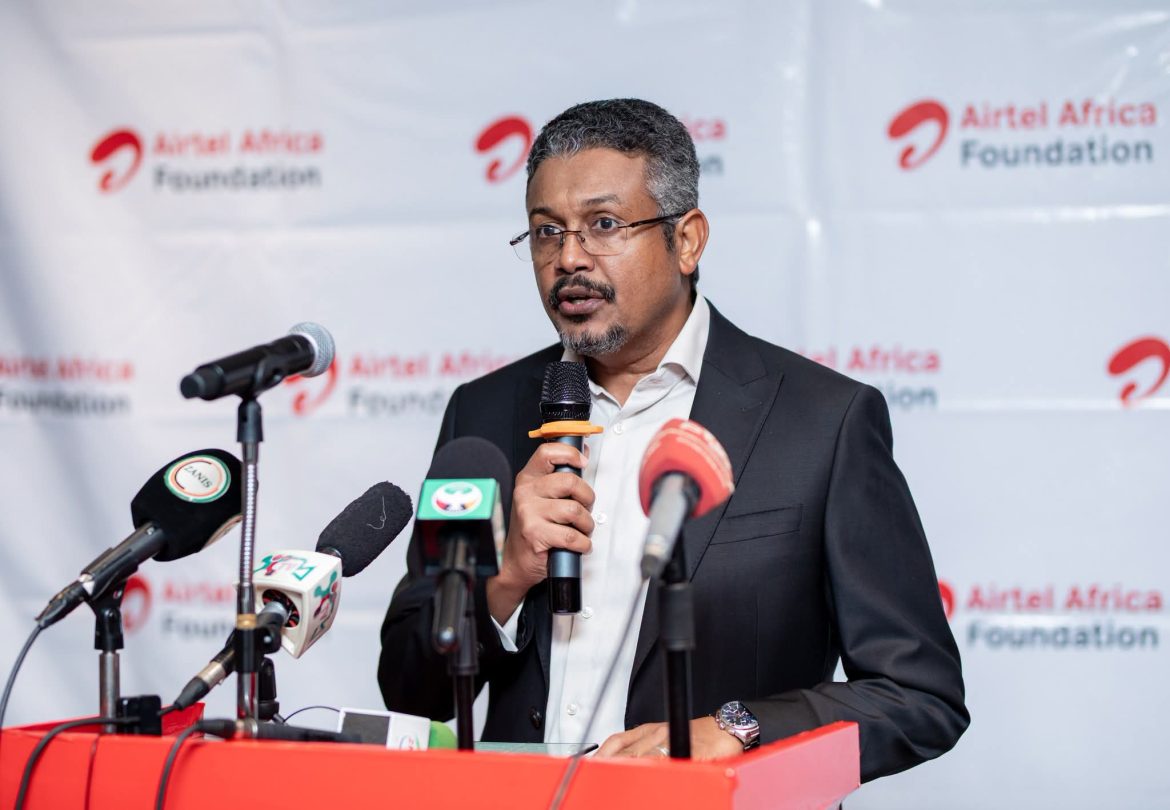
Airtel Africa has reduced its diesel consumption by 9.1 million litres and achieved a 94 percent waste recycling rate during the 2025/26 financial year, underscoring the growing role of sustainability investments in strengthening both environmental performance and digital inclusion across the continent. The telecommunications group announced the results during a media roundtable in Lusaka, where Chief Executive Officer Sunil Taldar outlined the company’s latest Sustainability Scorecard, highlighting progress in emissions reduction, connectivity expansion, financial inclusion, education and community development.
The sustainability milestones reflect a broader shift among Africa’s telecommunications operators as they seek to reduce the environmental footprint of rapidly expanding digital infrastructure while responding to growing investor expectations around environmental, social and governance (ESG) performance. Telecommunications networks remain among the continent’s largest consumers of diesel-powered backup generation due to unreliable electricity supply in many markets, making energy efficiency an increasingly important commercial and sustainability priority.
 According to Airtel Africa, reducing diesel consumption formed part of wider operational efficiency measures aimed at lowering emissions while improving the resilience of network infrastructure serving millions of customers across its markets. The company also reported recycling 94 percent of its operational waste, reflecting efforts to strengthen circular resource management within its network operations.
The company said its telecommunications network now reaches 81.9 percent of Africa’s population, serving 183.5 million customers across its operations. Data services continue to expand, with 84.2 million active data users, reflecting rising demand for digital connectivity across both urban and rural markets.
Mobile financial services also remain a major growth area. Airtel Money now serves 54.1 million customers through a network of approximately 2.4 million agents, with women representing 44.1 percent of its customer base. The continued expansion of digital financial services is strengthening financial inclusion across several African economies where access to formal banking remains limited, particularly among rural populations and small businesses.
The company’s sustainability strategy increasingly links environmental performance with broader socioeconomic outcomes. According to Airtel Africa, digital connectivity, financial inclusion and climate resilience are becoming mutually reinforcing priorities as African countries accelerate digital transformation while pursuing sustainable development objectives.
In Zambia, Airtel highlighted several initiatives designed to strengthen education outcomes through expanded digital access. Working with the United Nations Children’s Fund (UNICEF), the company has connected 300 schools to the internet, providing digital access to more than 292,000 learners while supporting 5,189 teachers with digital education resources. Improved internet connectivity in schools has become increasingly important as governments seek to modernise education systems and expand access to digital learning opportunities.
The company has also invested in physical education infrastructure through its School Adoption Programme, supporting classroom construction, computer laboratories, internet connectivity and sanitation facilities in schools across Chipata, Solwezi, Mufulira, Mansa and Mongu. Such investments contribute to strengthening human capital development while supporting Zambia’s long-term digital economy ambitions.
Beyond education, Airtel Zambia said it continues to support entrepreneurship through the Zambia Information and Communications Technology Authority (ZICTA) Innovation Challenge. According to the company, the initiative has trained more than 500 innovators, supported the commercialisation of over 30 start-ups and contributed to the creation of more than 200 direct jobs. The programme forms part of wider efforts to strengthen innovation ecosystems that can generate locally developed digital solutions while expanding employment opportunities for young people.
The company has also focused on reducing digital inequalities through its Tech for Her Programme, which has provided digital and entrepreneurial skills training to more than 300 women and young people. The programme includes specialised technology training for women alongside entrepreneurship support for youth, reflecting growing recognition that digital inclusion requires targeted investment in skills development as well as network infrastructure.
According to industry analysts, Africa’s telecommunications sector is becoming increasingly central to achieving multiple Sustainable Development Goals by enabling access to financial services, education, healthcare and digital commerce while supporting productivity across other sectors of the economy. At the same time, operators face growing pressure to reduce greenhouse gas emissions associated with network expansion and improve resource efficiency as investors place greater emphasis on ESG performance.
Diesel consumption remains a significant operational challenge for many African telecommunications companies because unreliable electricity grids require thousands of mobile towers to depend on diesel generators to maintain uninterrupted services. Investments in energy efficiency, renewable energy integration and improved network management therefore offer both environmental and financial benefits by reducing operating costs while lowering emissions.
 The company’s latest sustainability results illustrate how telecommunications infrastructure is increasingly being positioned not only as a driver of digital connectivity but also as an enabler of broader economic resilience and inclusive development. As African economies continue expanding digital services, balancing network growth with environmental sustainability is likely to remain a defining challenge for the sector.
For Africa, where digital infrastructure is expected to underpin future economic growth, investments that simultaneously strengthen connectivity, improve financial inclusion, reduce emissions and develop human capital may become increasingly important in supporting resilient and low-carbon development pathways. Airtel Africa’s latest sustainability performance demonstrates how commercial telecommunications investments are increasingly intersecting with wider national development priorities, particularly in education, digital innovation, financial inclusion and climate resilience.


