


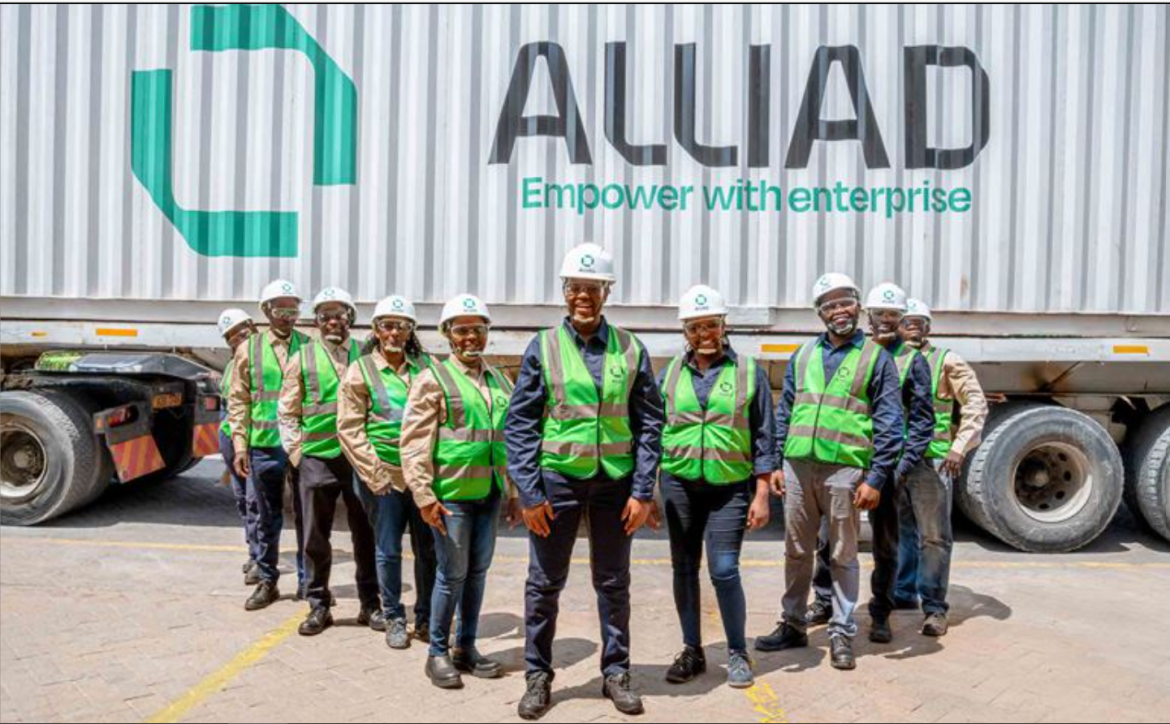
Alliad is expanding its sustainability and local economic participation programmes in Kenya, using supplier engagement, local hiring, fleet efficiency and community investment to strengthen its operating model as companies across Africa face increasing pressure to integrate environmental, social and governance considerations into their supply chains. The integrated business services provider said its 2025 sustainability programme included its first Kenya Supplier Forum, which brought together more than 60 local suppliers to discuss food safety, sustainability, international standards and local content.
The initiative forms part of a broader effort by Alliad to increase the participation of domestic businesses across its African operations. According to the company’s sustainability report, 77% of its 1,775 suppliers across its markets were local in 2025, while Kenya maintained a workforce that was entirely locally employed. In Côte d’Ivoire, the company increased local procurement spending from 30% to 46% during the year, indicating a wider shift towards domestic supplier participation across its African operations.
For Kenya, the emphasis on local procurement carries implications beyond the company’s immediate supply chain. Greater use of domestic suppliers can retain a larger share of corporate expenditure within the economy, supporting smaller businesses, employment and the development of local capabilities. The impact, however, depends on whether local suppliers can consistently meet quality, food safety, sustainability and international compliance requirements, areas that formed part of the discussions at Alliad’s supplier forum.
Alliad Global Chief Executive Officer Rashad Sinokrot said the company’s sustainability strategy was increasingly focused on how its growth affects the communities and supply chains in which it operates. The approach reflects a broader movement among multinational and regional businesses to treat supplier resilience and local economic participation as components of operational sustainability rather than solely as corporate social responsibility activities.
The company’s activities in Uganda illustrate how this approach is being extended into agricultural supply chains. Through its weekly Open Market Day programme in Buliisa District, more than 80 local farmers were connected directly with buyers, creating additional channels for market access. For small-scale producers, such arrangements can help reduce barriers between farm output and commercial buyers, although the durability of such benefits depends on reliable demand, logistics and producer capacity.
Alliad also reported community investments in Uganda that included planting 1,285 trees at local schools, contributing UGX40 million towards girls’ education and providing healthcare supplies to Kawempe Referral Hospital. The healthcare contribution reached 150 mothers and 150 newborns, according to the report. In Côte d’Ivoire, the company supported environmental education programmes in 10 schools, including awareness activities and the establishment of arboretums.
Across its operations, Alliad invested $49,172 in community initiatives in 2025, almost four times the previous year’s amount, while corporate donations reached 2,044 people. The figures point to an expansion in the scale of community investment, although measuring the longer-term development impact of such spending requires assessment beyond the number of beneficiaries or the value of individual interventions.
The company also reported progress in its environmental performance. All of its operations reported their carbon footprint during 2025, while renewable energy accounted for 11% of electricity consumption. The company said it diverted 191 tonnes of waste from landfill and planted 1,285 trees across its operating locations.
In Kenya, environmental measures have also been incorporated into transport operations. Alliad introduced more fuel-efficient vehicles and deployed a transport enterprise resource planning platform designed to improve fleet management. The company expects the system to reduce fuel consumption by between 10% and 15%, linking emissions reduction with an operational efficiency objective.
Transport remains a significant sustainability issue for businesses operating across African markets, where long supply chains, high logistics costs and uneven infrastructure can increase fuel consumption and operating expenses. Improvements in fleet efficiency can therefore have both environmental and commercial implications, particularly as companies face growing scrutiny over emissions across their value chains.
Alliad’s sustainability report also points to a tightening of its internal ESG governance. The company completed its first EcoVadis assessment and its second group-wide Double Materiality Assessment, intended to identify environmental, social and governance issues that are most significant to its operations and stakeholders.
The company also introduced its first Sustainable Procurement Policy and Whistleblowing Policy and established three cross-functional committees to strengthen ESG oversight. These measures place procurement, governance and stakeholder concerns more directly within the company’s formal management structures.
The significance of this shift extends beyond Alliad. Procurement represents a major channel through which companies can influence sustainability standards among smaller suppliers, particularly in African markets where small and medium-sized enterprises form a substantial part of employment and domestic economic activity. Requirements around environmental performance, labour practices, traceability, quality and governance can create opportunities for suppliers to improve their competitiveness but can also impose additional compliance costs on businesses with limited resources.
This creates a practical challenge for companies seeking to localise supply chains. Increasing local procurement while maintaining international standards requires investment in supplier capacity, technical assistance, quality systems and access to finance. Without those supporting mechanisms, sustainability requirements can unintentionally favour larger suppliers over smaller domestic enterprises.
For Kenya, where policymakers have increasingly emphasised local value addition and stronger domestic supply chains, the Alliad example illustrates how corporate procurement decisions can intersect with wider economic development priorities. The combination of local hiring, supplier development and operational efficiency can potentially strengthen domestic participation while reducing some environmental and supply-chain risks.
The broader African context is equally important. Companies operating across multiple markets are increasingly navigating sustainability disclosure requirements, investor expectations and supply-chain due diligence rules that originate both within Africa and in international markets. This is increasing the importance of credible ESG data, traceability and governance systems for African businesses seeking to participate in regional and global supply chains.
 Alliad’s 2025 sustainability report therefore reflects a wider transition in corporate sustainability management, from discrete community programmes towards greater integration with procurement, workforce strategy, transport, risk management and governance. The effectiveness of that approach will ultimately depend on whether the policies and assessments translate into measurable changes in emissions, supplier resilience, local economic participation and community outcomes.
For Kenya and other African markets, that distinction matters. Sustainability commitments are increasingly being tested not only through corporate reports but through the resilience and inclusiveness of the economic systems in which companies operate. Strengthening local suppliers, developing domestic talent and reducing operational resource consumption can contribute to that resilience when supported by transparent measurement and sustained implementation.


