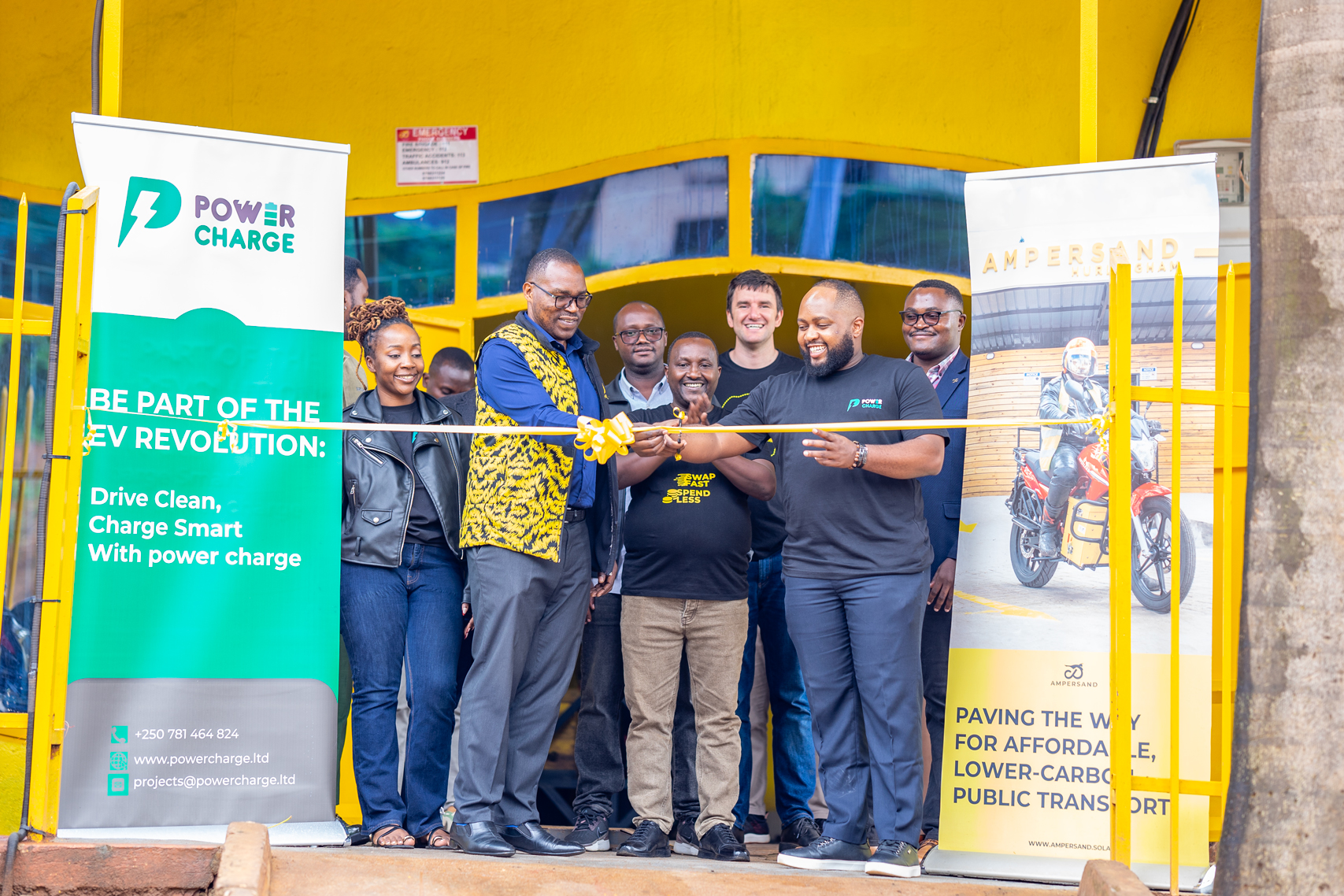

Ampersand Energy RW Ltd launched its first franchise-operated battery swap station in Kigali on February 19, signaling a strategic shift in how electric vehicle (EV) infrastructure is scaled across East Africa’s high-growth transport markets. The Miduha Battery Swap Station, established in collaboration with local infrastructure firm Power Charge Ltd, represents a move away from the capital-intensive, company-owned model toward a partnership-based framework designed to accelerate the rollout of green energy systems.
By integrating Ampersand’s proprietary battery technology with the market expertise of Rwandan entrepreneurs, the initiative aims to facilitate more than 72,000 battery swaps annually, supporting hundreds of commercial motorcycle riders who form the backbone of the city’s logistics and passenger transport sectors.

The adoption of a franchise model addresses one of the most significant barriers to the African energy transition: the high upfront cost of building distributed charging networks. According to Emmanuel Hakizimana, Country Manager of Ampersand Energy RW, the partnership allows for faster and more capital-efficient expansion while maintaining technical and service standards.
For Rwanda, a country that has aggressively pursued a decarbonization agenda through favorable tax regimes and e-mobility incentives, this shift from direct ownership to franchising indicates a maturing ecosystem where local small and medium enterprises (SMEs) are beginning to capture value within the EV supply chain. This transition is essential for ensuring that the benefits of the green economy are decentralized, creating a profitable charging business rooted in the domestic economy rather than relying solely on international venture capital.
The operational metrics of the new station reflect the broader viability of battery swapping as a practical solution for African urban centers. Ampersand currently delivers more than 20,000 swaps per day across Rwanda and Kenya, having powered over 450 million kilometers of travel to date. These figures demonstrate that the technical hurdles of range anxiety and charging downtime, which often impede EV adoption, can be mitigated through standardized, swappable power units.
For commercial riders, whose daily income is directly tied to vehicle uptime, the ability to swap a depleted battery for a fully charged one in minutes is a critical economic enabler, effectively lowering the total cost of ownership compared to traditional internal combustion engines.

The long-term implications for Africa’s public finances and urban planning are substantial. As more local firms like Power Charge Ltd enter the charging infrastructure space, the reliance on imported petroleum products may decrease, potentially easing pressure on national foreign exchange reserves.
Furthermore, the build-out of these networks provides a predictable load for national utilities, assisting in the stabilization of the electrical grid through managed charging demand. As Kigali continues to serve as a laboratory for e-mobility, the success of the franchise model will likely provide a blueprint for other African metropolises seeking to modernize their transport sectors while fostering local industrial capacity and energy independence.
Engage with us on LinkedIn: Africa Sustainability Matters