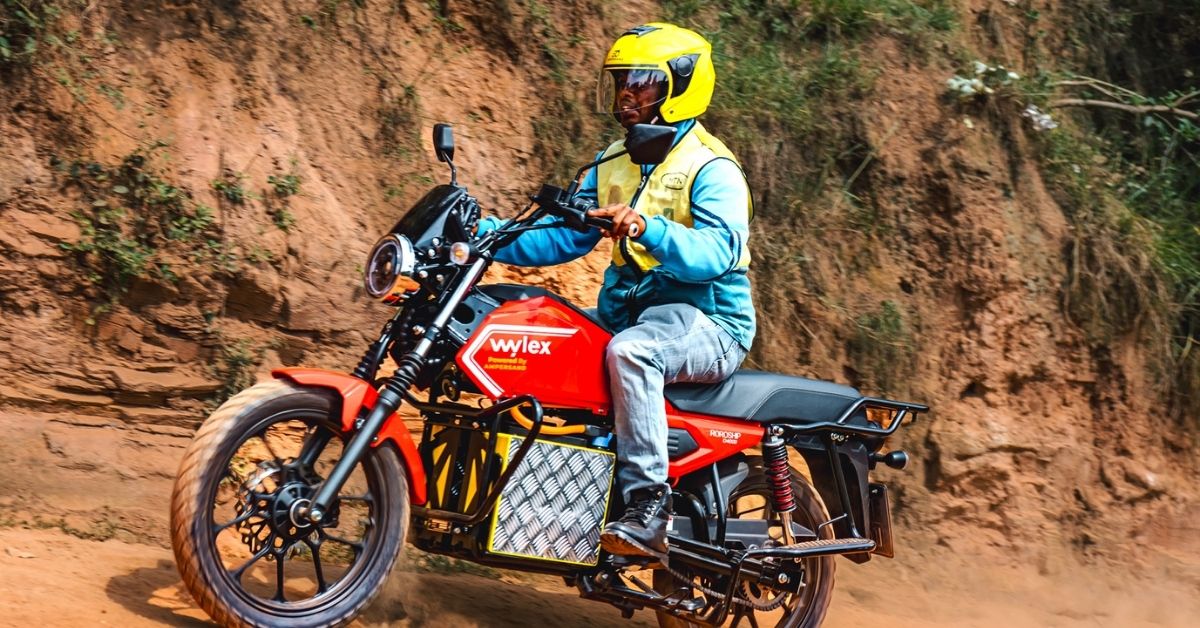

Ampersand Energy recently announced a partnership that places it at the center of a structural shift in Africa’s electric mobility market, after opening its battery swap network to third-party vehicle manufacturers for the first time. The agreement allows Wylex Mobility, an electric motorcycle manufacturer, to operate its vehicles on Ampersand’s batteries and swapping infrastructure across East Africa, marking a departure from closed, brand-specific electric transport systems.

The announcement, made in Nairobi on 9th December 2025, positions Ampersand as the first electric transport company on the continent to open its battery and energy network to external manufacturers. Until now, electric motorcycle companies operating in Africa have largely built vertically integrated systems, where vehicles, batteries and charging infrastructure were designed to work only within a single brand’s ecosystem.
Under the new arrangement, Wylex motorcycles will use Ampersand’s existing battery technology and access its swap stations across Kenya and Rwanda. The partnership follows technical testing and quality assessments conducted by Ampersand to ensure compatibility and safety within its network.
Ampersand, founded as Africa’s first electric transport company, has built one of the region’s most extensive battery swap systems for commercial motorcycles. The company currently completes more than 20,000 battery swaps per day and has powered over 400 million kilometres of electric travel. Its Alpha motorcycle fleet alone records approximately one million kilometres daily across its operating markets.
The scale of the network has been central to Ampersand’s decision to open it to other manufacturers. According to the company, demand from riders has increasingly centered on vehicle choice rather than energy access, provided reliability is maintained. The partnership with Wylex is intended to expand options for commercial riders while keeping battery performance and service standards consistent.

Wylex enters the East African market with a motorcycle designed for commercial transport and cargo use. The model features an 8,000-watt motor, a reinforced steel frame, an extended seat measuring 88 centimetres, and a carrying capacity of up to 200 kilograms. The design reflects the realities of motorcycle-based transport across East Africa, where two-wheelers are widely used for passenger services, deliveries and small-scale logistics.
The integration means Wylex vehicles will not require separate charging infrastructure, allowing them to operate immediately within Ampersand’s established swap network. For manufacturers, this removes the need to finance energy infrastructure independently, a cost that has historically slowed the rollout of electric vehicles across the region.
For Ampersand, the move represents a shift from operating solely as a vehicle provider to acting as an energy platform. The company’s battery technology and swap stations are now positioned as shared infrastructure, with access determined by technical standards rather than ownership.
Read also: The Gambia targets universal electricity access by 2026 through regional power and gas links
The partnership also reflects broader market dynamics within East Africa’s transport sector. Motorcycles account for a significant share of urban and peri-urban mobility, particularly in Kenya, Rwanda, Uganda and Tanzania. Rising fuel costs, maintenance expenses and tightening emissions regulations have increased interest in electric alternatives, but adoption has been uneven due to concerns over downtime, charging access and upfront costs.
Battery swapping has emerged as one response to these constraints, reducing charging time to minutes rather than hours. Ampersand’s system is designed around commercial usage patterns, where riders typically exchange batteries multiple times a day to maintain continuous operation.
Company executives described the partnership as a response to both rider demand and manufacturer interest. Ampersand stated that opening its network allows vehicle makers to enter the region faster while maintaining consistent energy performance. Wylex, for its part, cited Ampersand’s established customer base and operational reliability as key reasons for choosing the partnership for its regional launch.
The announcement comes as governments across East Africa outline policies to support electric mobility, particularly in urban transport. Kenya and Rwanda have both introduced incentives for electric vehicles, while pilot programmes involving electric motorcycles and buses continue to expand. However, infrastructure availability remains uneven, and most electric vehicle deployments are still concentrated in limited corridors.

By allowing third-party access, Ampersand’s network could reduce duplication of infrastructure in markets where capital remains constrained. Instead of multiple companies building parallel energy systems, manufacturers can connect to a single, existing platform, provided they meet technical requirements.
Ampersand indicated that additional manufacturers may be allowed onto the network in the future, subject to quality and safety evaluations. The company did not disclose financial terms of the Wylex agreement.
For now, the partnership signals a change in how electric mobility may scale in Africa: through shared energy infrastructure rather than isolated systems. Whether the model expands beyond East Africa will depend on regulatory alignment, market demand and the pace at which electric motorcycles replace conventional petrol-powered fleets already operating across the region.
Engage with us on LinkedIn: Africa Sustainability Matters
Engage with us on LinkedIn: Africa Sustainability Matters