


Nigeria’s former Vice President Atiku Abubakar has secured the presidential nomination of the African Democratic Congress (ADC), positioning the veteran politician for another bid for the country’s highest office at a time of mounting economic pressure, political realignment and growing scrutiny over governance in Africa’s largest economy.
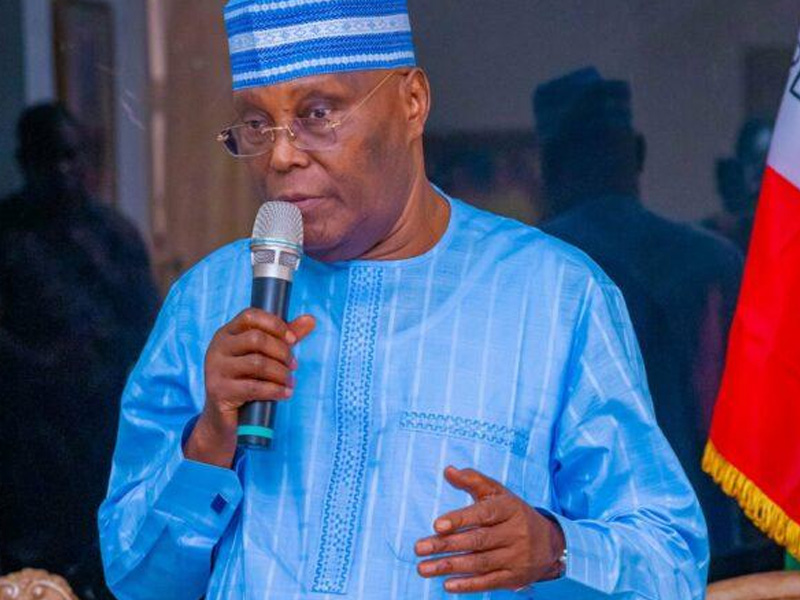 Abubakar accepted the nomination after defeating two rival aspirants during the party’s primary process, marking what would become his fourth presidential contest if formally confirmed for the next general election cycle. In remarks following the vote, the former vice-president described the process as evidence that democratic competition remained possible within Nigeria’s political system despite what he characterised as pressure on opposition parties.
I wish to express my profound appreciation for the privilege which you have bestowed on me of leading our great party, the African Democratic Congress, into the next elections as the presidential candidate,” Abubakar said after the nomination.
The development comes as Nigeria continues to confront significant macroeconomic and social pressures, including inflation, currency instability, rising public debt servicing costs and persistent unemployment. Political analysts say these conditions are likely to shape electoral debates in the coming years, particularly around economic management, institutional accountability and social protection.
Abubakar, one of Nigeria’s most recognizable opposition figures, has repeatedly argued that democratic institutions are under strain. Following his nomination, he accused the ruling establishment of attempting to weaken opposition parties through political interference and internal destabilisation.
In a post published on X, he said the ADC had demonstrated that party members could freely contest leadership positions through a transparent process. He further alleged that the government had contributed to leadership disputes within opposition movements while targeting political rivals.
The ruling authorities have consistently rejected accusations of undermining democratic processes.
Nigeria’s political environment remains highly consequential for Africa’s broader economic outlook. As the continent’s largest oil producer and one of its biggest consumer markets, Nigeria plays a central role in regional trade, energy markets, financial flows and investment sentiment across West Africa.
According to economic analysts, prolonged political uncertainty or institutional instability in Nigeria often carries implications beyond its borders, affecting investor confidence, regional currency dynamics and trade integration efforts under frameworks such as the African Continental Free Trade Area (AfCFTA).
The nomination also reflects continuing fragmentation within Nigeria’s opposition landscape following successive electoral cycles dominated by the ruling party. While opposition coalitions have periodically emerged around prominent national figures, sustaining unified political structures has remained a challenge in a country marked by complex regional, ethnic and economic interests.
Abubakar’s long political career spans multiple administrations and political alignments. A former customs official and businessman, he served as Vice President between 1999 and 2007 during Nigeria’s return to civilian rule after years of military government. Since then, he has remained a recurring figure in presidential politics, campaigning on themes including economic liberalization, private sector investment and institutional reform.
His latest nomination arrives as Nigerians continue to grapple with rising living costs following economic reforms introduced in recent years, including fuel subsidy removal and currency market adjustments. While supporters of the reforms argue they are necessary to stabilize public finances and attract long-term investment, critics contend that the immediate social costs have intensified hardship for households and small businesses.
The broader political debate is therefore increasingly tied to questions about economic resilience, governance credibility and the state’s capacity to deliver employment and infrastructure development for a rapidly growing population.
According to demographic projections, Nigeria is expected to become one of the world’s most populous countries within the coming decades, placing further pressure on public services, urban infrastructure, energy systems and labour markets. Analysts note that political leadership and policy continuity will play a central role in determining whether that growth translates into broader economic opportunity or deepens structural inequalities.
 For investors and regional policymakers, the evolving electoral landscape will likely be monitored closely not only for its domestic implications but also for its influence on fiscal policy, energy reform, regional security cooperation and Nigeria’s role within continental diplomacy.
While the next presidential election remains some distance away, Abubakar’s nomination signals the beginning of another highly contested political cycle in a country whose democratic trajectory continues to carry significant implications for governance and economic stability across Africa.


