


Kenya has launched its first national training curriculum tailored specifically for private sector professionals to strengthen the use of weather and climate information in business decision-making, as increasingly erratic weather patterns continue to disrupt key sectors of the economy.
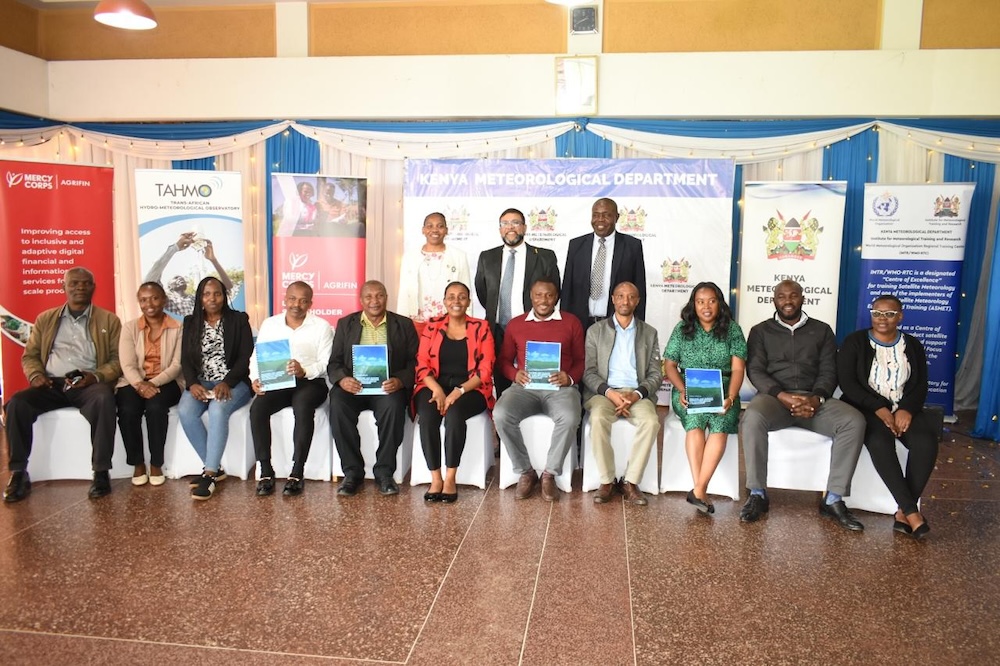
The Training Curriculum on Weather and Climate Information Services for Private Sector Stakeholders was unveiled by the Institute for Meteorological Training and Research (IMTR) and the Kenya Meteorological Service Authority (KMSA), with support from Mercy Corps AgriFin, the Kenya National Qualifications Authority (KNQA), and the Technical and Vocational Training Authority (TVETA).
The initiative reflects growing recognition among policymakers and businesses that climate variability is no longer only an environmental concern but an operational and financial risk affecting productivity, investment planning and economic resilience across multiple sectors.
Kenya has experienced a succession of climate-related shocks in recent years, including prolonged droughts, flash floods, pest infestations and shifting rainfall patterns that have disrupted agriculture, hydropower generation, transport systems and insurance markets. The economic consequences have been significant, particularly for agriculture-dependent livelihoods and sectors linked to food supply chains.
The curriculum targets professionals operating in five climate-sensitive sectors — agriculture, energy, finance, insurance and information and communication technology — which authorities describe as central to the generation, interpretation and practical application of climate information. The programme is intended to help businesses improve preparedness, manage operational risks and integrate climate data into long-term planning and investment strategies.
Speaking during the launch, Bernard Chanzu, Director of the Meteorological Training and Research Directorate, described the programme as a structural shift in how climate services are delivered and utilised within Kenya’s economy.
“This curriculum demonstrates that strengthening climate services is not only about improving access to climate data, but also about building the leadership and institutional capacity needed to transform information into meaningful action,”he said. “It recognises the private sector not as a passive recipient of climate information, but as a critical partner within the climate services ecosystem.”
The initiative comes at a time when African economies are increasingly under pressure to improve climate resilience as weather-related losses continue to rise. According to regional climate assessments, Africa remains among the most vulnerable continents to climate change despite contributing a relatively small share of global greenhouse gas emissions. Limited forecasting capacity, low insurance penetration and infrastructure deficits have compounded the economic impacts of extreme weather events across many countries.
KMSA Acting Director General Edward Maina Muriuki said the programme is designed to address growing business continuity risks associated with climate disruptions. He noted that enterprises capable of interpreting climate risks are better positioned to minimise financial losses, protect assets and identify emerging economic opportunities linked to climate adaptation and resilience investments.
“The curriculum promotes a culture of preparedness and resilience. Businesses that understand climate risks are better positioned to minimise losses, protect assets, ensure operational continuity and identify emerging opportunities within the economy,” he said.
The curriculum was developed through a multi-stakeholder process involving public institutions, technical experts, academia, regulators and private sector actors. According to the organisers, the framework integrates forecasting products from KMSA, guidelines from the World Meteorological Organization (World Meteorological Organization), and accreditation standards established by KNQA and TVETA.
It also incorporates regional climate outlooks, satellite datasets and lessons drawn from collaborations involving meteorological agencies, agritech firms, development partners and research institutions. The integration of digital technologies and climate intelligence reflects a broader trend toward data-driven adaptation systems within African economies.
Mercy Corps AgriFin Programme Director Sieka Gatabaki said the initiative highlights the expanding role of public-private partnerships in strengthening climate resilience systems. He added that the curriculum could provide a model for replication across other African countries seeking to improve the use of climate information within private sector operations.
The launch event was presided over by Ishaam Abader, Director of the Regional Coordination Office at the World Meteorological Organization, who noted that private sector participation is becoming increasingly important in climate services through financing, technological innovation and digital infrastructure development.
More than 70 participants attended the launch, including representatives from government agencies, development finance institutions, climate investors, innovators and agri-food enterprises, underscoring growing interest in climate risk management as a core component of economic planning.
The initiative also reflects a broader shift in climate adaptation policy across Africa, where governments are increasingly seeking to embed climate intelligence into financial systems, agricultural planning and infrastructure management. In sectors such as agriculture, where weather variability directly affects yields, access to accurate forecasting and climate advisory services is becoming increasingly tied to productivity and food security outcomes.
In the financial sector, climate-related disruptions are also reshaping risk assessment frameworks. Banks, insurers and investors are under growing pressure to evaluate exposure to climate risks, particularly in economies where extreme weather events can rapidly affect asset values, supply chains and repayment capacity.
For Kenya, the curriculum represents an effort to bridge the longstanding gap between scientific climate data and practical business application. While meteorological agencies have traditionally focused on forecasting and public advisories, policymakers are increasingly recognising that the economic value of climate information depends on whether businesses and institutions can translate forecasts into operational decisions.

https://www.aecweek-registration.com/2026/?repid=
As climate shocks become more frequent and costly, initiatives aimed at improving climate literacy and institutional preparedness are expected to become increasingly important across Africa’s private sector. The effectiveness of such programmes, however, will likely depend on sustained investment in forecasting systems, digital infrastructure and regional cooperation capable of supporting long-term climate resilience strategies.
The launch of the curriculum therefore marks not only a training initiative but also a broader attempt to reposition climate information as a strategic economic asset within Kenya’s development and risk management framework.


