


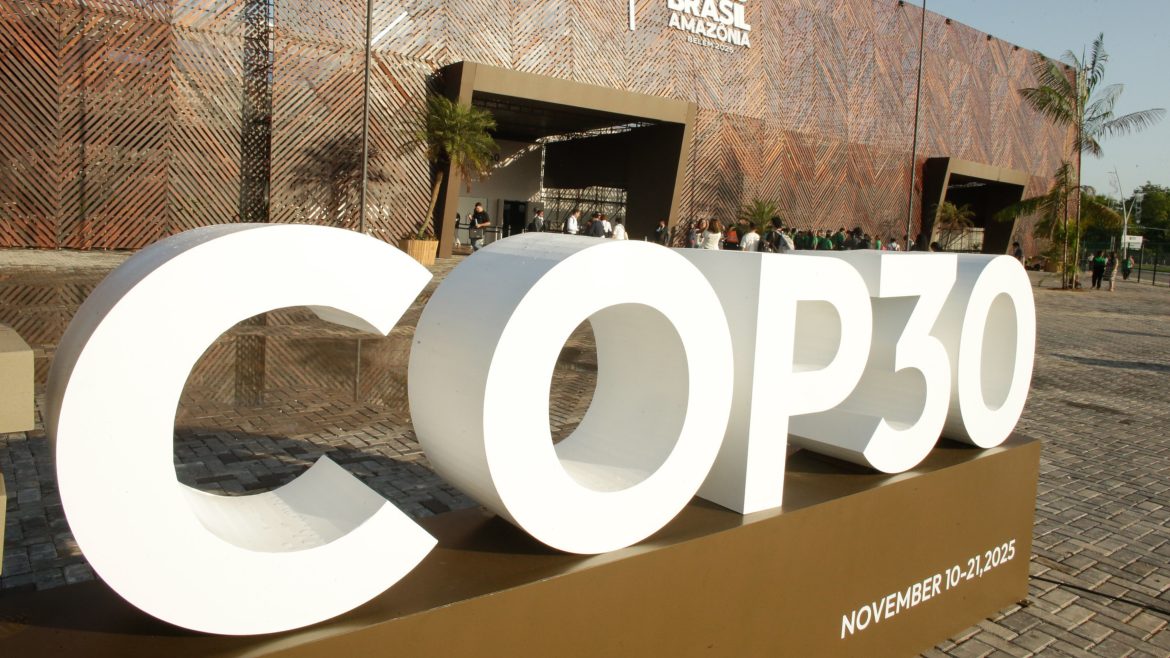
The presidents of the 30th and 31st UN Climate Change Conferences (COP30 and COP31) have unveiled a preliminary proposal for a Global Implementation Accelerator aimed at shifting international climate diplomacy away from lengthy negotiations toward faster delivery of climate solutions, in a move that could reshape how global climate commitments are translated into action, particularly for developing economies in Africa.
The initiative, presented in Denmark during a ministerial meeting on climate and development in Copenhagen, is expected to be formally launched at COP30 in Belém, Brazil, in November 2025, under Brazil’s presidency. It is designed to prioritise scalable climate solutions, including technologies, methodologies and policy tools, that can be deployed rapidly across multiple regions to accelerate emissions reduction and adaptation efforts.

The proposal reflects growing frustration among negotiators and climate officials over the pace of implementation of commitments already agreed under the United Nations Framework Convention on Climate Change (United Nations Framework Convention on Climate Change), particularly as countries continue to struggle to align domestic policies with the temperature goals of the Paris Agreement.
According to COP30 CEO Ana Toni, the Global Implementation Accelerator is intended as a voluntary and cooperative mechanism that identifies high-impact interventions capable of generating ripple effects across sectors and countries. She said the focus is on moving beyond abstract negotiation texts toward practical “solution acceleration plans” that can be deployed in real economies, particularly in areas such as energy transition technologies, industrial processes and climate adaptation systems.
The shift in emphasis comes as governments prepare updated nationally determined contributions (NDCs), which are expected to set out more ambitious emissions targets for 2030. However, implementation gaps remain significant, especially in emerging and developing economies where fiscal constraints, limited access to affordable climate finance and technology barriers continue to slow progress.
A central concern raised during the Copenhagen discussions was the persistent financing gap required to support both mitigation and adaptation. While scientific pathways to limiting global warming to 1.5°C above pre-industrial levels are widely agreed, officials noted that the challenge lies less in identifying solutions and more in mobilising capital at scale and ensuring effective technology transfer to lower-income countries.
The COP30 presidency received 444 submissions to inform international roadmaps on fossil fuels and deforestation, following consultations held between February and April. These roadmaps, which build on agreements reached at COP28 in Dubai in 2023, are expected to guide global efforts to phase down fossil fuel dependency and halt deforestation trends over the remainder of the decade.
Ambassador André Corrêa do Lago, president-designate of COP30, said the transition from agreement to implementation is now the central challenge of the global climate regime. He noted that while solutions are well established, the ability of countries to deploy them at scale depends on financial flows, institutional capacity and access to technology, all of which remain unevenly distributed between advanced economies and developing regions.
For Africa, where climate vulnerability intersects with infrastructure deficits and limited fiscal space, the implementation agenda carries particular weight. Many African economies are simultaneously grappling with rising energy demand, urban expansion and increasing exposure to climate shocks such as droughts, flooding and heat stress. The effectiveness of initiatives like the Global Implementation Accelerator will therefore depend on whether they can unlock predictable finance and practical technology partnerships, rather than adding another layer of global commitments.
Diplomatic discussions in Copenhagen also examined the future of the global climate regime, including how international rules and institutions governing emissions reductions and adaptation financing can evolve to reflect current economic realities. Ambassador Liliam Chagas of Brazil’s Ministry of Foreign Affairs said countries are increasingly shifting toward more goal-oriented negotiations focused on measurable outcomes rather than procedural agreements.
She described the current phase of the climate regime as a transition from negotiation to implementation, reflecting a decade-long effort since the adoption of the Paris Agreement in 2015 to convert global commitments into national policies. However, progress remains uneven, with many developing countries still reliant on external financing and technical support to meet their climate objectives.
https://www.aecweek-registration.com/2026/?repid=
The emerging implementation-focused approach signals a broader recalibration of global climate governance, where delivery, financing mechanisms and institutional coordination are becoming as important as ambition-setting. For African economies, the outcome will hinge on whether these reforms translate into expanded access to climate finance, strengthened energy transition pathways and greater resilience in agriculture, infrastructure and urban systems.
As preparations continue toward COP30 and COP31, the effectiveness of the proposed accelerator will ultimately be judged not by the scale of ambition it articulates, but by its ability to narrow the widening gap between global climate commitments and the realities of implementation on the ground.


