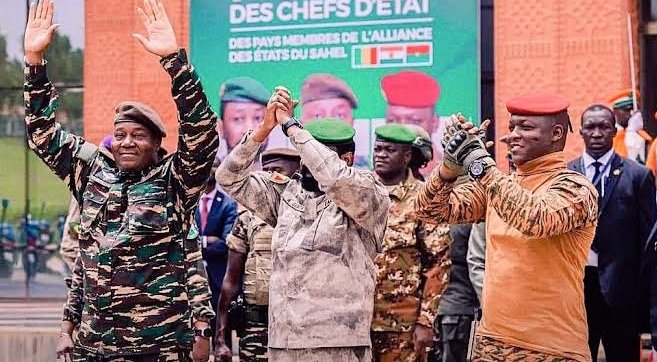

On Friday, 13 December 2025, finance ministers from Burkina Faso, Mali and Niger announced in Bamako the formal creation of the Confederal Investment and Development Bank of the Alliance of Sahel States, a new regional lender intended to finance infrastructure, energy and food systems in one of Africa’s most economically constrained regions.
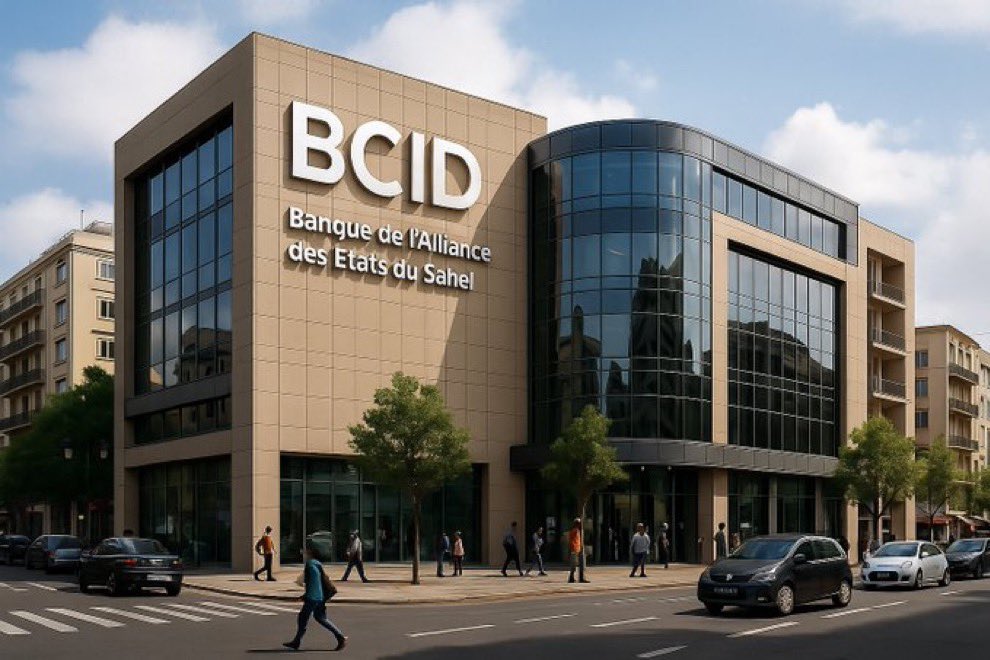
An AI generated animated projection image of the Bank’s building outlook. Image source: X platform
The bank, known by its French acronym BCID-AES, was approved after months of technical work and its founding charter was signed in the presence of Mali’s President Assimi Goïta, who currently chairs the Sahel alliance. How much capital the bank will command, who will manage it, and whether it will accept external partners are questions still unresolved, but the move itself signals a shift in how the three countries intend to fund development.
The Alliance of Sahel States was formed amid political realignments and strained relations with traditional development partners. Burkina Faso, Mali and Niger face overlapping challenges: weak infrastructure, heavy dependence on agriculture, chronic power shortages and rising security costs.
Read also: Cameroon secures $86m Standard Chartered loan to expand Rubber and Palm Oil processing
Public investment needs are large, but access to international finance has become more difficult, pushing governments to look inward and regionally for solutions. The creation of BCID-AES follows an announcement in May that the alliance wanted its own investment vehicle to channel sovereign resources into shared priorities.
According to officials, the bank will focus on roads, agriculture, food security, energy generation and cross-border connections, as well as selected private-sector projects aligned with national plans. These sectors reflect some of the Sahel’s most pressing gaps. Less than half of the population in Burkina Faso and Niger has access to electricity, while Mali’s access rate is only marginally higher.

Power shortages raise costs for businesses and limit industrial growth, while poor transport networks inflate food prices and constrain regional trade. Agriculture employs the majority of the population across the three countries, yet productivity remains low and highly vulnerable to climate shocks.
BCID-AES is being positioned alongside existing African development finance institutions such as the West African Development Bank and Central Africa’s development bank, which pool member contributions and borrow on capital markets to finance public and private projects. Those institutions collectively raise billions of dollars each year. Whether the new Sahel bank can approach that scale will depend on its starting capital and governance.
The three member states have committed initial funds, but no figures have been made public. Officials have also discussed a confederal levy to provide a steady revenue stream, an idea that would tie the bank’s balance sheet directly to national budgets already under strain.
Read also: Somalia’s Bosaso City to receive $23 million Solar power investment from African Development Fund
The decision to establish the bank in Bamako carries symbolic and practical weight. Mali is centrally located within the alliance and already hosts regional institutions. From there, BCID-AES will need to build technical capacity quickly, appoint experienced management and put in place risk controls credible enough to attract co-financing. Large infrastructure and energy projects often require long tenors and blended finance, particularly in low-income and high-risk environments like the Sahel.
The unresolved question of international participation will shape the bank’s future reach. Opening the institution to non-member states or external partners could expand its capital base and lower borrowing costs, but it would also require compromise on governance and oversight. Remaining closed would preserve political control but limit the scale of projects it can support. This choice matters because the region’s infrastructure financing gap is measured in billions of dollars annually.
The African Development Bank estimates that Africa as a whole faces an annual infrastructure shortfall of up to $100 billion, with fragile regions bearing a disproportionate share of unmet needs.
Engage with us on LinkedIn: Africa Sustainability Matters
Engage with us on LinkedIn: Africa Sustainability Matters