


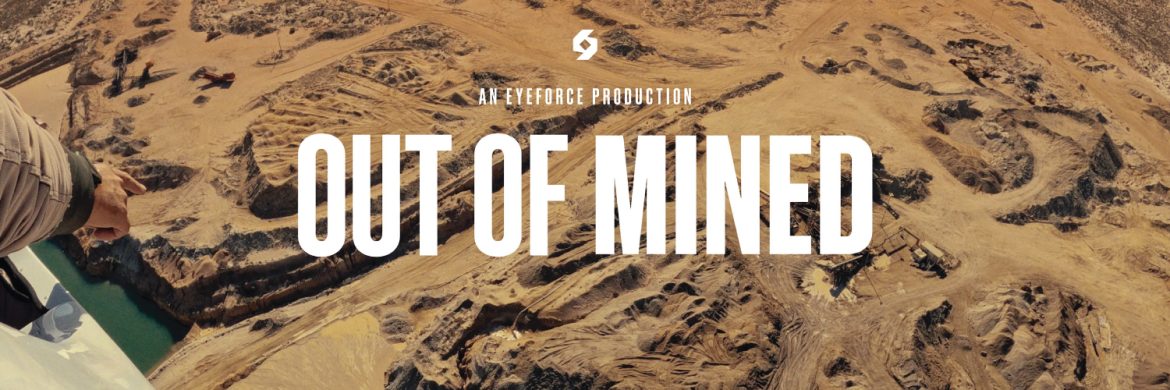
The world premiere of Out of Mined, a feature-length documentary examining the environmental and social legacy of mining along South Africa’s West Coast, has brought renewed attention to the growing tension between mineral development and biodiversity conservation as the country seeks to balance economic growth with environmental protection.
The documentary premiered on June 24 at Cape Town’s historic Labia Theatre before an audience of nearly 400 people, marking its first public screening in South Africa ahead of an international festival circuit that includes the Berlin Indie Film Festival, the Changing Tide Ocean Film Festival and the Green Montenegro International Film Festival. The film has also been nominated for a Cannes Film Award, with winners expected to be announced on June 27.
Directed by documentary filmmaker and cinematographer Arthur Neumeier and produced by Eyeforce in partnership with environmental organisation Protect the West Coast (PTWC), Out of Mined explores more than a century of diamond and heavy mineral extraction along approximately 450 kilometres of South Africa’s Atlantic coastline, documenting its ecological, cultural and socio-economic consequences. The film arrives as mining activity along South Africa’s coastline is once again attracting increased attention. According to Protect the West Coast, approximately 60 new mining applications were submitted across the Western and Northern Cape provinces during 2026 alone, while mining company Trans Hex recently received environmental authorisation for offshore diamond mining between Doringbaai and Strandfontein, near the ecologically significant Olifants River estuary.
The growing number of applications reflects increasing global demand for minerals used in manufacturing, construction and emerging energy technologies. However, conservationists argue that many of the proposed developments overlap with environmentally sensitive coastal ecosystems that support fisheries, tourism and unique biodiversity found nowhere else in the world. South Africa’s West Coast forms part of the globally recognised Cape Floristic Region, one of the world’s six floral kingdoms and a UNESCO World Heritage Site. The region contains thousands of endemic plant species and supports rich marine ecosystems that provide livelihoods for fishing communities while contributing to the country’s tourism economy.
Despite decades of mining, rehabilitation efforts have remained limited in many areas. According to The Tipping Point, a recent report published by Protect the West Coast, only around 10% of the coastline currently enjoys formal environmental protection, leaving much of the remaining coastline potentially vulnerable to future mining activities. The documentary juxtaposes sweeping images of pristine dunes, wetlands and coastal ecosystems with landscapes altered by decades of mining, while giving voice to small-scale fishers, Indigenous communities, scientists, legal experts and environmental advocates who describe the long-term implications of resource extraction for both ecosystems and local livelihoods.
“The more time we spent on the West Coast, the more we realised how little most people actually know about what is happening there,” director Arthur Neumeier said during the premiere.
“We wanted to create a film that not only shines a light on the impact of mining, but also honours the beauty, communities and biodiversity that still remain. This film is ultimately about connection to place, and asking ourselves what kind of future we want for this coastline.”
Filmed over nine separate expeditions to the West Coast and the Richtersveld, the production team collected more than 20 terabytes of footage before editing it into a 60-minute documentary that blends investigative journalism, environmental storytelling and cinematic imagery.
The premiere was followed by a public discussion featuring environmental experts, community leaders and activists, highlighting the increasingly complex relationship between conservation, resource extraction and social justice. Among the panellists was community activist Wendy Pekeur, founder of the Ubuntu Rural Women and Youth Movement, who discussed the disproportionate social impacts that mining activities can have on women and young people in rural communities, including issues surrounding economic exclusion, land rights and community participation in development decisions. Her contribution reflected a broader shift within environmental governance debates, where questions of biodiversity conservation are increasingly linked to social inclusion, Indigenous rights and equitable benefit-sharing.
Mining remains one of South Africa’s most important economic sectors, contributing significantly to export earnings, employment and government revenue. At the same time, global demand for critical minerals needed for electric vehicles, renewable energy technologies and battery manufacturing has intensified pressure to expand mineral exploration across many African countries. Analysts note that governments increasingly face difficult policy choices between supporting mineral development to stimulate economic growth and safeguarding ecosystems that provide long-term environmental and economic benefits through tourism, fisheries and climate resilience.
The debate extends beyond South Africa. Across Africa, countries including Namibia, Mozambique, Madagascar and Sierra Leone are also experiencing increased interest in coastal and offshore mineral extraction as international demand for strategic minerals continues to grow. Environmental organisations have argued that stronger regulatory oversight, cumulative environmental impact assessments and more effective rehabilitation requirements will be essential if mining expansion is to proceed without causing irreversible ecological damage.
South Africa’s environmental legislation requires mining companies to obtain environmental authorisations and rehabilitation obligations before projects proceed. However, implementation and enforcement remain subjects of ongoing public debate, particularly where developments intersect with biodiversity hotspots or traditional community livelihoods. The documentary does not advocate a blanket opposition to mining but instead raises broader questions about governance, accountability and long-term stewardship of natural resources. Mike Schlebach, Managing Director of Protect the West Coast, said the film was intended to serve as a catalyst for practical conservation initiatives rather than simply documenting environmental degradation.
He noted that the organisation plans to expand rehabilitation programmes and community-based conservation projects following the film’s release, working alongside local stakeholders to restore damaged ecosystems while supporting sustainable livelihoods. The premiere was supported by outdoor apparel company Patagonia South Africa, whose director, Grant Cleghorn, said storytelling plays an important role in strengthening public understanding of the environmental value of landscapes used for recreation, livelihoods and biodiversity conservation.
https://www.aecweek-registration.com/2026/
As South Africa continues to pursue economic growth through mining while advancing its commitments under global biodiversity and climate agreements, Out of Mined contributes to a broader national conversation about how natural resource development can be balanced with environmental stewardship and community participation. The documentary’s international release is expected to bring global attention to one of Africa’s most biologically diverse coastlines and the policy choices that will shape its future.


