


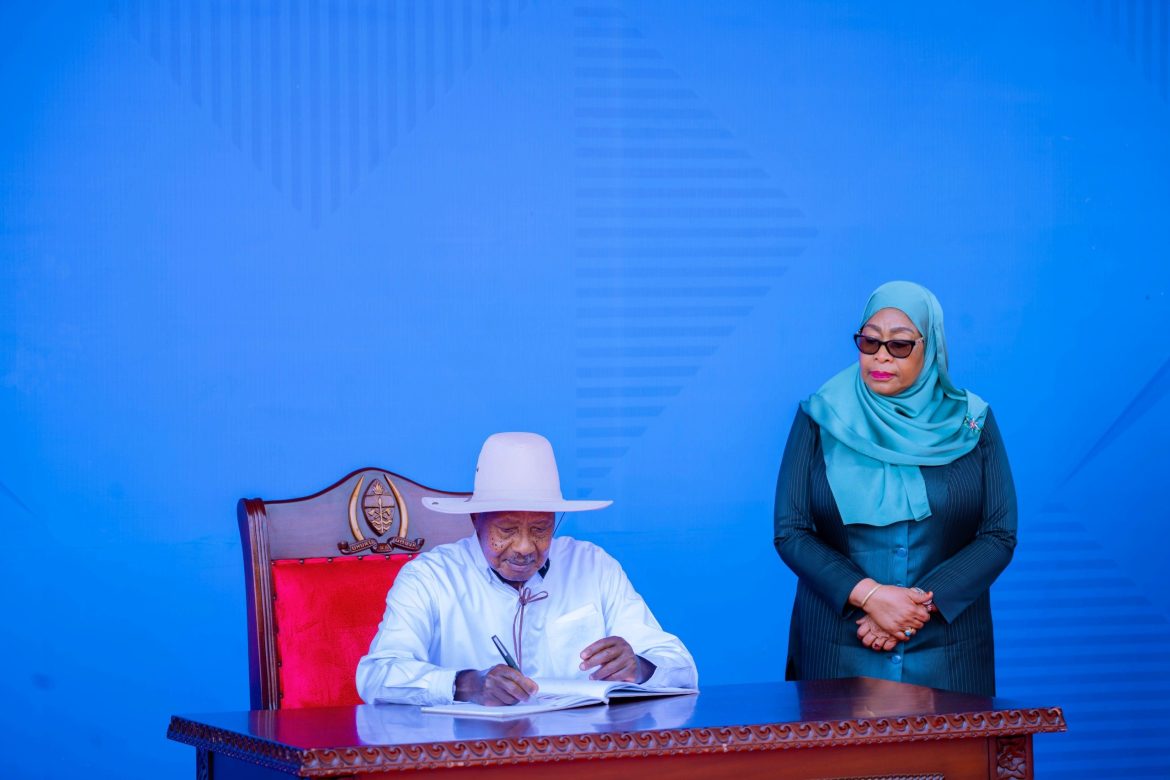
Tanzania and Uganda’s agreement with Vitol to develop Tanga Port into a regional energy hub is positioning the Tanzanian port for a larger role in East Africa’s petroleum trade, as Uganda prepares to commercialise its crude production and Kenya advances plans for a large refinery at Lamu. The development could reshape regional flows of crude, refined petroleum products, storage and trading, while giving landlocked Uganda an alternative coastal gateway to Kenya’s established Mombasa corridor.
The immediate foundation for Tanga’s ambitions is the East African Crude Oil Pipeline, which is designed to transport Ugandan crude from the Lake Albert region to Tanzania’s Indian Ocean coast. As the pipeline moves towards operation, the economic question is increasingly shifting from how Uganda’s crude reaches the sea to what infrastructure and commercial activity can be built around its arrival in Tanga.
For Tanzania, that creates an opportunity to capture more value from petroleum logistics beyond the transit of crude. For Uganda, it offers another route into international markets and could reduce dependence on a single corridor for petroleum supply. Vitol’s participation adds an international trading component, potentially linking physical infrastructure at Tanga with global markets for crude and refined products. The proposed hub comes as East African governments are reassessing energy security after repeated disruptions in global petroleum markets. Uganda currently relies heavily on refined fuel imports, much of which enters through Kenya’s Mombasa corridor. A stronger Tanga-based system could provide Uganda with an additional supply route while allowing Tanzania to expand its position in regional petroleum storage, handling and distribution.
The scale of the opportunity remains uncertain. Tanzania has indicated that potential investment in energy infrastructure around Tanga could eventually exceed $20 billion, but that figure represents an indication of possible development rather than committed expenditure. The final configuration of the hub including storage, trading, refining and distribution facilities — will depend on investment decisions, commercial demand and the ability of governments and private companies to finance supporting infrastructure.
Tanga’s strategic advantage is its direct relationship with Uganda’s crude through the EACOP system. The pipeline provides an identifiable supply stream that could underpin investment in storage, marine handling and export infrastructure. The port could therefore develop beyond a facility used mainly to load Ugandan crude onto international tankers and become part of a wider petroleum trading and distribution network. That possibility becomes more significant when considered alongside Kenya’s plans for Lamu. Kenya is pursuing a proposed 700,000-barrel-per-day refinery at the coastal port, with the intention of supplying domestic and regional markets. The project would be integrated into the wider LAPSSET corridor, giving Lamu a potential role in connecting petroleum infrastructure with South Sudan, Ethiopia and other inland markets.
Read also :Dangote sets October 2026 start for $16 billion Lamu refinery, targeting east Africa’s fuel market
The two developments create an emerging contest over East Africa’s future energy geography. Tanga is being positioned around Ugandan crude and regional petroleum trade, while Lamu is being developed around refining and a broader transport corridor. Mombasa, meanwhile, retains the advantage of an established petroleum import and distribution network serving Kenya and neighbouring economies. The competition will not ultimately be determined by port capacity alone. Refineries require reliable feedstock and large customer markets. Petroleum traders need efficient storage and shipping infrastructure. Landlocked countries need dependable road, rail and pipeline connections. Governments must also provide regulatory certainty, while investors need confidence that infrastructure can generate sufficient returns over decades.
This makes project execution as important as strategic location. Kenya’s Lamu plans, for example, face questions around financing, environmental approvals and community participation. Those considerations illustrate the broader risks facing large energy infrastructure projects across the region: a project can have a compelling strategic rationale but still struggle if financing, regulatory approvals, environmental safeguards or community engagement are unresolved. For Tanzania, the commercial prize lies in moving further up the petroleum value chain. Exporting Ugandan crude through Tanga would generate port activity, but storage, blending, processing, trading and regional distribution could capture a larger share of the value created around the commodity.
Vitol’s role is particularly relevant to the trading dimension. The company operates one of the world’s largest independent energy-trading businesses, with significant exposure to crude and petroleum products, shipping and physical energy assets. Its involvement could help connect infrastructure at Tanga with international commodity markets, although the commercial impact will ultimately depend on the infrastructure that is built and the terms under which it operates. Vitol reported delivering 605 million tonnes of oil equivalent of energy in 2025 and maintaining more than $13 billion in long-term assets. A successful Tanga hub could also alter petroleum supply routes into the Great Lakes region. Uganda would be the most immediate market, but Rwanda, Burundi, South Sudan and eastern Democratic Republic of Congo could become commercially relevant if storage, transport and border infrastructure improve.
The economics of those routes will remain decisive. Distance, freight costs, taxes, border procedures and road and rail capacity can determine whether a new coastal gateway is commercially competitive against an established corridor. A refinery or storage terminal alone does not guarantee market share; the surrounding logistics network must be capable of moving products reliably and at competitive cost. The emerging infrastructure race also reflects a broader shift in East Africa’s energy security strategy. Uganda and Tanzania are investing in infrastructure associated with crude production and petroleum trade, while Kenya is simultaneously pursuing major refining capacity and expanding renewable energy systems.
Kenya’s energy strategy illustrates this apparent contradiction. The country is pushing towards greater electricity access, clean cooking and renewable power while also seeking to strengthen petroleum infrastructure. More than 80% of Kenya’s electricity generation comes from renewable sources, led by geothermal, hydropower, wind and solar, yet transport and other parts of the economy continue to depend heavily on liquid fuels. For African economies, this is increasingly the practical reality of the energy transition. Cleaner electricity systems can expand while oil remains important for transport, industrial activity and trade. The immediate policy challenge is therefore not simply choosing between hydrocarbons and renewables, but managing energy security, industrialisation and infrastructure investment while economies gradually diversify their energy systems.
Recent disruptions in international shipping and oil markets have reinforced the risks facing countries that depend heavily on imported refined petroleum. Additional storage capacity and alternative import routes cannot insulate East African economies from global price movements, but they can provide governments and private traders with greater flexibility when supply chains are disrupted. The same principle applies to electricity infrastructure. East African countries are simultaneously seeking investment in solar, wind, geothermal and transmission networks as they expand industrial capacity and improve energy access. Oil and gas infrastructure is therefore developing alongside renewable energy investment rather than disappearing immediately from national development strategies.
For Tanga, the decisive issue will be whether the port can evolve from a strategic location into a commercially integrated energy hub. That would require storage facilities, marine infrastructure, petroleum distribution networks, trading capacity and efficient connections to inland markets. The agreement with Vitol provides a potential commercial anchor, but the long-term value of the project will depend on the scale, cost and reliability of the infrastructure eventually delivered.
Kenya enters this competition with substantial existing advantages. Mombasa already serves as a major regional petroleum gateway, while Lamu offers a new industrial platform through the LAPSSET corridor. Kenya’s challenge will be to convert its proposed refinery and transport investments into commercially viable infrastructure while managing environmental, regulatory and financing risks. Tanzania faces a different challenge: turning Tanga’s direct connection to Ugandan crude into a broader regional business capable of attracting refiners, traders, distributors and customers. Vitol can strengthen the commercial proposition, but infrastructure costs and market access will determine whether the port can compete effectively with Mombasa and Lamu. For Uganda, the emergence of competing corridors could provide strategic benefits regardless of which port ultimately handles the largest volumes. A viable Tanga route would give Kampala another coastal gateway, while greater regional storage and refining capacity could provide additional options during periods of global supply disruption.
The wider significance is therefore not simply about which East African port handles more oil. It is about who controls the infrastructure connecting crude production, refining, storage, finance and regional trade. Uganda is bringing new crude production into the regional economy. Tanzania is seeking to position Tanga around that production and international commodity markets. Kenya is strengthening Lamu while retaining Mombasa’s established position. If these investments reach commercial scale, East Africa could develop a more diversified petroleum market in which ports operate not merely as entry and exit points, but as integrated platforms for processing, storage, logistics and trade.
That would also affect where the economic value of East Africa’s petroleum resources is captured. The long-term gains will depend not only on crude extraction, but on whether the region develops the infrastructure, financial systems, technical capacity and industrial networks required to retain more value locally. For East Africa, the contest between Tanga, Lamu and Mombasa is therefore becoming a contest over the architecture of the region’s energy economy — and the extent to which new petroleum infrastructure can strengthen energy security, regional trade and industrial development while the continent simultaneously moves towards a more diversified energy system.


