


Chinese solar panel exports to Africa rose sharply in April 2026 as manufacturers expanded sales into the continent amid weakening access to Western markets and rapidly growing African demand for lower-cost renewable energy technologies.
According to Chinese customs data cited by Nairametrics, China exported 123,787 tons of solar cells and panels to African countries in April, compared with 67,552 tons during the same period a year earlier, representing an increase of approximately 83 percent. The figures highlight Africa’s growing importance within global solar supply chains as energy demand, electrification pressures and climate targets accelerate investment in renewable energy infrastructure across the continent.
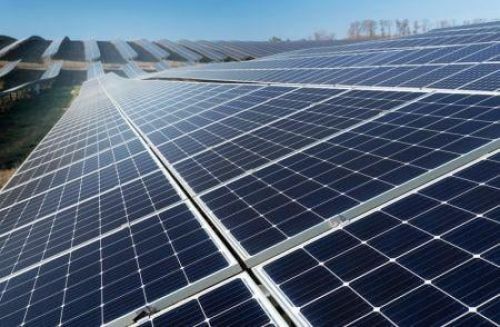
The increase comes as Chinese solar manufacturers continue to adjust export strategies in response to rising trade restrictions, tariffs and industrial policy shifts in the United States and Europe. With access to some traditional export destinations becoming more constrained, African markets are increasingly emerging as an alternative outlet for Chinese renewable energy products.
Some African countries recorded particularly strong import growth. Imports by the Democratic Republic of Congo (Democratic Republic of the Congo) surged by 482 percent year-on-year in April, while South Africa (South Africa), already one of the continent’s largest solar markets, recorded growth of 81.4 percent.
The broader trend has also been visible over a longer period. According to Ember’s Global Electricity Review 2026, African imports of Chinese solar panels rose from 12.7 gigawatts in 2024 to 18.8 gigawatts in 2025, an increase of 48 percent. Analysts say the figures reflect a combination of falling technology costs, expanding electricity demand and worsening energy supply deficits across many African economies.
Although exports declined from the March 2026 peak of 209,474 tons, the earlier surge was largely linked to buyers accelerating purchases ahead of the expiry of a Chinese export tax incentive on April 1. The temporary spike highlighted how global policy changes in manufacturing hubs can rapidly influence procurement patterns in emerging energy markets.
Pricing remains one of the main drivers behind the expansion of Chinese solar exports into Africa. Chinese solar panels are estimated to be between 20 percent and 30 percent cheaper than comparable products from competing Asian manufacturers, according to industry estimates cited by Nairametrics. For African governments, utilities and private developers operating under tight fiscal conditions and constrained access to capital, lower equipment costs significantly improve the commercial viability of solar projects.
The cost advantage is especially important at a time when many African countries are attempting to expand electricity access while simultaneously reducing dependence on expensive imported fossil fuels. More than 600 million people in sub-Saharan Africa still lack access to electricity, according to estimates from international energy agencies, making affordable energy infrastructure a central development priority.
The growth in imports also reflects the continent’s limited domestic solar manufacturing capacity. Africa currently produces relatively few photovoltaic panels locally, leaving most countries heavily dependent on imported equipment. Morocco and South Africa operate the continent’s largest manufacturing facilities, each with estimated annual production capacity of roughly one gigawatt, while Egypt and Nigeria maintain smaller-scale assembly operations.
Despite increasing political interest in local manufacturing and industrialisation, African solar production remains limited by high capital costs, infrastructure constraints, fragmented markets and competition from low-cost imports. As a result, imported Chinese equipment continues to dominate the continent’s rapidly expanding solar sector.
According to a previous report by Ember (Ember), 20 African countries recorded their highest-ever solar panel import volumes during the 12 months leading up to June 2025, while 25 countries imported more than 100 megawatts of solar panels, up from only 15 countries the previous year.
Sierra Leone (Sierra Leone) illustrates the scale of the ongoing transformation. Ember reported that the country imported enough solar panels during the period to potentially generate electricity equivalent to 61 percent of its total 2023 power output once fully installed and connected to the grid. Similar trends are emerging in several African economies where solar deployment is increasingly viewed as the fastest route toward improving electricity access and reducing reliance on diesel-powered generation.
The expansion of solar imports is also reshaping Africa’s broader energy transition dynamics. Many African electricity systems remain heavily dependent on fossil fuels, hydropower or aging centralized grids vulnerable to supply disruptions and climate-related shocks. Distributed solar systems, mini-grids and utility-scale photovoltaic projects are increasingly being deployed to address both urban and rural energy shortages.
For China, the African market offers both commercial opportunities and geopolitical significance. Chinese companies already play a dominant role in Africa’s infrastructure financing, mining and telecommunications sectors, and renewable energy is becoming another major area of engagement. Expanding solar exports allows Chinese manufacturers to maintain production volumes amid oversupply concerns and slowing demand growth in some mature international markets.
However, the rapid increase in imported solar technology also raises questions about Africa’s long-term industrial strategy. While cheaper imports support faster deployment and lower electricity costs, they may also complicate efforts to build domestic manufacturing ecosystems capable of generating jobs and technological capacity within African economies.
Some policymakers and industry groups have argued that the continent risks replicating patterns seen in other commodity and manufacturing sectors, where Africa primarily functions as a consumer market rather than a production hub. Achieving greater balance may require coordinated industrial policies, regional supply chains and targeted incentives aimed at supporting local assembly and component manufacturing.
At the same time, financing constraints remain a major barrier to scaling solar deployment across the continent. Although equipment costs have fallen substantially over the past decade, many African renewable energy projects continue to face high borrowing costs, currency volatility and weak transmission infrastructure, factors that increase project risk and limit investment flows.

https://www.aecweek-registration.com/2026/?repid=
Nevertheless, the sharp rise in Chinese solar exports suggests that Africa is becoming an increasingly important frontier in the global renewable energy market. As energy demand continues to expand alongside population growth and urbanisation, the continent is expected to remain a key destination for solar technology suppliers seeking new growth opportunities outside traditional Western markets.
The trend also signals a broader shift in Africa’s energy landscape, where renewable technologies are gradually moving from niche alternatives to central components of national electricity strategies. Whether that transition translates into more resilient, affordable and industrially inclusive energy systems will depend on how effectively governments balance immediate electrification needs with longer-term manufacturing and infrastructure development goals.


