


Zimbabwe has signed a landmark petroleum production sharing agreement with Australian energy company Invictus Energy, marking a significant step in the country’s efforts to commercialise newly discovered gas resources and expand domestic energy production from the Cabora Bassa basin.
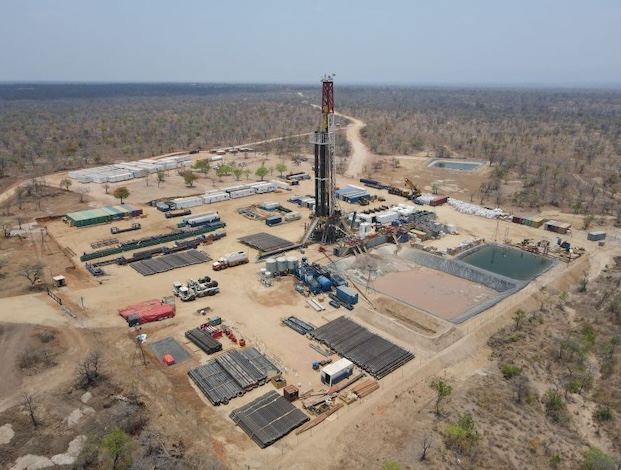 The agreement, signed in Harare on Wednesday between the Zimbabwean government and Invictus subsidiary Geo Associates, establishes the commercial framework for future gas production from the Mukuyu gas field, where the company announced major gas condensate discoveries in 2023. The deal comes as Zimbabwe seeks to strengthen energy security, reduce reliance on imported fuels and position itself within Africa’s evolving natural gas sector.
Speaking during the signing ceremony, Invictus Chief Executive Scott Macmillan said the production sharing agreement would operate under a hybrid structure that allows the Zimbabwean state to choose between receiving a direct share of profits or a portion of future gas production. According to company officials, the arrangement is intended to provide greater fiscal flexibility for the government while supporting long-term project development.
Zimbabwe’s Finance Minister Mthuli Ncube described the agreement as part of the country’s broader strategy to unlock natural resource wealth and support economic development. The government has increasingly prioritised extractive industries as a source of foreign exchange earnings, public revenue and industrial growth at a time when many African economies are under pressure to strengthen domestic production capacity and fiscal resilience.
The Cabora Bassa basin has emerged as one of southern Africa’s most closely watched frontier hydrocarbon regions following Invictus’ exploration results at the Mukuyu field. The company is now preparing to drill its next exploration target, the Musuma-1 well, during the second half of the year. According to Invictus, the prospect is estimated to contain approximately 1.2 trillion cubic feet of gas and around 73 million barrels of condensate resources.
If commercially viable reserves are confirmed at scale, the project could alter Zimbabwe’s energy landscape by providing a domestic gas supply for electricity generation, industrial activity and potentially regional energy markets. Zimbabwe has long faced chronic electricity shortages, forcing businesses and households to rely on costly diesel generators and imported power supplies from neighbouring countries.
Natural gas is increasingly being positioned by several African governments as a transitional energy source capable of supporting industrialization while reducing dependence on more carbon-intensive fuels such as coal and heavy fuel oil. Countries including Mozambique, Tanzania, Senegal and Mauritania have accelerated gas development projects in recent years as global demand for energy security and alternative supply sources grows.
For Zimbabwe, the economic implications extend beyond energy supply. Analysts note that large-scale gas development could support industrial processing, fertilizer production and manufacturing activity if linked to domestic value chains rather than remaining purely export oriented. Infrastructure investment associated with the sector, including pipelines, roads, power systems and processing facilities, could also generate broader economic spillovers if managed effectively.
However, the development of new hydrocarbon projects across Africa is increasingly occurring within a more complex global financing environment. International lenders and development institutions are under mounting pressure to align investments with climate commitments, even as African governments argue that energy access and industrial growth remain immediate development priorities.
According to energy economists, African gas projects now face the dual challenge of securing long-term financing while demonstrating how resource revenues can contribute to economic diversification, infrastructure development and energy transition goals. Concerns around governance, debt exposure and revenue management continue to shape investor assessments across the continent’s extractive sector.
Zimbabwe’s resource sector has historically struggled to attract large-scale foreign capital because of policy uncertainty, currency instability and wider macroeconomic challenges. The Invictus agreement may therefore be viewed by investors as a test case for how the country manages future resource partnerships and energy-sector reforms.
Read also: https://www.africanews.com/2026/05/28/australian-energy-firm-signs-landmark-gas-deal-with-zimbabwe/
The structure of the production sharing agreement will likely be closely watched within regional energy markets as governments seek to balance investor incentives with public revenue generation. Hybrid fiscal arrangements, such as the one outlined by Invictus, are increasingly being used in frontier energy markets to provide flexibility amid volatile global commodity prices and evolving energy demand patterns.
The broader significance of the Cabora Bassa project also lies in its timing. Africa’s energy systems remain under pressure from rapid urbanization, industrial demand growth and insufficient electricity generation capacity. According to the African Development Bank, hundreds of millions of Africans still lack reliable access to electricity, constraining industrial productivity and economic expansion.
 For Zimbabwe, successful commercialization of gas resources could provide an opportunity to stabilise domestic energy supply while strengthening public revenues and industrial capacity. Yet the long-term developmental impact will depend largely on governance, infrastructure planning and whether resource extraction translates into wider economic value creation beyond the energy sector itself.
As African economies seek to balance industrialization ambitions with energy transition pressures, Zimbabwe’s emerging gas sector reflects the increasingly strategic role natural gas is expected to play within the continent’s development and energy security agenda over the coming decade.


