
In recent announcements made from the United Arab Emirates and Kampala, a new institution entered Africa’s crowded and often contested carbon market space with a clear message: governments, not intermediaries, should sit at the center of how carbon finance is built and governed on the continent.
The East African Carbon Company, known as EACC, formally launched as a government-aligned platform designed to develop carbon projects in partnership with African states, beginning with Uganda, at a time when scrutiny of carbon markets is intensifying globally.

EACC’s launch comes against a backdrop of growing demand for carbon credits alongside rising concern about how those credits are produced, who controls them, and who benefits. Across Africa, carbon projects have expanded rapidly over the past decade, driven by international buyers seeking offsets linked to forests, land restoration and avoided deforestation.
Many governments have raised alarms about opaque contracts, weak benefit-sharing and projects negotiated with little sovereign oversight. Several countries, including Kenya, Zimbabwe and Tanzania, have since moved to tighten carbon market regulations, asserting control over authorization, pricing and revenue flows.
Read also: African Energy Commission unveils continental plan to improve national energy data systems
Positioned within this shifting landscape, EACC says it intends to operate differently. The company is structured to work directly with national and regional governments to design and implement carbon projects that align with domestic laws, land-use priorities and international climate frameworks, including Article 6 of the Paris Agreement.
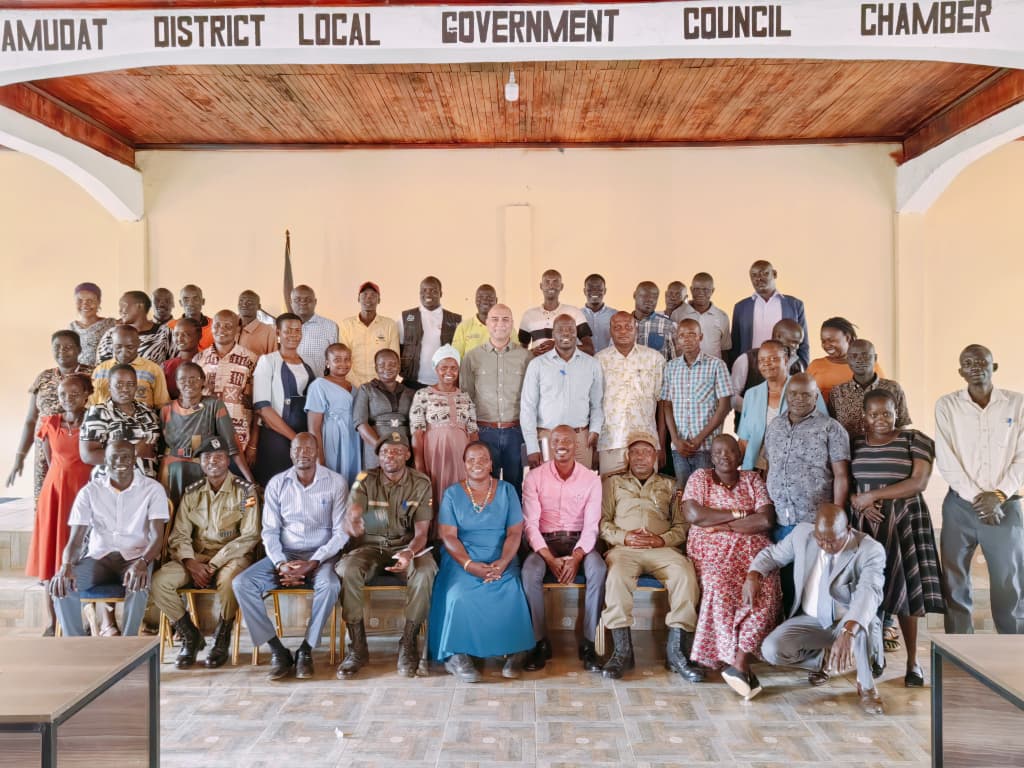
Its most advanced partnership is with Uganda’s Ministry of Water and Environment, where EACC is supporting nature-based projects on public land aimed at forest protection and ecosystem restoration.
Early feasibility studies conducted jointly in Uganda have identified about 714,000 hectares of land suitable for long-term restoration and protection. Over a 40-year period, that area is estimated to generate up to 18.5 million tonnes of carbon sequestration.

For context, Uganda’s total annual emissions are estimated at roughly 40 million tonnes of carbon dioxide equivalent, meaning the projected sequestration would represent a significant contribution toward national climate commitments if realised. Initial project phases are expected to train around 5,000 farmers and create more than 1,000 direct jobs, linking carbon finance to livelihoods in rural areas where economic options are often limited.
Naveed Tariq, EACC’s chief investment officer, described the model as one built around sovereign leadership and long-term alignment between climate goals, economic development and investor expectations. His remarks reflect a broader shift in the voluntary carbon market, where buyers in Europe and Asia are demanding higher standards of transparency, stronger legal backing and credible monitoring. Credits linked to unclear land tenure or weak verification are increasingly discounted or rejected outright.
Read also: Burkina Faso, Mali and Niger launch confederal investment bank for regional development financing
The emphasis on government partnership also responds to a practical reality. Across much of Africa, public land and protected areas account for the majority of high-quality nature-based carbon potential. Without state involvement, projects face legal uncertainty and social risk.
EACC says its approach embeds central and local government teams throughout project design and implementation, supported by geospatial monitoring and reporting systems aligned with Uganda’s Climate Change Mechanisms Regulations. This framework is intended to ensure that measurement, reporting and verification meet international standards while remaining accountable to national authorities.
The stakes are high. Africa currently captures a small share of global carbon market revenues despite holding a significant proportion of the world’s nature-based mitigation potential. Estimates from international climate finance groups suggest Africa receives less than 5 percent of voluntary carbon market value.
Proponents argue that better governance, clearer rules and credible institutions could help shift that balance, especially as institutional investors and long-term capital from regions such as the Gulf increasingly look for durable, nature-positive assets with lower reputational risk.
EACC’s entry does not resolve the deeper debates surrounding carbon markets, including questions about additionality, permanence and the role of offsets in global decarbonization. But it does reflect an emerging consensus among African policymakers that if carbon finance is to play a meaningful role in development and conservation, it must be rooted in national priorities and public oversight.
Whether EACC’s model can deliver at scale will depend on execution, regulatory clarity and the willingness of governments and communities to remain actively engaged over decades, not just project cycles.
For now, the company’s launch signals a recalibration. As carbon markets mature and rules tighten, Africa’s next phase of climate finance may be shaped less by speculative deals and more by institutions that sit at the intersection of public authority, local livelihoods and global climate capital.
Engage with us on LinkedIn: Africa Sustainability Matters
Engage with us on LinkedIn: Africa Sustainability Matters