


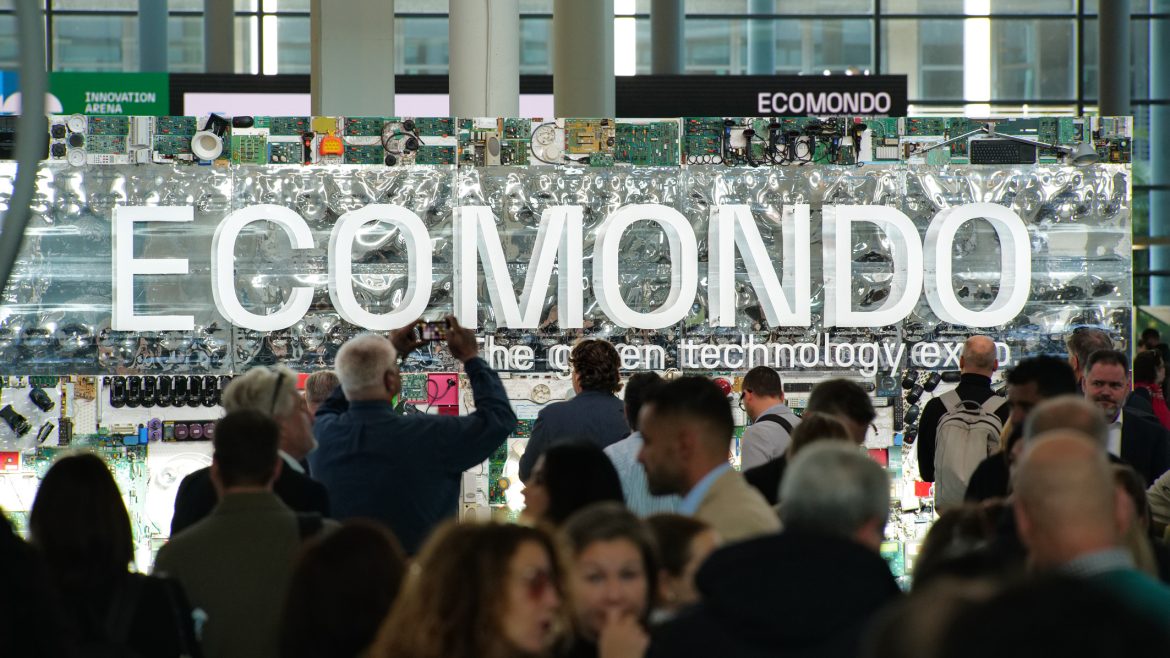
Ecomondo 2026, one of Europe’s leading events dedicated to the green, blue and circular economy, is set to place international cooperation, resource efficiency and industrial sustainability at the centre of discussions when it convenes policymakers, businesses, researchers and development institutions from around the world between 3 and 6 November in Rimini, Italy.
Organised by the Italian Exhibition Group (IEG), the 29th edition of the event comes at a time when governments and industries are accelerating efforts to adapt to stricter environmental regulations, changing resource markets and growing pressure to transition towards lower-emission economic models. Organisers say this year’s edition will have a stronger international orientation, with expanded participation from Africa, the Mediterranean region, Europe, Asia and the Americas.
The event reflects a broader shift in global sustainability policy, where circular economy principles are increasingly being integrated into industrial strategies, trade frameworks and investment decisions. As countries seek to reduce waste, strengthen resource security and improve environmental performance, platforms such as Ecomondo have become important venues for connecting technology providers, investors, regulators and development actors.
For Africa, the growing emphasis on international cooperation at Ecomondo may create new opportunities for investment, technology transfer and knowledge exchange across sectors ranging from waste management and renewable energy to water infrastructure, agriculture and sustainable manufacturing.
Organisers have announced an extensive international engagement programme ahead of the event, including roadshows in Spain, Morocco, Germany, Hungary and Canada aimed at strengthening institutional partnerships and commercial networks. The initiative forms part of a wider effort to attract buyers, industry associations and official delegations from multiple regions while reinforcing Ecomondo’s position as a global sustainability platform.
The event’s expanding footprint mirrors increasing international attention on circular economy solutions as governments seek to address resource constraints, climate-related risks and industrial competitiveness challenges. According to the European Commission, circular economy strategies are becoming a central pillar of Europe’s industrial transition agenda, supporting efforts to reduce dependence on imported raw materials while promoting sustainable production and consumption patterns.
A notable feature of the 2026 edition will be its strong focus on policy and regulatory developments. Discussions are expected to examine several major European initiatives, including the Circular Economy Act, the Bioeconomy Strategy, the Critical Raw Materials Act, the Biotech Act II and new provisions relating to Extended Producer Responsibility. These frameworks are likely to influence international supply chains and trade relationships well beyond Europe.
For African economies, developments in European sustainability regulation carry significant implications. The European Union remains one of Africa’s largest trading partners, and new environmental standards increasingly affect market access for exporters in sectors such as agriculture, manufacturing, textiles and minerals. Understanding evolving compliance requirements has become a strategic priority for African businesses seeking to maintain competitiveness in international markets.
The conference programme will also focus on the bioeconomy, bioenergy, healthy and circular cities, artificial intelligence and digital technologies that support the ecological transition. These themes are gaining relevance across Africa as governments and private investors seek solutions that can simultaneously address economic growth, urbanisation pressures and environmental sustainability.
Bioenergy and bioeconomy development, in particular, are attracting increasing attention across the continent. Many African countries possess significant agricultural resources and biomass potential that could support renewable energy production, industrial development and rural livelihoods. However, scaling these opportunities requires investment, technical expertise and supportive policy frameworks.
Another major development for the 2026 edition is the introduction of a dedicated exhibition hall for the textile sector. The move reflects growing international focus on sustainability within global textile supply chains, particularly as new European regulations encourage greater transparency, recycling and resource efficiency across the industry.
The textile industry remains an important source of employment and export earnings for several African economies, including Ethiopia, Kenya, Egypt and Morocco. As sustainability requirements become more stringent, manufacturers across the continent may face both compliance challenges and opportunities to position themselves within emerging circular value chains.
The event will also feature an expanded Waste as a Resource exhibition area and a reorganised Water Cycle and Blue Economy section. The latter will focus on wastewater recovery, water reuse technologies, trenchless infrastructure solutions and smart water management systems.
Water security is increasingly becoming a strategic concern for African governments as climate variability, population growth and urban expansion place additional pressure on existing resources. Technologies and financing models showcased at Ecomondo could therefore have relevance for countries seeking to improve water efficiency, reduce losses and strengthen resilience to climate-related disruptions.
The continued inclusion of sectors such as environmental monitoring, bioenergy, regenerative bioeconomy, soil restoration and circular urban development reflects the increasingly interconnected nature of sustainability challenges. Policymakers are increasingly recognising that environmental issues cannot be addressed in isolation but require coordinated approaches linking energy, industry, agriculture, infrastructure and governance.
The event’s institutional partnerships further underscore its international significance. Organisations including the European Commission, the Organisation for Economic Co-operation and Development (OECD), the Food and Agriculture Organization of the United Nations (FAO), the United Nations Industrial Development Organization (UNIDO) and various European environmental agencies are expected to contribute to discussions on policy, investment and technological innovation.
https://www.aecweek-registration.com/2026/?repid=
For Africa, where governments are balancing development priorities with climate commitments and resource constraints, the growing engagement between European and African stakeholders at forums such as Ecomondo may become increasingly important. Access to sustainable technologies, climate finance, circular economy expertise and international partnerships is likely to play a critical role in supporting industrial transformation and long-term economic resilience.
As global markets continue to evolve, Ecomondo 2026 illustrates how sustainability is becoming less of a specialised environmental issue and more of an economic and industrial agenda. For African businesses, policymakers and investors, participation in these conversations may offer valuable insights into emerging regulations, market opportunities and technologies that are shaping the future of global trade and sustainable development.


