


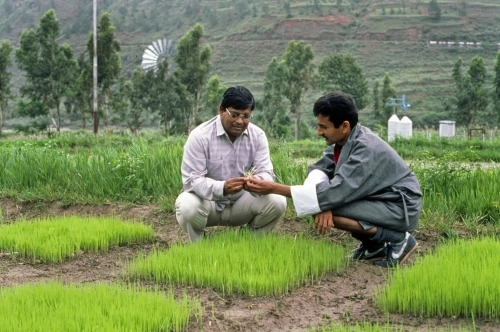
The United Nations and international partners have launched a global initiative to explore how artificial intelligence can improve the early detection of drought, as climate change increases pressure on water resources and exposes governments, farmers and vulnerable communities to growing risks from prolonged water shortages.
The AI Challenge for Drought Detection was launched on July 7 under the Global Initiative on Resilience to Natural Hazards through AI Solutions. The initiative seeks technology-driven approaches capable of identifying emerging drought conditions earlier, giving governments, humanitarian organisations and communities additional time to prepare and respond.
The challenge is part of a broader United Nations effort to examine how artificial intelligence can be responsibly deployed to strengthen disaster preparedness and early-warning systems. Participating UN agencies include the International Telecommunication Union (ITU), United Nations Environment Programme (UNEP), United Nations Framework Convention on Climate Change (UNFCCC), UNESCO, United Nations Office for Outer Space Affairs (UNOOSA) and the World Meteorological Organization (WMO).
The initiative was highlighted during the AI for Good Global Summit 2026, where international organisations and technology stakeholders examined how artificial intelligence could strengthen resilience to natural hazards. Discussions involving organisations including the WMO and UN-Habitat focused on using AI to make early-warning systems more timely, accurate and accessible, particularly for communities that remain underserved by conventional monitoring infrastructure.
Drought presents a particular challenge for disaster management because it generally develops more slowly than sudden-onset hazards such as floods, cyclones or earthquakes. Declining rainfall can gradually affect soil moisture, agricultural production, rivers, reservoirs and groundwater before the wider economic and social consequences become fully visible.
This makes early detection particularly important. An earlier indication of worsening drought conditions can give agricultural authorities time to advise farmers on planting decisions, water managers an opportunity to adjust allocations and governments and humanitarian organisations additional time to prepare support for communities at risk.
Artificial intelligence could strengthen this process by analysing large volumes of environmental data and identifying patterns that may not be immediately apparent through conventional monitoring. Satellite observations, meteorological measurements, soil-moisture information, hydrological data and other environmental indicators can provide signals of emerging drought conditions.
The value of AI in this context, however, will depend heavily on the quality and availability of data. In regions where weather stations, hydrological monitoring systems and digital infrastructure are limited, AI models may have insufficient information to produce reliable forecasts. This is particularly relevant for Africa, where many communities remain highly exposed to rainfall variability but monitoring and early-warning infrastructure can be unevenly distributed. The World Meteorological Organization has highlighted major gaps in weather, climate and hydrological observation systems across developing regions, making investment in data infrastructure an important component of effective climate adaptation.
The challenge therefore goes beyond developing more sophisticated algorithms. AI-powered early-warning systems will need reliable datasets, strong public institutions, technical expertise and mechanisms that ensure information reaches the people most exposed to climate risks. This is especially important for agricultural communities. Across much of Africa, rain-fed agriculture remains central to rural livelihoods and food security. A drought warning delivered several weeks or months earlier could potentially allow farmers to adjust planting schedules, select more drought-tolerant crops, protect livestock, improve water storage or access financial and humanitarian support.
The same information could support governments in managing water resources more strategically. Reservoir operators, irrigation authorities and municipal water utilities could use improved drought forecasts to anticipate shortages and adjust water allocation before crisis conditions emerge. Drought also has implications beyond agriculture and water supply. Prolonged shortages can affect food prices, public health, energy generation, migration and economic activity. In countries where hydropower contributes significantly to electricity generation, declining water availability can also affect energy security.
The potential application of AI therefore sits at the intersection of climate adaptation, disaster risk reduction, food security, water management and economic resilience. But technological sophistication alone will not guarantee better outcomes. An accurate drought forecast has limited value if governments lack the resources to act on it or if affected communities cannot receive and understand the warning. The effectiveness of early-warning systems depends on the entire chain from observation and forecasting to communication, decision-making and early action.
This creates an important governance dimension for AI deployment. Models used to inform public decisions must be transparent enough to build institutional trust, while their limitations and uncertainties need to be understood by decision-makers. There must also be safeguards against bias arising from datasets that underrepresent particular regions, communities or environmental conditions. For Africa, ensuring that local knowledge is incorporated into AI-supported drought monitoring could be particularly important. Farmers, pastoralists and local water managers often have detailed knowledge of changing environmental conditions that may not be captured fully by remote sensing or conventional datasets. Combining scientific observations, satellite data and community-level information could improve the relevance of early-warning systems.
The initiative also aligns with wider global efforts to strengthen climate adaptation and disaster risk reduction. Improved drought monitoring can contribute to Sustainable Development Goal 6 on clean water and sanitation and SDG 13 on climate action, while supporting the Sendai Framework for Disaster Risk Reduction’s emphasis on understanding disaster risk and strengthening early-warning systems. The challenge comes as international organisations increasingly explore AI as an instrument for addressing environmental and development challenges. The technology is already being examined for applications ranging from weather forecasting and flood prediction to ecosystem monitoring, agricultural planning and disaster response.
The emerging question is therefore shifting from whether AI can process environmental information to whether it can help governments make better decisions at the speed required by a changing climate. For Africa, the stakes are particularly high. The continent contributes a relatively small share of historical global greenhouse gas emissions but faces significant exposure to climate-related risks, including drought, water stress and agricultural losses. Strengthening early-warning capabilities could therefore become an important component of climate adaptation strategies.
However, equitable access will be critical. If AI-powered warning systems are developed primarily for countries with advanced data infrastructure, the communities facing some of the greatest climate risks could remain excluded. International investment in weather stations, satellite access, hydrological monitoring, digital connectivity and local technical capacity will therefore be as important as investment in AI models themselves. There is also an opportunity to strengthen regional cooperation. Droughts frequently cross national borders, particularly across shared river basins and pastoral regions. African countries could benefit from interoperable data systems and regional early-warning platforms capable of monitoring climate and water conditions across borders.
The AI Challenge for Drought Detection represents an important test of whether emerging technologies can contribute to this broader transformation. Its success will not ultimately be measured by the sophistication of the algorithms developed, but by whether those technologies enable earlier warnings, faster decisions and stronger protection for vulnerable communities and ecosystems. The larger lesson is that AI should be viewed as an enabling technology rather than a standalone solution. Effective climate resilience will require the combination of technology, reliable data, strong institutions, financing, local knowledge and public trust.
As drought risks intensify in many parts of the world, the ability to detect water stress before it becomes a humanitarian or economic crisis will become increasingly valuable. The UN-backed initiative provides an opportunity to test whether artificial intelligence can help close that gap and turn environmental data into earlier, more effective climate action.


