

The Water Air Food Awards (WAFA) has announced its 2026 winners, recognising community-led initiatives in Nepal, Kenya and Ethiopia for environmental solutions targeting water security, pollution, food systems and youth climate action. The four winners were announced on November 20 at the Generation Green Workshop, held during the Green Business Forum 2026 at Copenhagen Business School in Denmark, following a selection process involving 12 finalists from 10 countries across five continents.
The awards recognised projects based on demonstrated community impact and the potential for their solutions to be replicated or expanded. The selected initiatives span safe water access and sanitation, plastic waste recovery, agricultural waste processing and river restoration, illustrating how locally organised programmes are addressing environmental pressures while generating livelihoods and community benefits.
The WATER category winner, Partnership for Sustainable Development Nepal, was recognised for a water security programme in Butwal, Rupandehi District, which provides safe drinking water and sanitation infrastructure to underserved households and schools. Led by Dr. Datta Bahadur Rawal, the project responded to longstanding reliance on contaminated water, which contributed to waterborne illnesses, including diarrhoea and typhoid, and sanitation challenges that affected school attendance, particularly among girls.

The initiative established water treatment systems in schools and homes, improved five tube wells, upgraded 70 household toilets and constructed two school toilet blocks. Hygiene education was also incorporated into the programme to improve water handling and sanitation practices among students and families.
According to WAFA, the intervention now provides safe drinking water to approximately 170 households and 450 schoolchildren, directly benefiting around 1,100 people. The programme has also eliminated open defecation among schoolchildren in the project area and significantly reduced waterborne diseases. Nearly 13,000 trees have been planted, reportedly offsetting approximately 286 tonnes of carbon dioxide annually, while recharge ponds have been restored to support groundwater replenishment.
The project has established community management structures to maintain the infrastructure, with local committees responsible for operations. Half of committee members are women, and maintenance is supported through monthly household contributions intended to sustain the systems beyond the initial project implementation.
In the AIR category, The Flipflopi Project in Kenya was recognised for its plastic recovery and recycling work across the Lamu Archipelago, where limited waste-management infrastructure has contributed to plastic pollution affecting waterways, marine ecosystems and public health. Plastic waste is frequently burned in open fires in areas with limited disposal options, releasing pollutants into the air.
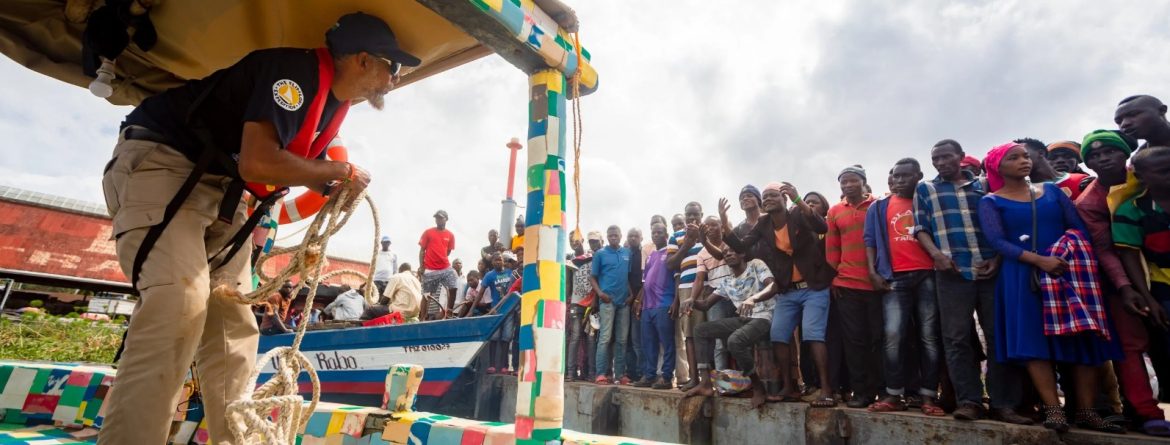
Since 2016, Flipflopi has developed a community-based recovery and recycling programme that includes Lamu County’s first plastic recovery and recycling facility. The facility serves approximately 70% of the archipelago and processes recovered plastic into durable products, including locally manufactured recycled planks. The project has also built a traditional sailing dhow made entirely from recycled plastic, which is used to raise awareness about plastic pollution and advocate for restrictions on single-use plastics.
The initiative has recovered 350,000 kilograms of plastic to date, with monthly collection volumes estimated at between 10 and 12 tonnes. WAFA reported that the project avoided approximately 318 tonnes of carbon dioxide-equivalent emissions between June 2022 and December 2024 by preventing plastic from being burned in open fires.
The programme has also linked waste recovery to economic opportunities. More than 1,000 people from low-income communities have received over US$40,000 in direct income support, with women accounting for 60% of beneficiaries. In addition, 106 students have graduated from an accredited 12-week vocational training programme delivered in partnership with Lamu Polytechnic, expanding opportunities for skills development linked to the circular economy.
The FOOD category award went to Laboscience Enterprise in Ethiopia for its initiative to convert fruit and vegetable waste into animal feed. The project operates in the Gamo Zone, where smallholder farmers have historically lost significant quantities of produce because of limited storage, processing capacity and market access. Surplus and spoiled produce was also being discarded into Lakes Abaya and Chamo, contributing to environmental pressures on water bodies supporting fisheries and tourism.
At the same time, shortages of livestock feed had contributed to grazing pressures around Nech Sar National Park, where livestock encroachment threatens wildlife and ecosystem integrity. Laboscience developed a system through which women-led cooperatives collect surplus agricultural produce and process it into animal feed, alongside herbal products and fertiliser.
The initiative has trained 3,065 women smallholder farmers in waste-to-feed processing and supported the formation of more than 20 micro-cooperatives across 16 local communities. WAFA reports that over 3,000 households now have access to affordable livestock feed, helping reduce pressure on protected areas and diverting agricultural waste away from lakes.
The enterprise also provides employment opportunities, including 25 jobs for young women at its processing plant. The model connects agricultural waste management, livestock production, women’s economic participation and biodiversity protection, with the potential to reduce waste-related pollution while strengthening local value chains.
The YOUTH CLIMATE ACTION category recognised Komb Green Solutions in Kenya, a youth-led initiative founded by Christopher Waithaka in 2018, for its work on waste removal, river restoration and community food production in Korogocho, one of Nairobi’s largest informal settlements. The community faces interconnected challenges involving waste management, river pollution, limited access to green spaces and livelihood opportunities. Komb Green Solutions has developed an approach that combines clean-up activities along the Nairobi River with the restoration of reclaimed land into green parks and the conversion of organic waste into useful products.
The initiative has removed more than 120 tonnes of waste from the Nairobi River and established a nursery containing 20,000 trees to support riverbank restoration and reduce flood risks. Composting and insect farming are used to transform organic waste into fertile soil and animal feed, supporting local food production activities.
According to WAFA, the project has directly benefited 3,221 people, while its environmental improvements have reached additional residents through cleaner river surroundings and improved community food systems. The initiative also trains young people and women in conservation, carpentry and sustainable farming, and operates a community water kiosk providing clean water to residents.
The organisation’s approach combines environmental restoration with skills development and employment pathways for young people. WAFA said the project has helped young people who were previously vulnerable to social and economic exclusion take leadership roles in community clean-up activities and environmental management.
The four projects illustrate different approaches to community-based environmental intervention, from infrastructure investments in water and sanitation to circular economy models that convert waste into products and income. Their recognition also highlights the role of local institutions, cooperatives, vocational training and community participation in sustaining environmental programmes beyond initial implementation.

WAFA Chief Executive Officer and Executive Chairperson Tina Lindgreen said the winners demonstrated what communities can achieve despite limited resources, adding that the organisation’s priority was to increase visibility and connect the initiatives with partners capable of helping them expand. The awards come amid growing attention to locally driven environmental solutions and the need to connect community innovation with financing, technical expertise and institutional partnerships. In many communities, environmental challenges are closely linked to livelihoods, public health, food security and access to basic services, making interventions that address several needs simultaneously increasingly relevant to development programmes.
For the winning initiatives, scaling their models will depend on maintaining community participation, access to resources, infrastructure management and the ability to adapt their approaches to other local contexts. The awards provide recognition for their existing work, while potential replication will depend on partnerships, financing and implementation conditions in the communities where expansion may take place.
WAFA’s 2026 awards therefore place community-led innovation at the centre of discussions on environmental sustainability, highlighting initiatives that link nature-based solutions with practical outcomes for people, livelihoods and ecosystems.