


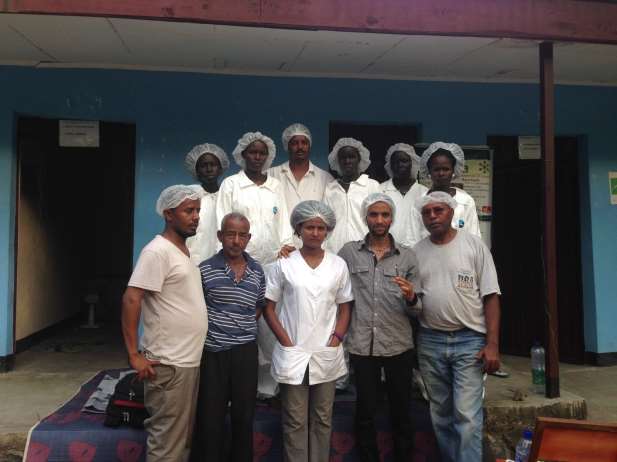
An agricultural waste-processing initiative in Ethiopia’s Gamo Zone has won the 2026 Food Award from the Water Air Food Awards (WAFA), recognising a community-based model that converts surplus fruit and vegetable produce into livestock feed, supports women farmers and reduces pressure on surrounding ecosystems.
Laboscience Enterprise was named the winner for its project, Conservation of Natural Resources through Adding Value to Post-Harvest Fruit Waste in the Gamo Zone, during the Generation Green Workshop held at Copenhagen Business School as part of the Green Business Forum 2026 on November 20. The initiative was selected from 12 finalists representing 10 countries across five continents, with the awards assessing demonstrated community impact and the potential for solutions to be replicated and scaled.
The project addresses interconnected challenges facing agricultural communities in southern Ethiopia, where post-harvest losses, limited livestock feed supplies and environmental pressures have affected both rural livelihoods and local ecosystems. In the Gamo Zone, farmers have historically struggled to find markets, storage facilities and processing infrastructure for surplus fruit and vegetables. During peak harvest periods, produce that could not be sold was left to spoil or dumped into Lakes Abaya and Chamo, waterways that support local fisheries, crocodile populations and ecotourism activities.

The shortage of livestock feed has also contributed to grazing pressure within Nech Sar National Park, threatening habitats supporting zebras and other wildlife. Women farmers, despite their central role in agricultural production, have faced limited access to processing technology, training and opportunities to generate income from agricultural value chains.
Laboscience’s approach seeks to address these challenges by establishing a local system for collecting, processing and reusing agricultural waste. Surplus fruit and vegetables are collected through hubs near markets before being dried and processed into natural livestock feed, herbal products and fertilizer.
The initiative has established women-led cooperatives to manage feed production and provides farmers with training in conservation agriculture. Community dialogues involving agricultural authorities, farmer groups and ecotourism stakeholders have also been used to strengthen coordination around resource management and environmental protection.
According to the project’s reported results, more than 3,065 women smallholder farmers have received training in converting post-harvest waste into feed. The initiative reports that more than 50,000 tonnes of fruit and vegetable waste have been processed into natural animal feed, while more than 20 micro-cooperatives have been established across 16 kebeles.
More than 3,000 families have gained access to affordable livestock and herbal feed, while over 250 smallholder farmers are reported to be earning direct income through the initiative. The processing plant has also created employment for 25 young women. The environmental dimension of the programme centres on reducing the amount of agricultural waste entering Lakes Abaya and Chamo while offering farmers an alternative to grazing livestock within Nech Sar National Park. The project links agricultural waste management with livelihoods and conservation, although the reported wildlife and ecosystem benefits have not been independently quantified in the award announcement.
Laboscience’s model also incorporates measures intended to support its continuity beyond the initial implementation period. Agreements with cooperatives, farmer groups and government institutions help establish local ownership of the production and collection systems, while technical manuals, training modules and standard operating procedures provide a framework for replicating the approach in other communities.
The initiative’s economic model is built around recovering value from materials that would otherwise be discarded. By converting fruit and vegetable residues, including pulp, peels and seeds, into feed, herbal products and fertilizer, the project seeks to reduce waste, create marketable products and retain more economic activity within rural communities.
Access to locally produced feed could also help reduce farmers’ dependence on more expensive feed sources, while cooperative-based production provides opportunities for women to participate in processing and income-generating activities. The extent to which these benefits can be sustained or expanded will depend on continued access to raw materials, markets, production capacity and local institutional support.

The recognition from WAFA places the initiative within a broader international network of community-led environmental and development solutions. The organisation says it has recognised 18 Silent Heroes since 2008, with initiatives across its network reaching an estimated 84 million people in 82 countries.
For Laboscience Enterprise, the 2026 award is expected to increase the project’s visibility and opportunities for partnerships, funding and expansion. Its approach illustrates how post-harvest waste management can be integrated into local agricultural production, livelihood development and ecosystem conservation, particularly where infrastructure and market access remain limited.
The experience in Gamo Zone also highlights the potential for locally organised processing systems to address multiple rural challenges through a single value chain. Whether the model can be replicated at scale will depend on how effectively its cooperative structures, technical systems and market relationships can be adapted to the conditions of other agricultural communities.