


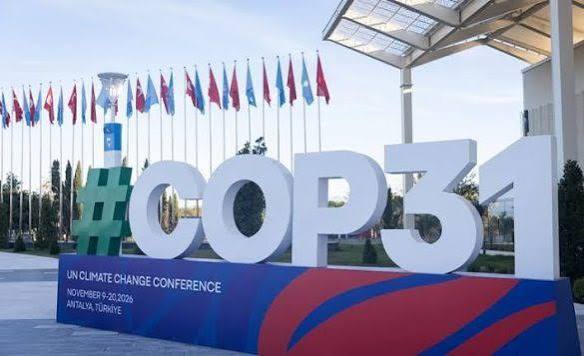
With governments failing to agree on a final political decision in Antalya, nature and climate organisations are urging countries to turn existing commitments into action, placing forests, wetlands, oceans, food systems and direct funding for local communities at the centre of preparations for COP32 in Addis Ababa.
The collapse of negotiations at COP31 in Antalya has left key proposals on forests, oceans, ecosystem restoration and climate adaptation without collective political endorsement, prompting nature organisations to call for renewed international cooperation ahead of the next United Nations climate summit in Ethiopia. While governments failed to reach consensus on a final agreement, experts say the coming year will be critical for translating existing climate commitments into national policies, investment and implementation, particularly in countries facing growing exposure to climate impacts.
The breakdown followed disagreements over fossil fuels, adaptation finance and the ambition of the proposed political decision. Nature4Climate, a coalition of organisations working to advance nature-based climate solutions, brought together experts from its member organisations to assess the implications of the outcome and identify priorities for COP32. Their reactions reflected disappointment over the lack of consensus but also a common argument that protecting ecosystems and reducing fossil fuel dependence must advance together.

Clare Shakya, Global Managing Director for Climate at The Nature Conservancy, said the consequences of the failed negotiations would be most severe for countries and communities least responsible for historical emissions but highly exposed to climate risks. She warned that the absence of a meaningful outcome would have implications for food systems and communities already experiencing increasingly severe extreme weather.
The criticism was accompanied by support for governments that rejected a proposed agreement they considered insufficiently ambitious. Several organisations argued that endorsing a political text without explicit recognition of fossil fuels would have weakened the direction of international climate action. Patricia Zurita, Executive Director of Conservation International, said the failure to recommit to the transition away from fossil fuels was particularly concerning as countries confront the prospect of exceeding the 1.5°C warming threshold.
Ani Dasgupta, President and CEO of the World Resources Institute, called for countries to use the setback to renew their commitment to multilateral climate action. He argued that governments must pursue emissions reductions, carbon removal and measures to strengthen community resilience against worsening climate impacts.
For conservation organisations, the negotiations also exposed the difficulty of securing political recognition for the role of natural ecosystems in climate mitigation and adaptation. Forests, wetlands, oceans and other ecosystems regulate water systems, store carbon, support biodiversity and sustain livelihoods. Their protection is increasingly viewed as part of climate resilience infrastructure, particularly in regions where agricultural production and local economies depend heavily on natural resources.
Bethan Laughlin, Senior Policy Specialist at the Zoological Society of London, argued that ecosystem protection and the transition away from fossil fuels should not be treated as competing priorities. She said both require simultaneous and large-scale action, with governments expected to incorporate climate and nature recovery into national plans, policies and financing decisions.
Dr Hollie Folkard-Tapp, a postdoctoral researcher at ZSL’s Institute of Zoology, similarly argued that the scientific basis for addressing climate change and biodiversity loss is established. The challenge, she said, is ensuring that governments act on commitments already made rather than allowing existing knowledge and policy promises to remain unimplemented.
The treatment of freshwater ecosystems was another concern raised during the negotiations. Cinthia Soto, Senior Climate Change Advocacy Officer at Wetlands International, said the proposed text recognised nature-based solutions, ecosystem restoration and integrated adaptation, but did not adequately acknowledge freshwater ecosystems, including wetlands, or their relationship with water security.
That omission is significant for countries where wetlands, rivers, peatlands and coastal ecosystems support agriculture, water availability and livelihoods. Wetlands can help regulate floods, store carbon and sustain biodiversity, while their degradation can increase exposure to water stress and climate-related hazards. Soto said climate resilience would remain incomplete without stronger recognition of the role these ecosystems play in national climate planning, implementation and finance.
The failure to secure a political decision also left proposed areas of cooperation on oceans and forests without formal endorsement through the cover text. Cathy Yitong Li, Global Climate and Energy Lead at BirdLife International, said the absence of outcomes on ocean and forest issues, as well as cooperation across the Rio Conventions on climate, biodiversity and land, represented a missed opportunity. However, she expressed confidence that governments and civil society could rebuild trust and advance action in the period leading to COP32.
Ocean-related discussions had made progress during the conference, according to Marine Lecerf, Head of International Policy at the Ocean and Climate Platform. She said countries had demonstrated greater convergence on integrating ocean-based climate action into the UN climate process, including proposals for a multi-year plan for future Ocean and Climate Change Dialogues and stronger links to the second Global Stocktake. Although the broader cover decision was not adopted, she argued that the technical and political progress on oceans should be carried forward.
Adaptation finance remained a central concern. Annamária Lehoczky, Senior Technical Specialist for Climate Change and Resilience at Fauna & Flora, said the Global Goal on Adaptation text reinstated the ambition to at least triple adaptation finance by 2035, but did not define the target amount or the baseline from which the increase would be measured. Without those details, she warned, the commitment would lack the clarity needed to support implementation.
The financing question is particularly relevant to African countries, where climate-related pressures on agriculture, water resources, infrastructure and food security are increasing. For governments preparing to host COP32, the challenge will be to ensure that adaptation commitments are linked to measurable financial support and practical programmes capable of reaching vulnerable communities.
Ethiopia’s role as the next host places these issues at the centre of the international climate agenda. Prime Minister Abiy Ahmed Ali highlighted the connection between rising temperatures, changing rainfall patterns and the country’s coffee-growing landscapes during COP31. He warned that climate change threatens the forests and farms associated with Arabica coffee, illustrating how climate impacts can affect ecosystems, agricultural production and economic livelihoods simultaneously.
The country’s restoration experience could provide a platform for discussions on nature-based adaptation. However, experts argue that COP32 must extend beyond showcasing environmental initiatives to address the financing and institutional arrangements required to scale them. Africa’s exposure to drought, flooding and food insecurity makes adaptation a central priority, while its forests, wetlands, grasslands and other ecosystems offer opportunities to strengthen resilience and support climate mitigation.
Sandeep Sengupta, Head of Global Climate Policy at the International Union for Conservation of Nature, said COP32 would provide an opportunity to highlight the contribution of healthy ecosystems to climate action, while reinforcing the need to reduce emissions across all sectors. He argued that adaptation should be a high priority given Africa’s vulnerability to climate change and Ethiopia’s experience in ecosystem restoration.
The private sector could also have a larger role in financing nature-related investments. Carljin van Dam, Manager of ESG Advisory at KPMG, said businesses were increasingly viewing nature as infrastructure, particularly in relation to food systems. She identified forests, wetlands and mangroves as areas where cooperation between governments and private investors could support long-term capital mobilisation.
For John Verdieck, Director of International Climate Policy at The Nature Conservancy, the period between COP31 and COP32 may be more consequential than the negotiations themselves. He argued that the impact of international climate agreements depends on how governments, companies and communities implement national plans, reduce emissions, strengthen resilience and build sustainable food systems. He also pointed to the improving economics of renewable energy as an indication that climate action can advance through investment and market developments beyond the annual COP process.
Forest protection is expected to be another important issue in the year ahead. Christine Dragisic, Managing Director for Global Policy at the National Audubon Society, said governments and international institutions would need to renew attention to the 2030 forest agenda through wider political platforms, including the G20, the World Economic Forum’s annual meeting in Davos and regional cooperation under ASEAN. She also identified the second Global Stocktake as an opportunity to assess collective progress against climate commitments.
The role of Indigenous Peoples and local communities in ecosystem protection is likely to feature prominently in these discussions. Teliska Pesenti, Environmental Protection Programme Manager at Live & Learn, called for climate funding to reach communities directly, arguing that Indigenous Peoples have a long record of managing and conserving forests. She pointed to the Pacific Resilience Fund as an example of efforts to strengthen locally managed climate financing.
Mamta Lama of the Regional Community Forestry Training Centre for Asia and the Pacific also called for greater representation of Indigenous Peoples in climate negotiations, including financial support for their participation. She argued that representation should extend beyond attendance to meaningful influence over decisions, including the development of voluntary carbon market methodologies and standards.

Patricia Zurita of Conservation International similarly called for nature-related funding to reach Indigenous Peoples and local communities responsible for stewarding carbon-rich and biodiverse ecosystems. She argued that the next summit should focus on implementing nature solutions, strengthening adaptation and making progress towards the adaptation finance ambition.
Wetlands International‘s Chief Executive Officer, Coenraad Krijger, also called for freshwater ecosystems to feature more prominently in the climate agenda. He said the second Global Stocktake offered an opportunity to better recognise the contribution of wetlands and peatlands to the Paris Agreement goals, while ensuring that the transition away from fossil fuels does not come at the expense of vulnerable ecosystems.
The priorities emerging from Antalya therefore extend beyond securing another political declaration. Governments will need to address the gaps in adaptation finance, integrate nature into national climate plans, strengthen cooperation across climate and biodiversity agreements, and establish more direct financing channels for communities managing critical ecosystems.
For Ethiopia, COP32 presents an opportunity to place African adaptation needs, food systems and ecosystem restoration more firmly within global climate negotiations. But the summit’s significance will ultimately depend on whether governments arrive with clearer financing commitments and evidence of implementation. The failure to reach agreement at COP31 has left nature-related proposals without a collective political decision; the next year will test whether countries can convert the commitments already on the table into measurable progress.