


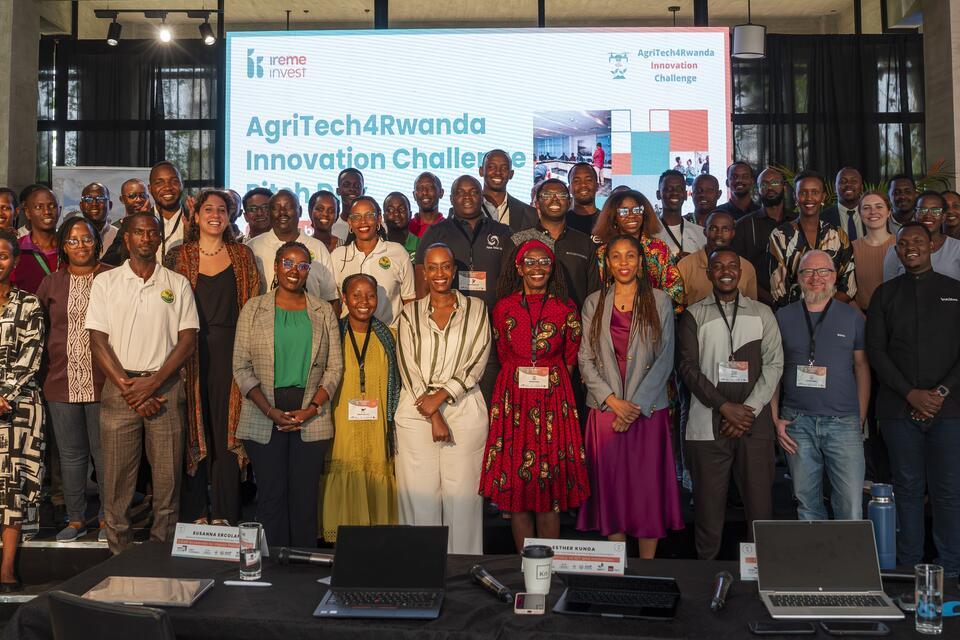
Rwanda has selected 12 youth-led agritech enterprises to advance to the bootcamp stage of the AYuTe Africa Challenge Rwanda 2026, highlighting the country’s growing commitment to technology-driven agricultural transformation and the role of innovation in strengthening food security, rural livelihoods and economic resilience. Organised by Heifer International Rwanda, the initiative aims to identify scalable agricultural technologies capable of addressing productivity, market access and climate-related challenges facing smallholder farmers, who remain central to Rwanda’s agricultural economy.
The finalists emerged from a competitive field of more than 1,200 applicants aged between 18 and 35, reflecting both the growing interest in agritech entrepreneurship and the increasing recognition of digital solutions as a critical component of Africa’s agricultural future. Following a rigorous evaluation and due diligence process, the selected innovators were chosen based on the potential impact, scalability and commercial viability of their proposed solutions.
 The five-day bootcamp, serves as a key development phase within the competition. Participants are receiving training in business strategy, financial planning, investor readiness and enterprise development, alongside mentorship from industry professionals and agricultural experts. The objective is not only to strengthen technical innovation but also to improve the ability of emerging enterprises to attract investment and achieve sustainable growth.
According to programme organisers, one of the primary challenges facing early-stage agritech businesses across Africa is the transition from innovation to commercial scale. While many entrepreneurs develop solutions with strong technical potential, securing capital, building market access and developing sustainable business models often remain significant barriers. The bootcamp seeks to address these gaps by preparing participants for long-term market participation rather than short-term competition success.
The initiative arrives at a time when agriculture remains a cornerstone of Rwanda’s economy, contributing significantly to employment and rural incomes. Yet the sector continues to face structural constraints, including fragmented value chains, limited access to finance, climate variability and productivity gaps. Technology-enabled solutions are increasingly viewed as essential tools for improving efficiency, strengthening resilience and enhancing food system performance.
One of the participating enterprises, AGRIRESEARCH UNGUKA LTD, focuses on providing farmers with advisory services covering seed selection, fertiliser application, pest management and profitability forecasting. Such services illustrate the broader shift towards data-driven agriculture, where digital platforms can help farmers make informed decisions, reduce production risks and improve yields.
The competition will culminate in a pitching event where participants present their business models before an independent panel. Five finalists will advance to the grand finale and compete for a share of a Rwf65 million prize fund, an increase from the previous year’s allocation. The expanded funding pool reflects growing confidence among development partners and investors in the potential of youth-led innovation to address agricultural challenges at scale.
Read also: https://agritechchallenge.org/projects/agritech4rwanda
Beyond Rwanda, the initiative reflects wider trends across Africa’s agricultural sector. Governments, investors and development institutions are increasingly supporting innovations in precision agriculture, digital advisory services, market linkage platforms and climate-smart farming technologies. These solutions are becoming increasingly important as African countries seek to meet rising food demand while adapting to climate pressures and improving resource efficiency.
The economic implications extend beyond agriculture itself. Successful agritech enterprises can contribute to employment creation, improved farmer incomes and stronger rural economies. They can also support broader development objectives by enhancing food security, reducing post-harvest losses and improving access to financial and market services. For countries with rapidly growing youth populations, innovation-driven agriculture offers opportunities to create productive employment while modernising a sector that remains central to economic development.
 The AYuTe Africa Challenge Rwanda 2026 therefore represents more than a start-up competition. It reflects a strategic effort to position innovation and entrepreneurship as drivers of agricultural transformation. As African countries continue to invest in technology-enabled development, programmes that strengthen the capacity of young innovators are becoming increasingly important in building resilient food systems and supporting long-term economic growth.
From a development perspective, Rwanda’s focus on agritech demonstrates how targeted investment in youth entrepreneurship can contribute to broader national objectives, including food security, rural development and economic diversification. The success of initiatives such as AYuTe will likely be measured not only by the number of start-ups supported, but by their ability to deliver practical solutions that improve agricultural productivity, strengthen value chains and create sustainable opportunities for farming communities across the continent.


