


As millions of Ethiopians headed to the polls on Monday in parliamentary and regional elections widely expected to reinforce Prime Minister Abiy Ahmed’s political mandate, a series of developments across Africa underscored the continent’s complex intersection of governance, public health, social accountability and economic resilience. From electoral processes in Ethiopia and Ebola response efforts in the Democratic Republic of Congo (DRC) to protests in Ireland over the death of a Congolese national and major regional events focused on education, agriculture and environmental sustainability, the developments illustrate the diverse challenges shaping Africa’s development trajectory in 2026.
Ethiopia’s elections represent one of the continent’s most significant political events this year. Approximately 50 million citizens were expected to participate in parliamentary and regional voting, with analysts anticipating a strong performance by Prime Minister Abiy Ahmed’s ruling party. However, the absence of voting in the Tigray region due to what electoral authorities described as “unfavourable conditions” highlights the continuing security and governance challenges facing Africa’s second-most populous nation.
The elections arrive at a critical period for Ethiopia’s economy. Following years of conflict, economic reforms and efforts to attract foreign investment, political stability remains closely linked to investor confidence, infrastructure financing and broader economic recovery. According to development economists, the credibility and inclusiveness of electoral processes can influence access to development financing, sovereign risk perceptions and long-term economic planning. The continued exclusion of some regions from political participation may therefore have implications beyond domestic politics, affecting perceptions of institutional stability across international markets.
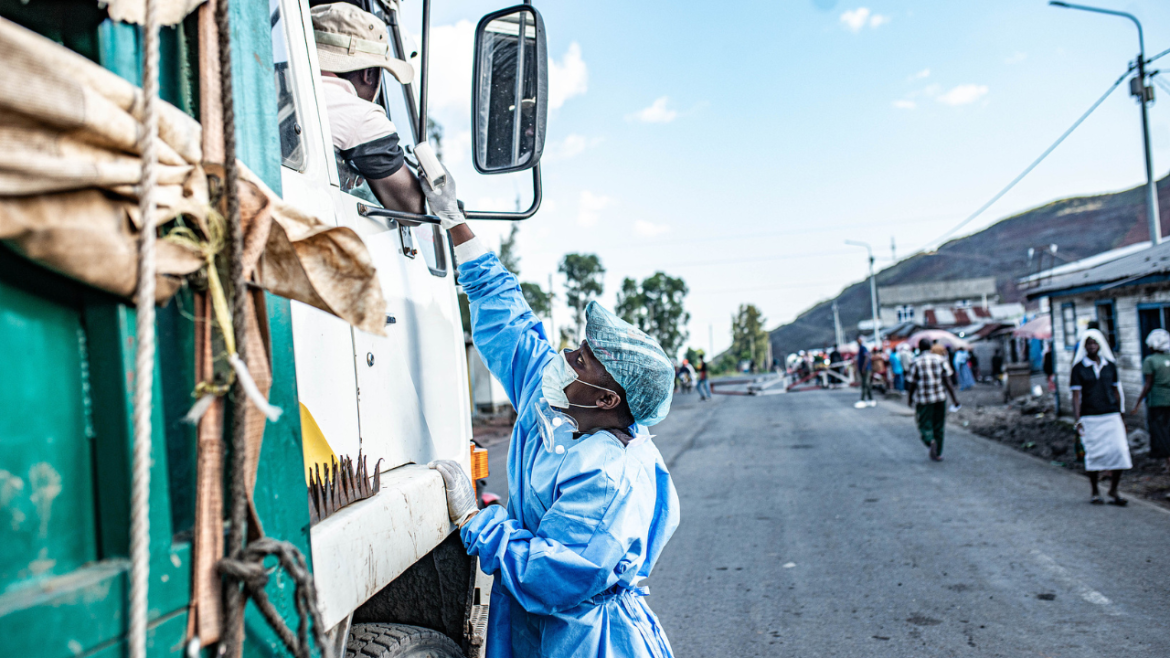
Meanwhile, in eastern DRC, health authorities reported encouraging signs in the fight against the ongoing outbreak of the rare Bundibugyo strain of Ebola. At least four healthcare workers who contracted the virus have recovered following symptomatic treatment and were presented publicly during a visit by World Health Organization (WHO) Director-General Tedros Adhanom Ghebreyesus to Bunia.
The recoveries provide a measure of optimism amid a broader public health emergency that continues to test the country’s health infrastructure. However, the outbreak also highlights the persistent challenges facing disease surveillance systems, emergency preparedness and healthcare financing across many African countries. Public health experts note that effective outbreak management increasingly depends not only on medical interventions but also on food security, community trust and the resilience of local health systems.
The DRC’s experience illustrates how health crises intersect with development priorities. Disease outbreaks can disrupt economic activity, strain public finances and divert resources from long-term investments in education, infrastructure and climate adaptation. For countries already managing fiscal pressures, recurring health emergencies can complicate development planning and undermine progress toward broader sustainability objectives.
Questions of governance and accountability also emerged beyond the African continent. In Dublin, protesters took to the streets demanding justice following the death of 35-year-old Congolese national Yves Sakila after an encounter with security officers. Footage circulating on social media has intensified scrutiny of the circumstances surrounding his death, prompting calls for transparency and accountability.
Read also: https://www.bbc.com/news/articles/cq6pv70e24no
The incident has resonated across African diaspora communities and renewed discussions about the treatment of African migrants abroad. Migration remains an important economic and social issue for many African countries, with remittances serving as a critical source of foreign exchange and household income. Consequently, the welfare and protection of African citizens living overseas carry implications that extend beyond individual cases, touching on diplomatic relations, labour mobility and broader discussions around human rights.
In a contrasting development, Haiti’s qualification for the FIFA World Cup has generated a rare moment of national celebration amid a prolonged humanitarian crisis. Under the leadership of coach Sébastien Migné, the Caribbean nation secured top position in its qualification group despite ongoing instability linked to gang violence and institutional challenges.
While Haiti lies outside Africa, the achievement has drawn attention across the Global South as an example of how sport can provide social cohesion and national visibility during periods of crisis. Similar dynamics are frequently observed across African countries, where sporting success often intersects with broader conversations around youth empowerment, social resilience and national identity.
Alongside these developments, several major continental events are focusing attention on Africa’s long-term development priorities. The 19th edition of eLearning Africa, taking place in Accra, Ghana, brings together policymakers, educators and technology experts to examine how digital tools can support skills development and educational transformation. As Africa’s youthful population continues to expand, investment in digital learning infrastructure is increasingly viewed as essential for economic competitiveness and workforce readiness.
 In N’Djamena, Chad, the Fourth Pan-African Conference on Seed Governance is addressing issues of agricultural resilience, genetic sovereignty and food security. Discussions around seed systems have become increasingly important as African countries seek to strengthen agricultural productivity while preserving indigenous biodiversity and adapting to climate-related risks. According to agricultural experts, access to locally adapted seed varieties remains fundamental to strengthening food systems and reducing vulnerability to external supply disruptions.
Meanwhile, Burundi is hosting the inaugural Africa on the Mapping Festival in Bujumbura, bringing together artists, photographers, filmmakers and digital creators from across the continent. The event reflects growing recognition of the creative economy as a contributor to employment, innovation and cultural exchange, sectors increasingly viewed as important components of diversified economic development.
These discussions converge as countries prepare to mark World Environment Day on June 5. Environmental sustainability remains closely connected to many of the continent’s core development challenges, including food security, energy access, water management and climate resilience. Governments across Africa continue to face the task of balancing economic growth ambitions with the need to protect ecosystems and strengthen adaptation to increasingly severe climate impacts.
 Taken together, the week’s developments reveal a continent navigating multiple transitions simultaneously. Electoral processes, public health emergencies, social accountability movements, educational innovation and environmental stewardship may appear distinct, but they are increasingly interconnected components of Africa’s development landscape.
The outcomes of these processes will influence not only political stability and economic performance but also the capacity of institutions to respond to the expectations of rapidly growing populations. For policymakers, investors and development partners, the central challenge remains how to strengthen governance, build resilience and expand opportunity in ways that support sustainable and inclusive growth across the continent.


