


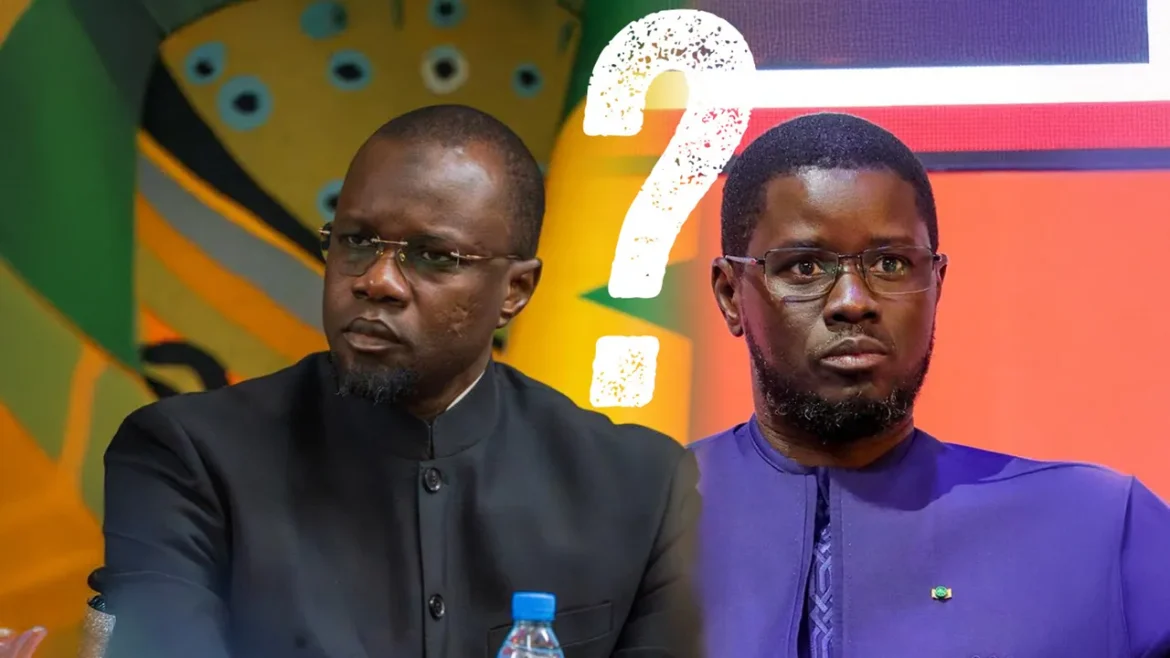
Senegal’s President Bassirou Diomaye Faye has unveiled a new 30-member cabinet that excludes representatives of the ruling PASTEF party, marking a significant escalation in the political rupture between the president and former Prime Minister Ousmane Sonko at a time when the country is seeking to restore fiscal credibility and revive negotiations with the International Monetary Fund (IMF).
The cabinet announcement, delivered in a televised address, comes less than two weeks after Faye dismissed Sonko from government, ending a political alliance that helped propel both leaders to power. The decision follows months of growing tensions over economic policy, particularly disagreements surrounding an IMF-backed debt restructuring programme designed to address Senegal’s worsening public finance challenges.
The latest developments have transformed what began as a policy dispute into a broader contest over political authority. Shortly after Sonko’s dismissal, lawmakers moved to reinstate him as a member of parliament and subsequently elected him speaker of the National Assembly, underscoring the continued influence of PASTEF within Senegal’s legislative institutions.
 The confrontation now places the executive and legislative branches on potentially divergent political paths. While President Faye has sought to consolidate his administration around a technocratic economic agenda, Sonko retains substantial support within parliament, creating uncertainty over the government’s ability to secure consensus on critical fiscal and economic reforms.
Last week, Faye appointed senior economist Ahmadou Al Aminou Mohamed Lo as prime minister, signalling a stronger emphasis on economic management as Senegal confronts one of the most significant debt challenges in its recent history. The appointment reflects growing pressure on the government to restore confidence among investors, development partners and international lenders following revelations that public debt figures had been significantly understated by the previous administration.
The debt disclosure has become a defining issue for Senegal’s economic outlook. According to government figures, the country’s debt burden reached approximately 132 per cent of gross domestic product by the end of 2024 after previously undisclosed liabilities were identified. The discovery prompted the IMF to suspend its $1.8 billion lending programme, creating additional pressure on public finances and delaying access to external financial support.
The suspension has implications that extend beyond macroeconomic indicators. IMF programmes often serve as signals of policy credibility for international investors, multilateral lenders and development finance institutions. Delays in restoring the programme could affect borrowing costs, infrastructure financing and broader investor sentiment at a time when Senegal is seeking to accelerate economic growth and manage rising fiscal obligations.
Sonko’s decision to keep PASTEF out of the new government further complicates the political landscape. In a statement published on social media, he cited unresolved disagreements with President Faye regarding the party’s future role in government. The move formalises a split within the political coalition that previously presented itself as a unified reform platform.
The timing is particularly sensitive given Senegal’s broader economic transition. The country is simultaneously managing fiscal consolidation efforts, preparations for renewed discussions with the IMF, and expectations linked to emerging oil and gas production. Policymakers face the challenge of balancing debt sustainability measures with public demands for economic relief, employment creation and improved public services.
For Senegal, political stability has historically been one of its strongest economic assets. The country has long distinguished itself within West Africa through relatively strong democratic institutions, predictable electoral processes and a stable investment environment. Prolonged tensions between the executive and parliament could test that reputation and introduce new uncertainties into economic decision-making.
The developments also carry broader significance for Africa. Across the continent, governments are increasingly navigating complex relationships between fiscal reform, sovereign debt management and domestic political pressures. As public debt levels rise in several African economies, leaders face growing demands to reconcile international financing requirements with political expectations at home.
According to regional economists, the Senegal case illustrates how debt sustainability challenges are becoming closely intertwined with governance questions. Fiscal reforms often require difficult political choices, and the success of adjustment programmes frequently depends on institutional cohesion and public trust.
Senegal is expected to resume discussions with the IMF during the week beginning June 8, a process that could provide greater clarity on the country’s fiscal recovery strategy. However, the effectiveness of those negotiations may depend not only on economic measures but also on the government’s ability to navigate an increasingly fragmented political environment.
 For citizens, businesses and development partners, the central question is whether Senegal can maintain institutional stability while implementing the reforms necessary to address its debt burden. The answer will have implications for economic growth, public investment and the country’s capacity to finance long-term development priorities.
As one of West Africa’s most closely watched economies enters a new phase of political uncertainty, the interaction between governance, fiscal policy and economic reform is likely to shape not only Senegal’s immediate recovery prospects but also broader debates about development financing and democratic accountability across the continent.


