


When Fatima Bio speaks about escaping an arranged marriage as a teenager during Sierra Leone’s Civil War, she frames it not only as a personal turning point but as the foundation of her political and social activism. Nearly three decades later, the former asylum seeker in the United Kingdom has become one of West Africa’s most visible and polarising first ladies, using her public platform to campaign against child marriage, advocate for girls’ education and challenge traditional expectations surrounding political leadership and women’s roles in public life.
Fatima Bio, wife of Sierra Leonean President Julius Maada Bio, has emerged as a prominent political figure in her own right since her husband assumed office in 2018. Her activism gained renewed attention following Sierra Leone’s 2024 law banning child marriage, legislation shaped in part by years of campaigning around adolescent girls’ rights, maternal health and access to education. According to government and international development agencies, Sierra Leone has historically recorded some of the world’s highest rates of child marriage and teenage pregnancy, trends closely linked to poverty, limited school access and weak social protection systems.
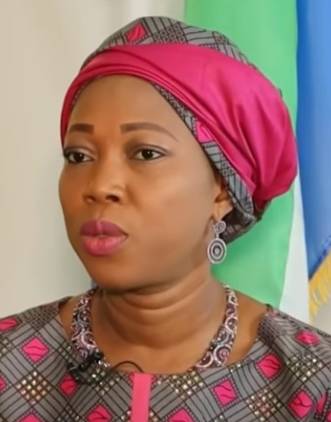
Bio says her own experiences shaped her commitment to the issue. Born in Sierra Leone’s Kano district, she was expected to marry a much older man while still a teenager before fleeing to Britain during the civil war in the mid 1990s. In London, she rebuilt her life as an actress and media personality before meeting Julius Bio, who later returned to Sierra Leonean politics after a military and political career shaped by the country’s post-war transition.
Her rise has coincided with broader debates across Africa about the evolving political influence of first ladies, particularly in countries where formal governance institutions often intersect with personality-driven politics and public activism. Unlike traditionally ceremonial roles associated with presidential spouses, Fatima Bio has become deeply involved in political campaigning, social policy advocacy and direct public engagement through social media, where she commands significant public visibility among younger Sierra Leoneans.
Supporters view her as a symbol of social mobility and women’s empowerment in a country where many girls still face barriers to education, reproductive healthcare and economic opportunity. Critics, however, argue that her growing political profile risks blurring the boundaries between elected office and informal political influence. Opposition lawmakers and some members of Sierra Leone’s ruling Sierra Leone People’s Party have questioned her increasingly vocal role in governance debates, particularly following public interventions on parliamentary disputes and internal party matters.
Her activism has also drawn international attention. Fatima Bio currently serves as president of the Organization of African First Ladies for Development (OAFLAD), a platform focused on health, education and gender-related initiatives across the continent. She has frequently campaigned on menstrual health and girls’ education, issues that remain significant development concerns in Sierra Leone and across sub-Saharan Africa. According to UNICEF, inadequate sanitation infrastructure and limited access to menstrual hygiene products continue to contribute to school absenteeism among girls in several African countries, affecting long-term educational outcomes and workforce participation.
Yet her public image has also been shaped by controversy. Questions surrounding her retention of a council house tenancy in London while serving as Sierra Leone’s first lady have generated criticism in British and Sierra Leonean media, particularly amid housing shortages in the United Kingdom. Additional scrutiny has emerged over allegations linking individuals associated with international drug trafficking networks to public events attended by Sierra Leone’s first family, claims she has denied.
Read more: https://www.bbc.com/news/articles/cvgzpz7zyd4o
These controversies unfold against the backdrop of Sierra Leone’s broader economic and governance challenges. Despite substantial mineral wealth, including diamonds and other natural resources, the country continues to struggle with high poverty rates, unemployment and fiscal vulnerability. According to international financial institutions, Sierra Leone remains heavily exposed to external shocks linked to commodity prices, food imports and fuel costs. Recovery from the Ebola epidemic, the COVID-19 pandemic and inflationary pressures triggered by global supply disruptions has placed additional strain on households and public finances.

The country’s political landscape also remains sensitive following contested elections in 2023 and recurring tensions over governance and economic management. Rising living costs and youth unemployment have fuelled periodic protests in recent years, reflecting wider frustrations shared across several African economies confronting debt pressures, inflation and limited formal employment opportunities for rapidly growing populations.
Within this context, Fatima Bio’s prominence reflects more than personal celebrity. Analysts say her visibility illustrates how questions of gender, social mobility and political influence are increasingly intersecting in African public life. Across the continent, younger populations connected through digital platforms are reshaping political communication, allowing public figures outside formal office to exercise growing influence over national debates.
Her political future remains uncertain. While speculation persists that she could eventually pursue elected office after President Bio leaves office at the end of his constitutional term in 2028, she has publicly avoided making definitive political commitments. Even so, her trajectory from civil war refugee to one of Africa’s most recognisable First Ladies highlight broader shifts underway in how political authority, advocacy and public leadership are evolving across the continent.


