


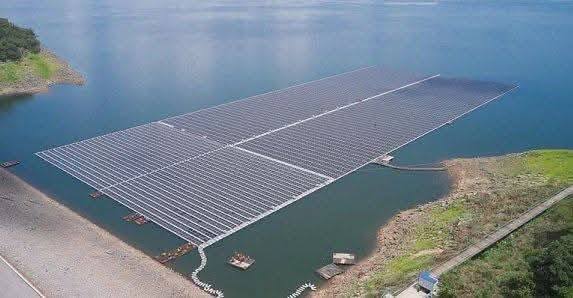
Ghana’s transition towards a more diversified and climate-resilient electricity system has received another boost after Chinese utility Shenzhen Energy announced plans to invest US$34 million in a new 50-megawatt (MW) photovoltaic solar power plant in the country’s Savannah Region. The project, to be developed through the company’s subsidiary Sunon Asogli Power, is expected to strengthen Ghana’s renewable energy capacity as the government accelerates efforts to achieve its target of installing 3,000MW of solar power by 2030 while reducing dependence on thermal generation and improving long-term energy security.
According to details reported by Reuters, the proposed solar facility will be located in the Central Gonja District and forms part of Shenzhen Energy’s broader strategy to expand its investment footprint in Ghana’s electricity sector. Although construction timelines have not yet been disclosed, the investment represents another significant contribution to a renewable energy market that has expanded steadily over the past decade but still accounts for less than five per cent of the country’s electricity generation.
The announcement comes as Ghana continues to position renewable energy as a cornerstone of its National Energy Transition Framework, which seeks to diversify the country’s energy mix, reduce greenhouse gas emissions and strengthen electricity supply in one of West Africa’s fastest-growing economies.
According to the International Renewable Energy Agency (IRENA), Ghana’s installed solar capacity increased from just 37MW in 2016 to approximately 186MW by 2025, reflecting sustained public and private investment in photovoltaic infrastructure. Despite this progress, hydropower and thermal generation continue to dominate the country’s electricity system, leaving considerable room for further renewable energy expansion.
The International Energy Agency (IEA) notes that electricity demand across sub-Saharan Africa is expected to grow rapidly over the coming decades due to population growth, urbanisation, industrialisation and digitalisation. For Ghana, expanding renewable energy capacity is increasingly viewed not only as an environmental priority but also as an economic strategy capable of strengthening energy security, reducing fuel import costs and supporting industrial competitiveness.
The new Shenzhen Energy project builds upon a series of major renewable energy investments launched across Ghana in recent years. In November 2025, construction began on the 200MW Norbert Anku Solar Park within the Dawa Special Economic Zone in the Greater Accra Region. Developed by Solar for Industries Limited, a subsidiary of Ghanaian conglomerate LMI Holdings, the project is expected to become the country’s largest photovoltaic power facility once completed.
The Norbert Anku development forms part of an ambitious long-term programme intended to expand to one gigawatt (GW) of solar generation by 2032. Construction is being implemented in two 100MW phases, with the first scheduled for completion in December 2026 and the second expected approximately nine months later.
Beyond utility-scale projects, Ghana has adopted a diversified approach to renewable energy deployment by simultaneously promoting decentralised electricity solutions. According to the Ministry of Energy and Green Transition, expanding rooftop solar systems, mini-grids and off-grid photovoltaic installations has become an important component of improving electricity access in rural and underserved communities while reducing pressure on the national grid.
In October 2025, the government launched an estimated US$200 million rooftop solar initiative designed to finance approximately 4,000 photovoltaic installations with a combined capacity of 137MW. The programme is expected to support households, businesses and public institutions in reducing electricity costs while accelerating distributed renewable energy adoption.
Industrial rooftop solar is also gaining momentum. In July 2024, Helios Solar Company, another subsidiary of LMI Holdings, commenced construction of a US$17 million rooftop photovoltaic installation at the Tema Free Zones Enclave. Upon completion, the 16.8MW facility is expected to become Africa’s largest industrial rooftop solar installation and reduce annual carbon emissions at the industrial complex by more than 10,000 metric tonnes.
These projects collectively illustrate Ghana’s evolving renewable energy strategy, which increasingly combines utility-scale generation with decentralised systems capable of supporting both industrial growth and universal electricity access.
According to the World Bank, Ghana has one of the highest electricity access rates in sub-Saharan Africa, with national access approaching 90% in 2024. Nevertheless, ensuring reliable and affordable electricity remains a challenge as rising demand places increasing pressure on existing generation and transmission infrastructure.
The government’s National Energy Transition Framework, published jointly by the Ministry of Energy and the Energy Commission in 2023, identifies renewable energy as a critical component of long-term economic transformation. The framework estimates that Ghana possesses approximately 35,000MW of technically exploitable solar energy potential, highlighting the considerable opportunity for future investment.
For investors such as Shenzhen Energy, Ghana offers an attractive renewable energy market supported by relatively strong electricity access, favourable solar resources, improving regulatory frameworks and growing industrial electricity demand. Chinese companies have become increasingly active participants in Africa’s energy infrastructure, financing and constructing projects spanning hydropower, solar energy, transmission networks and battery storage across multiple countries.
According to the African Development Bank (AfDB), expanding renewable energy generation across Africa will require significantly higher levels of private investment alongside continued public sector support. The continent faces an annual infrastructure financing gap estimated at between US$130 billion and US$170 billion, with electricity infrastructure representing one of its largest investment priorities.
Solar energy is expected to play an increasingly central role in addressing this challenge. IRENA estimates that the cost of utility-scale solar photovoltaic electricity has declined by nearly 90% globally over the past decade, making solar one of the most competitive sources of new electricity generation. Combined with declining battery storage costs, these technological improvements are enabling countries to expand renewable generation while improving grid reliability.
For Ghana, the Shenzhen Energy investment also carries wider implications for industrial development and climate resilience. Reducing dependence on imported fossil fuels can strengthen macroeconomic stability by lowering exposure to volatile international energy prices, while expanding renewable generation contributes to the country’s commitments under the Paris Agreement and supports broader regional efforts to build low-carbon economies.
The project also reinforces West Africa’s growing role in Africa’s renewable energy transition. Alongside initiatives in Côte d’Ivoire, Senegal, Nigeria and Burkina Faso, Ghana’s expanding solar portfolio demonstrates how countries across the region are increasingly integrating renewable energy into national development strategies that balance economic growth, electricity access and environmental sustainability.
As Ghana moves towards its ambitious target of installing 3,000MW of solar capacity by 2030, investments such as Shenzhen Energy’s Savannah Region project are likely to become increasingly important in strengthening generation capacity, attracting foreign direct investment and supporting a more diversified electricity system. While significant investment will still be required to fully realise the country’s renewable energy ambitions, the latest project highlights growing international confidence in Ghana’s energy market and reinforces the country’s position as one of West Africa’s emerging leaders in clean energy development.


