


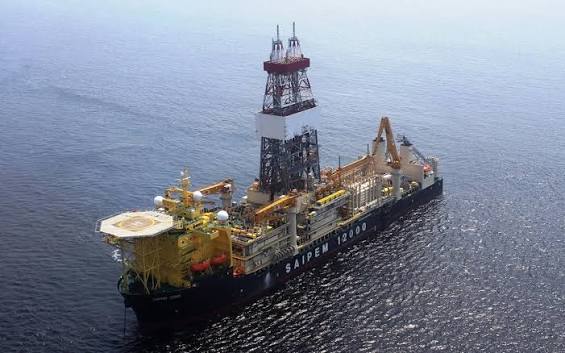
Italian energy major Eni has awarded engineering company Saipem a contract worth approximately $260 million to drill additional wells at Côte d’Ivoire’s Baleine offshore oil field, marking another major milestone in the country’s ambition to become one of West Africa’s fastest-growing hydrocarbon producers while strengthening domestic energy security. The contract, announced on 22 July 2026, forms part of the third development phase of the Baleine project, which is expected to increase crude oil production to around 150,000 barrels per day and significantly expand natural gas supplies for Côte d’Ivoire’s electricity sector and industrial economy.
The agreement comes as African oil and gas producers increasingly pursue investments that combine export revenues with domestic energy development. While hydrocarbons remain central to many African economies, governments are placing greater emphasis on ensuring that new upstream developments also contribute to industrialisation, electricity access and economic diversification rather than serving export markets alone.
According to Saipem, the contract will see its Santorini offshore drilling vessel deployed off Côte d’Ivoire’s coast from early 2027. The agreement includes a firm long-term commitment with options for additional drilling activities and the potential redeployment of the vessel to neighbouring West African markets, providing operational flexibility as offshore exploration continues to expand across the Gulf of Guinea.
The drilling campaign supports Phase Three of the Baleine development programme, which received a final investment decision (FID) of approximately $4 billion from Eni in May 2026. The investment represents one of the largest upstream energy commitments currently underway in Africa and reflects growing confidence in Côte d’Ivoire’s offshore petroleum potential.
Discovered in 2021 on Block CI-501 in the eastern offshore basin, Baleine rapidly emerged as Côte d’Ivoire’s largest oil discovery and among the most significant hydrocarbon finds in West Africa in recent years. Commercial production commenced in August 2023 using a temporary floating production system, allowing the project to begin generating revenues while permanent infrastructure was being developed.
Since production began, Baleine has expanded at an unusually rapid pace. Output has increased from approximately 20,000 barrels per day during its initial production phase to around 60,000 barrels per day, according to project updates released by Eni. The latest drilling programme is expected to provide the additional production wells required to support the next phase of expansion.
Alongside the drilling programme, Eni is progressing construction of a permanent floating production unit that will replace temporary production facilities currently operating at the field. Engineering company Altera Infrastructure was awarded the contract to deliver the offshore production platform, which will enable substantially higher oil production while significantly increasing natural gas processing capacity.
According to project information, the new floating production facility will process approximately 160 million cubic feet of natural gas per day, with all gas supplies earmarked for Côte d’Ivoire’s domestic market. This distinguishes Baleine from many conventional offshore developments, where associated gas is frequently exported or reinjected rather than utilised domestically.
The additional gas volumes are expected to play an increasingly important role in supporting Côte d’Ivoire’s electricity generation. Natural gas already fuels the majority of the country’s thermal power plants, which complement hydropower generation and enable the country to maintain one of the most reliable electricity systems in West Africa.
According to Côte d’Ivoire’s 2025 National Energy Compact, the government aims to achieve universal electricity access by 2030, building on an electrification rate of approximately 64% recorded at the end of 2023. Expanding domestic gas production could improve fuel security for thermal generation while reducing dependence on imported petroleum products and supporting continued electricity network expansion.
Beyond electricity, greater domestic gas availability could also strengthen industrial competitiveness by providing reliable energy for manufacturing, agro-processing, mining and other energy-intensive sectors. Affordable and stable energy supplies remain among the key determinants of industrial growth across many African economies seeking to increase local value addition.
The Baleine development also illustrates how African upstream projects are increasingly being structured to deliver broader economic outcomes beyond crude exports. Governments are placing greater emphasis on local content requirements, employment creation, domestic energy supply and infrastructure development when negotiating investment agreements with international energy companies.
According to the International Energy Agency (IEA), natural gas is expected to remain an important transition fuel for many emerging economies over the coming decades, particularly where it can replace higher-emission fuels while supporting the integration of renewable energy into electricity systems. In Africa, where electricity demand continues to grow rapidly alongside urbanisation and industrialisation, domestic gas production is increasingly viewed as part of broader energy transition strategies rather than an alternative to renewable energy investment.
The Baleine project also strengthens Côte d’Ivoire’s position within the Gulf of Guinea, where several countries—including Ghana, Nigeria, Angola and Senegal—are expanding offshore production while seeking to balance hydrocarbon development with climate commitments and economic diversification.
For international investors, continued investment in Baleine demonstrates that selected African upstream projects remain commercially attractive despite evolving global energy markets. Long-term demand for reliable energy supplies, combined with relatively competitive production costs and growing domestic energy demand, continues to attract capital into strategically important projects.
At the same time, large-scale investments such as Baleine underscore the importance of integrating resource development with national development objectives. According to the African Development Bank (AfDB), Africa’s energy transition will require significant investment across both conventional and renewable energy systems to meet rising electricity demand while improving resilience and supporting economic transformation.
The latest drilling contract therefore represents more than another upstream engineering agreement. It signals continued confidence in Côte d’Ivoire’s energy sector while reinforcing the country’s ambition to leverage its offshore resources to strengthen fiscal revenues, expand electricity access and accelerate industrial development.
As Phase Three progresses towards its production target of approximately 150,000 barrels per day, Baleine is expected to become one of West Africa’s most significant integrated oil and gas developments. Its success will be measured not only by increased crude output but also by how effectively its domestic gas supplies contribute to powering industries, supporting universal electrification and strengthening long-term economic resilience in one of Africa’s fastest-growing economies.


