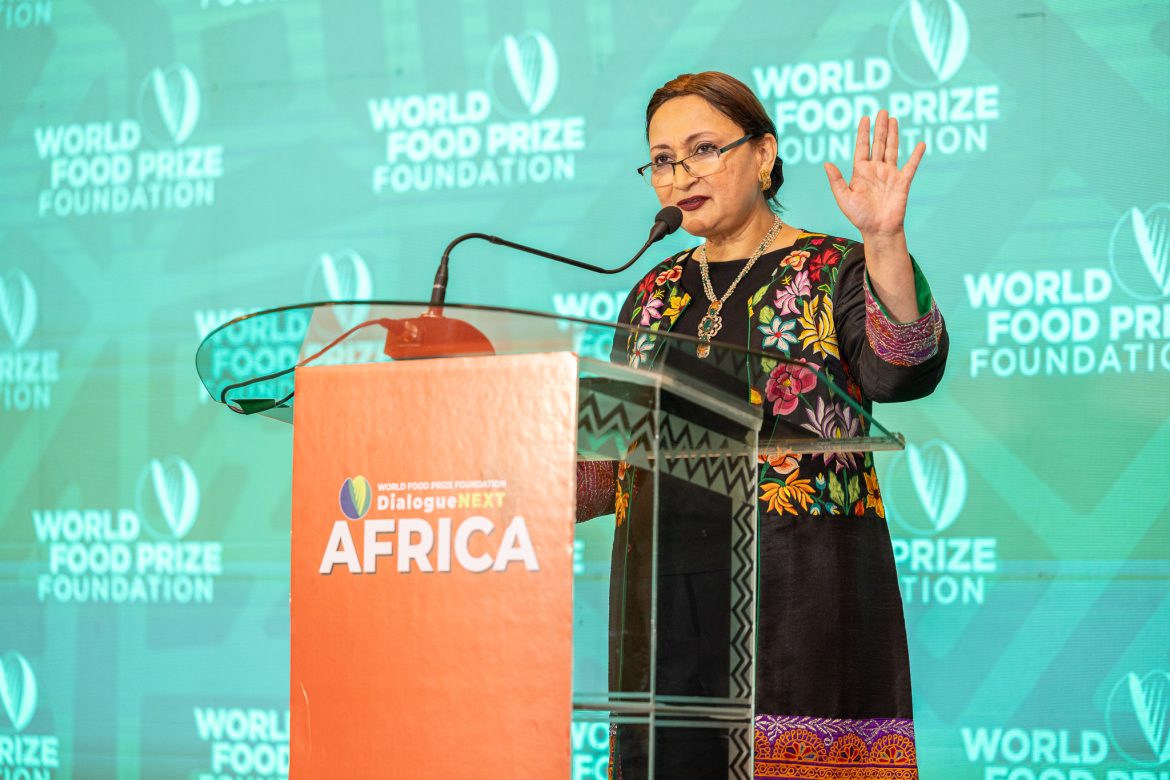
Africa’s agricultural future took centre stage in Nairobi this week as policymakers, scientists, agripreneurs, development institutions and farmers convened for DialogueNEXT in Africa, a high-level forum aimed at accelerating agricultural innovation and strengthening food systems on a continent expected to account for more than one-quarter of the world’s population by 2050. Hosted by the World Food Prize Foundation, the gathering seeks to advance practical solutions that can increase agricultural productivity, improve climate resilience and attract greater investment into one of Africa’s most strategically important sectors.
Held under the theme “Born to Feed the Future,” the conference brings together senior government officials, research institutions, private sector leaders and development partners at a time when Africa faces mounting pressure to transform its agricultural systems. Rising populations, rapid urbanisation, climate change and persistent food insecurity are increasing the urgency of investing in technologies, policies and business models capable of delivering sustainable agricultural growth.
Among the senior government representatives participating are Kenya’s Cabinet Secretary for Agriculture and Livestock Development, Mutahi Kagwe, and Madagascar’s Minister of Livestock, Dr. Riana Nantenaina Randrianomenjanahary. Their participation reflects growing recognition among African governments that agricultural transformation is central not only to food security but also to economic growth, employment, industrialisation and regional trade. The discussions span a broad range of priorities shaping the future of African agriculture. Sessions are examining regulatory reforms needed to encourage agricultural investment, innovations designed around the needs of smallholder farmers, strategies for improving harvest productivity, strengthening nutrition outcomes and building more resilient agricultural value chains. A ministerial dialogue is expected to address policy and regulatory barriers that continue to limit innovation and private investment across the sector, while dedicated discussions on agripreneurship are highlighting the growing role of African entrepreneurs in developing locally relevant agricultural technologies.
The conference reflects an important shift in the global conversation surrounding African agriculture. Rather than positioning the continent solely as a recipient of external solutions, DialogueNEXT emphasises Africa’s growing capacity to generate its own innovations through collaboration between farmers, researchers, technology companies, financial institutions and policymakers. This narrative aligns with broader trends across the continent, where digital agriculture, precision farming, climate-smart production systems, biotechnology and data-driven advisory services are increasingly reshaping agricultural production. Mobile technologies, artificial intelligence, satellite monitoring and digital financial services are enabling farmers to improve productivity, manage climate risks and access new markets, creating opportunities for more resilient and commercially viable farming systems.
DialogueNEXT in Africa also represents the latest chapter in the World Food Prize Foundation’s international engagement programme. Following previous editions in Mexico in 2024 and India in 2025, the series now arrives in Africa, continuing the legacy of Nobel Peace Prize laureate Dr. Norman E. Borlaug, whose contributions to global agricultural productivity transformed food production in several developing regions.
“It is an honor to hold this conference in Africa, four decades after Dr. Borlaug made his first major visit to the continent in 1984,”said Mashal Husain, President of the World Food Prize Foundation. “Borlaug came with a simple but powerful conviction: that science in the hands of farmers could defeat hunger. That mission is unfinished and more urgent than ever as Africa’s food systems must feed a young, growing and increasingly urban population.”
The timing of the conference is particularly significant given the mounting pressures confronting African food systems. Climate change continues to increase the frequency and severity of droughts, floods and extreme weather events that disrupt agricultural production across multiple regions. At the same time, global supply chain disruptions, rising input costs and geopolitical instability have reinforced concerns over food affordability and national food security. According to climate projections referenced during the conference, crop yields across sub-Saharan Africa could decline by approximately 10% under a global warming scenario of 2°C. Should temperatures rise beyond that threshold, yield reductions could reach as much as 20%, threatening livelihoods, increasing food imports and placing additional pressure on public finances.
The emergence of a strong El Niño weather pattern further heightens these concerns. Forecasts indicate a high probability that El Niño conditions will persist into the southern hemisphere summer, potentially affecting rainfall patterns, agricultural production and food availability across several African countries. Such climate variability underscores the importance of strengthening adaptive farming practices, investing in resilient crop varieties and improving climate information services for farmers.
Agriculture remains one of Africa’s largest employers, supporting the livelihoods of more than half of the continent’s population while contributing significantly to national GDPs across many economies. Yet despite its strategic importance, the sector continues to receive relatively limited investment compared with its potential to drive inclusive economic growth, industrial development and export expansion. Former President of the African Development Bank Group and 2017 World Food Prize Laureate Akinwumi Adesina argued that increasing investment in African agriculture is essential for unlocking this potential.
“Hosting this conversation in Africa is not just symbolic, but necessary. This continent is home to some of the world’s most dynamic agricultural systems and most resilient farmers, yet it remains chronically underinvested in,” Adesina said.
“The challenges climate shocks, fragile supply chains and growing populations are real, but so are the solutions, which are increasingly being developed by African scientists, farmers and entrepreneurs.”
His remarks reflect a growing consensus among development institutions that Africa possesses many of the ingredients required to become a global agricultural powerhouse. The continent holds approximately 60% of the world’s remaining uncultivated arable land, a rapidly expanding consumer market and an increasingly youthful entrepreneurial population capable of driving agricultural innovation. However, realising this potential will require sustained investments in rural infrastructure, agricultural research, irrigation systems, mechanisation, digital technologies, access to finance and regional market integration. The African Continental Free Trade Area (AfCFTA) also presents opportunities to strengthen regional agricultural value chains by reducing trade barriers and expanding market access for African producers.
The discussions taking place in Nairobi are expected to inform deliberations at the Norman E. Borlaug International Dialogue, scheduled to take place in Des Moines, Iowa, from 20–22 October 2026, where global agricultural leaders will continue examining pathways towards more sustainable and resilient food systems.
https://www.aecweek-registration.com/2026/
For Africa, DialogueNEXT represents more than another international conference. It signals an evolving recognition that the continent’s food security challenges and opportunities must increasingly be addressed through African-led innovation, stronger institutions and strategic public-private partnerships. As governments seek to balance food security, climate resilience and economic development, the conversations emerging from Nairobi are likely to shape policy priorities and investment decisions well beyond the conference itself.
Ultimately, Africa’s ability to feed its growing population will depend not only on expanding agricultural production but also on building smarter, more resilient and more inclusive food systems. The innovations, partnerships and policy reforms discussed at DialogueNEXT will therefore play an increasingly important role in determining how the continent responds to one of its defining development challenges.