


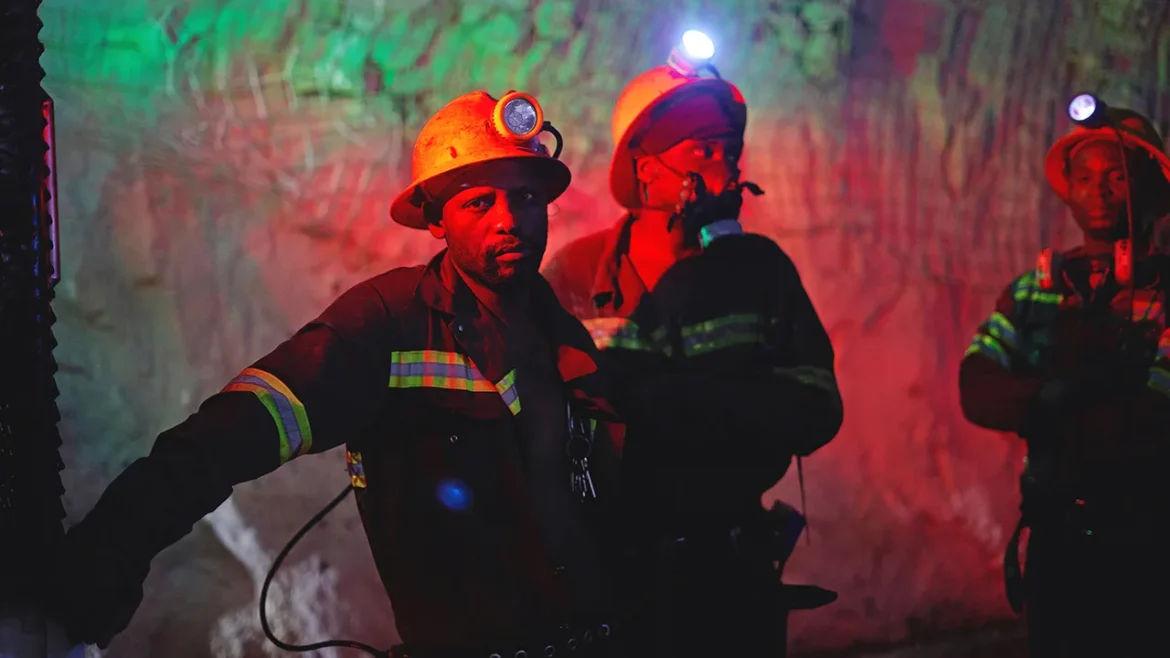
The United States may have limited scope to match China’s financial reach in Africa’s critical minerals sector, but it retains another potential advantage: the ability to offer investment partnerships built around transparency, traceability and environmental and social safeguards. As Washington seeks to diversify supplies of cobalt, lithium, graphite, manganese and other minerals essential to clean-energy technologies, advanced manufacturing and defence, African governments are increasingly weighing not only the capital available to develop deposits but also the environmental, labour, and governance consequences of extraction.
Africa holds an estimated 30% of the world’s critical mineral reserves, according to figures cited by the Brookings Institution and the U.S. Chamber of Commerce. The concentration of minerals needed for batteries, renewable-energy equipment, semiconductors and other strategic technologies has placed countries including the Democratic Republic of Congo, Zambia, Zimbabwe and Mozambique at the centre of a widening competition between China, the United States, Europe and other external powers seeking to secure supply chains.
China has established a substantial position through mining investment, infrastructure development and processing capacity, making it difficult for Washington to compete simply by offering more money. Chinese companies have built relationships across mineral-producing economies over several decades, while Beijing has developed processing capabilities that extend well beyond the extraction of ore. For the United States, attempting to reproduce that model could require significant financial commitments while offering no guarantee of quickly narrowing the gap.
A different proposition is therefore emerging around responsible sourcing and ESG compliance. U.S.-backed initiatives such as the Minerals Investment Network for Vital Energy Security and Transition, or MINVEST, the Minerals Security Partnership and the Blue Dot Network have sought to link investment with environmental protection, community consultation, labour safeguards, transparency and commercially viable infrastructure.
The strategic value of such standards is changing as African governments confront the consequences of poorly managed resource extraction. Environmental degradation, unsafe working conditions, displacement of communities and limited local value addition have long complicated the development impact of mineral wealth. The question for governments is increasingly not simply how quickly a mine can be developed, but whether extraction can generate durable economic benefits without creating environmental liabilities that outlast the investment cycle.
The Democratic Republic of Congo provides one example of the growing complexity. The country controls some of the world’s most significant cobalt resources and has sought to diversify its mineral partnerships as it attempts to reduce excessive dependence on a single external market or group of investors. Such diversification creates an opening for Western investors, but it also places greater emphasis on whether alternative partnerships can deliver commercially competitive financing while meeting governance and environmental expectations.
Concerns over environmental performance have also become part of the debate surrounding Chinese mining operations in Africa. Research cited in the article by the Atlantic Council and the Keough School of Global Affairs has documented concerns over environmental and safety practices associated with some Chinese mining operations. The reported contamination incidents involving mining waste in Zambia and the Democratic Republic of Congo have further highlighted the potential costs of weak environmental controls, although individual cases should not be treated as representative of every Chinese mining operation on the continent.
Labour conditions remain another area of scrutiny. Earlier investigations by Amnesty International into cobalt supply chains in the Democratic Republic of Congo documented allegations of child labour and inadequate protective equipment at artisanal mining sites linked to international supply chains. Such findings have contributed to pressure from consumers, investors and governments for greater visibility over where strategic minerals originate and under what conditions they are produced.
For African countries, traceability is becoming increasingly important as mineral supply chains become subject to more stringent international requirements. Battery manufacturers, automobile companies and technology firms face growing pressure to demonstrate that the minerals entering their products are not associated with forced labour, severe environmental damage or opaque business practices. African producers that can demonstrate credible traceability and compliance could therefore gain access to markets and financing that increasingly incorporate environmental and social risk into investment decisions.
This does not mean ESG requirements are without costs. Smaller mining companies and African suppliers may face significant expenses in collecting environmental data, conducting impact assessments, improving worker protections and establishing traceability systems. If standards are designed without adequate financing or technical assistance, compliance requirements could exclude smaller domestic firms and reinforce the dominance of large international operators.
That tension makes project preparation and institutional capacity central to the critical minerals debate. African governments need regulators capable of monitoring environmental performance, licensing systems that are transparent, credible revenue-management frameworks and institutions able to enforce labour and community protections. Investors, meanwhile, need predictable rules and sufficient information to assess environmental and social risks before committing capital.
The United States has mechanisms through which it can offer such support. The U.S. International Development Finance Corporation requires projects it finances to comply with environmental and social safeguards under its Environmental and Social Policy and Procedures. Environmental and social impact assessments form part of the institution’s investment and monitoring framework, providing a basis for identifying and managing risks associated with major projects.
The policy direction in Washington remains complicated, however. The current U.S. administration has placed less emphasis on ESG domestically and has rolled back or reconsidered some policies associated with climate and energy transition. That creates uncertainty over how prominently ESG will feature in the country’s broader economic diplomacy. Yet environmental and social safeguards attached to development-finance operations continue to provide a practical channel through which responsible investment principles can influence overseas projects.
For Africa, the competition between external powers could ultimately provide leverage if governments use it to negotiate stronger terms for mineral development. Competition can create opportunities to secure infrastructure, processing capacity, technology transfer and financing, but the benefits depend on the quality of contracts and the ability of governments to enforce them. Without stronger local institutions, increased competition for mineral assets could simply reproduce a familiar pattern in which African economies export raw materials while higher-value processing and manufacturing take place elsewhere.
The stakes are particularly high because critical minerals are central to the global energy transition. Countries such as Zimbabwe, Zambia and the Democratic Republic of Congo possess resources that could support industrial development, but extraction alone does not guarantee diversification. Local processing, skills development, reliable power, transport infrastructure and transparent management of mineral revenues will determine how much value remains in producing economies.
The United States therefore faces a strategic choice in Africa. It can attempt to compete directly with China’s financial model, or position responsible investment, transparent governance and supply-chain traceability as part of a broader proposition to African governments. The latter approach would not eliminate the importance of competitive financing, but it could differentiate U.S. partnerships in markets where communities and policymakers are increasingly focused on the long-term consequences of extraction.
 For African governments, the more consequential question is how to turn competition among global powers into better development outcomes. Critical minerals can provide export earnings and attract investment, but they can also deepen environmental pressures, local conflict and economic dependence when governance is weak. The credibility of any external partner will ultimately be measured not by the size of its announcements but by the quality of projects it helps deliver, the value retained locally and the protections available to communities affected by extraction.
As the critical minerals race accelerates, trust may therefore become an economic asset in its own right. For Washington, credible ESG safeguards and transparent supply chains could offer a means of establishing partnerships that are distinct from China’s established financing and infrastructure model. For Africa, the opportunity lies in using that competition to demand investment that combines mineral development with environmental protection, local value addition and stronger institutions.


