


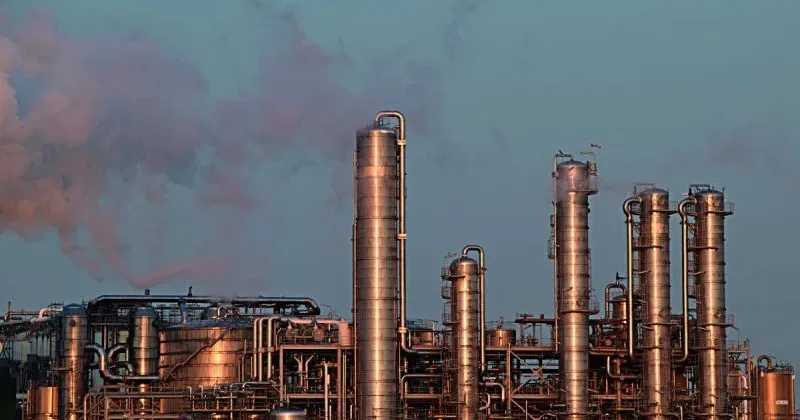
Greenpeace has called on the Kenyan government to suspend regulatory approvals for the proposed Dangote Group oil refinery in Lamu, arguing that the project should not proceed until an independent environmental and social impact assessment (ESIA) is completed, published and subjected to comprehensive public consultation. The appeal, issued on 14 July, marks the latest development in a growing debate over the future of large-scale fossil fuel infrastructure in East Africa, where governments are balancing economic development, energy security and industrialisation against increasing environmental scrutiny and evolving global climate commitments. While the refinery has received strong political backing from the Kenyan government, environmental organisations are raising concerns over its potential ecological, economic and social impacts, particularly within Lamu’s environmentally sensitive coastal ecosystem.
The proposed refinery represents one of the most significant downstream petroleum investments currently under consideration in Kenya. If developed, it would strengthen domestic refining capacity, reduce dependence on imported refined petroleum products and potentially position Kenya as a regional energy processing hub serving East African markets. The project also aligns with broader efforts to expand industrial infrastructure under Kenya’s long-term economic development agenda.
However, its location in Lamu County, an area internationally recognised for its rich marine biodiversity and cultural heritage, has placed environmental considerations at the centre of public debate. In its statement, Greenpeace Africa urged Kenyan authorities to immediately halt all administrative approvals relating to the project until an independent environmental and social assessment is undertaken and its findings made publicly available. The organisation further called for extensive consultation with communities expected to be affected by the development, arguing that meaningful stakeholder engagement should precede any regulatory decisions.
According to Sherelee Odayar, Oil and Gas Campaign Lead at Greenpeace Africa, the project presents significant environmental risks to one of East Africa’s most ecologically important coastal regions.
“This project threatens to damage one of East Africa’s most fragile coastal ecosystems while locking Kenya into a risky fossil fuel future,” Odayar said.
Greenpeace argues that refinery development could increase the risk of habitat degradation affecting mangrove forests, coral reefs and seagrass ecosystems, while raising concerns over potential pollution, industrial emissions and the possibility of oil spills associated with petroleum processing and transport.
Lamu’s coastal environment supports diverse marine species while providing essential ecosystem services that sustain fisheries, coastal protection and tourism. The area also forms part of a broader ecological landscape that includes internationally recognised conservation sites and culturally significant communities whose livelihoods remain closely linked to marine resources.
Environmental impact assessments are a statutory requirement for major infrastructure projects in Kenya under the country’s environmental legislation, with oversight provided by the National Environment Management Authority (NEMA). Such assessments are intended to evaluate potential environmental and social impacts while proposing mitigation measures where projects proceed. Greenpeace maintains that the refinery should undergo an independent review beyond standard regulatory procedures given its potential scale and environmental sensitivity.
Beyond ecological concerns, the organisation questioned the long-term economic benefits associated with the proposed investment. While acknowledging that construction activities would generate employment, Greenpeace argued that many jobs created during project implementation would likely be temporary and that long-term economic gains could be outweighed by potential impacts on existing industries. Fishing and tourism remain among the principal economic activities in Lamu County, supporting thousands of households through commercial fisheries, hospitality services, transport and cultural tourism. Environmental organisations argue that any degradation of coastal ecosystems could affect these sectors, reducing income opportunities for local communities that depend on natural resources.
The organisation also expressed concerns regarding long-term investment risks associated with expanding fossil fuel infrastructure during a period of accelerating global energy transition. According to Greenpeace, the refinery could become increasingly exposed to stranded asset risks as international markets adopt stronger decarbonisation policies and demand for fossil fuels evolves over coming decades. The group argues that Kenya would achieve greater long-term economic resilience by prioritising investment in renewable energy sectors such as geothermal, wind and solar power, where the country already possesses significant competitive advantages.
Kenya is widely recognised as one of Africa’s leading renewable energy producers. According to the International Renewable Energy Agency (IRENA), renewable sources account for a substantial proportion of the country’s electricity generation, supported particularly by geothermal resources developed within the Rift Valley. Nevertheless, petroleum products continue to play a significant role in Kenya’s transport, manufacturing and industrial sectors, where demand for liquid fuels remains substantial despite expanding renewable electricity generation.
Greenpeace’s intervention follows a strategy the organisation has adopted in opposing several major fossil fuel developments across Africa. According to BankTrack, an international organisation that monitors financing for energy and infrastructure projects, Greenpeace has combined public awareness campaigns, technical research and engagement with financial institutions to influence investment decisions associated with large-scale oil and gas developments. One of the most prominent examples has been the East African Crude Oil Pipeline (EACOP), where sustained advocacy campaigns contributed to several international financial institutions publicly declining participation in project financing. According to BankTrack, banks including Deutsche Bank and Lloyds Banking Group confirmed they would not finance the pipeline, reflecting growing scrutiny of carbon-intensive infrastructure among sections of the international financial sector.
At the same time, environmental advocacy against fossil fuel investments has generated criticism from industry organisations and some African policymakers. The African Energy Chamber (AEC) has argued that restricting investment in African oil and gas projects risks undermining economic development, industrialisation and energy security across the continent. The organisation maintains that Africa should retain the flexibility to utilise its natural resources while pursuing a balanced energy transition aligned with national development priorities.
The debate surrounding the proposed Lamu refinery therefore reflects broader discussions taking place across Africa regarding how countries should balance climate objectives with economic growth, employment creation and energy access. Within Lamu itself, public opinion remains divided. Some local leaders and community members have welcomed the prospect of increased investment, employment opportunities and supporting infrastructure associated with the refinery. Others remain cautious, citing previous large-scale development initiatives, including the Lamu Port-South Sudan-Ethiopia Transport (LAPSSET) Corridor, where anticipated local economic benefits have, according to some stakeholders, materialised more slowly than expected.
The Kenyan government has not publicly responded to Greenpeace’s latest statement. However, President William Ruto reaffirmed government support for the refinery during a ceremony held on 10 July, describing the project as an important industrial investment capable of creating approximately 60,000 jobs while strengthening Kenya’s downstream petroleum sector.Government support reflects broader efforts to position Kenya as a regional logistics, manufacturing and energy hub under national development strategies focused on industrialisation, infrastructure expansion and regional trade.
The next phase of the project will depend largely on Kenya’s regulatory processes and the outcome of ongoing environmental assessments. Whether Greenpeace’s campaign succeeds in delaying approvals or prompts additional review procedures remains uncertain. More broadly, the debate illustrates the increasingly complex policy choices confronting African governments as they seek to reconcile industrial development, environmental protection and long-term economic competitiveness. As international climate policies, investor expectations and domestic development priorities continue to evolve, decisions surrounding projects such as the proposed Lamu refinery are likely to shape not only national energy strategies but also wider discussions on Africa’s role within the global energy transition.


