


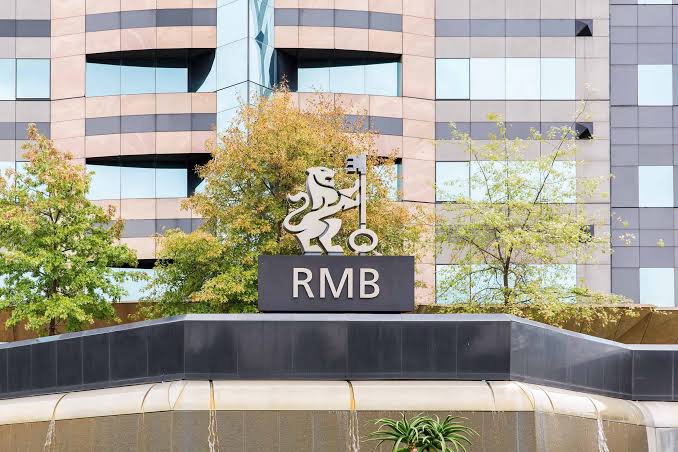
Rand Merchant Bank (RMB) has been recognised as Africa’s Best Bank for Environmental, Social and Governance (ESG) in 2026 after accelerating sustainable finance mobilisation, pioneering new transition finance structures and expanding capital flows into sectors central to Africa’s low-carbon and inclusive economic transformation. The recognition reflects a broader shift in African financial markets, where sustainability is increasingly being integrated into core banking strategy rather than treated as a specialised investment segment.
The accolade follows a year in which RMB, the corporate and investment banking division of FirstRand, surpassed its original target of facilitating ZAR200 billion in sustainable and transition finance a year ahead of schedule. The bank has since increased its ambition to mobilise ZAR450 billion by 2030, underscoring growing demand for financial products that support climate resilience, industrial decarbonisation and social development. During 2025 alone, RMB facilitated ZAR80.7 billion across 77 sustainable finance transactions, compared with ZAR70.8 billion across 64 transactions the previous year, while sustainable finance advances rose from 14 percent to 23 percent of its investment banking portfolio.
The expansion comes as African financial institutions increasingly face pressure from global investors, regulators and development finance institutions to demonstrate credible ESG integration while addressing the continent’s unique development priorities. Unlike mature markets, where sustainable finance is often driven by investor demand, African banks continue to play a catalytic role by originating transactions, educating clients and developing financing frameworks that respond to both environmental and socio-economic challenges.
According to RMB, sustainability is embedded across its lending portfolio through an internal climate classification system that assesses every client and financing facility using four categories; green, olive, grey and brown, to evaluate transition readiness and climate impact. The institution has committed to achieving a portfolio comprising at least 40 percent green and olive assets by 2030, while targeting an 80 percent renewable energy mix within its financed power generation portfolio and net-zero financed emissions by 2050. These commitments align with internationally recognised Science Based Targets initiative pathways while reflecting the practical realities of financing Africa’s energy transition.
The bank’s transaction pipeline during the review period illustrates the increasingly sophisticated nature of sustainable finance across the continent. Among its landmark deals was South Africa’s largest syndicated sustainability-linked loan, a ZAR9 billion facility arranged for Mediclinic, where financing costs are linked to measurable environmental performance indicators including greenhouse gas emissions, water management and landfill diversion. RMB also structured transition financing for Genser Energy through a blended package supporting the conversion of gas infrastructure to lower-emission technologies while reducing routine gas flaring. In another example, a social loan extended to telecommunications infrastructure provider Bandwidth and Cloud Services demonstrated how commercial lenders are beginning to replace development finance institutions in supporting digital inclusion and connectivity.
The growing importance of social finance has emerged as a defining feature of Africa’s ESG landscape. While climate finance dominates global sustainability discussions, African financial institutions increasingly argue that social investment remains equally important in addressing unemployment, financial inclusion, healthcare access and gender equity. Reflecting this shift, RMB arranged FirstRand’s inaugural Women in Business social bond, raising ZAR2.5 billion to finance enterprises led by women entrepreneurs. The bond incorporated strict accountability measures requiring proceeds to be allocated to qualifying projects within two years, reinforcing market confidence in the integrity of sustainable finance instruments.
According to RMB executives, the African market continues to require proactive engagement with corporate borrowers to originate sustainable finance opportunities, rather than simply responding to existing demand. This market-building role has become increasingly important as businesses seek to balance climate commitments with economic competitiveness, particularly in sectors such as manufacturing, mining, transport and agriculture that remain central to African industrialisation strategies.
Beyond transaction origination, the bank has invested heavily in building market infrastructure designed to strengthen ESG reporting and climate risk management. During the year, RMB piloted Endura, an ESG and climate data platform intended to improve the availability and consistency of sustainability information across financial institutions. Rather than retaining the platform exclusively for internal use, the bank plans to make it available across the wider banking sector, recognising that improved data quality remains one of the principal barriers to scaling sustainable finance throughout Africa.
Institutional innovation has extended to policy development as well. FirstRand’s transition finance framework, developed with RMB serving as exclusive adviser and independently validated by Moody’s, has become one of the first globally to align simultaneously with both the International Capital Market Association’s Climate Transition Bond Guidelines and the Loan Market Association’s Transition Loan guidance. The framework has already supported financing from British International Investment aimed at accelerating industrial transition across sectors including energy generation, cement manufacturing and heavy industry.
The bank has also contributed to broader capital market reforms beyond its own balance sheet. During the review period, RMB advised South Africa’s National Treasury on the development of its sustainable funding framework, participated in the formulation of the country’s Green Finance Taxonomy and supported sustainability initiatives involving stock exchanges in Botswana and Zambia. These efforts reflect growing recognition that scaling sustainable investment requires not only individual transactions but also stronger regulatory frameworks, standardised disclosures and greater market transparency.
Africa’s sustainable finance market remains relatively small compared with developed economies, yet it is expanding rapidly as governments pursue ambitious climate adaptation programmes while seeking to attract private investment into infrastructure, renewable energy, manufacturing and social development. According to multilateral development institutions, the continent faces annual climate financing requirements measured in hundreds of billions of dollars, far exceeding current investment levels. Closing this gap will depend heavily on commercial financial institutions capable of mobilising domestic and international capital while developing financial products suited to African market conditions.
 RMB’s recognition therefore reflects more than corporate performance. It highlights the increasingly strategic role African financial institutions are expected to play in financing economic transformation, strengthening climate resilience and supporting sustainable industrial development. As governments across the continent pursue more ambitious energy transition and development agendas, the ability of commercial banks to structure credible ESG financing frameworks, mobilise long-term investment and improve sustainability disclosures is likely to become an increasingly important determinant of Africa’s broader economic competitiveness.
For African capital markets, the evolution of sustainable finance signals a structural shift rather than a temporary trend. Institutions that successfully integrate environmental stewardship, social development and governance into mainstream financing are increasingly positioned to attract international investment, strengthen financial resilience and support the continent’s long-term development priorities.


