


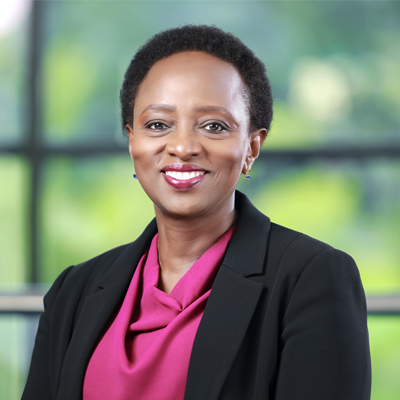
The Insurance Development Forum has appointed ZEP-RE Managing Director and Group CEO Hope Murera as Deputy Chair of its Steering Committee, placing an experienced African insurance executive at the centre of a global effort to expand the role of insurance in climate resilience, financial inclusion and sustainable development. The appointment, announced on September 30, comes as African governments, insurers and development finance institutions seek to close a persistent protection gap that leaves households, businesses and public finances exposed to increasingly costly climate and disaster risks.
Murera, who has more than 30 years of experience in Africa’s insurance and reinsurance sector, will serve as Deputy Chair (Industry) alongside her existing responsibilities at ZEP-RE. She is also chair of the board of ACRE Africa, the agricultural technology and insurance business in which ZEP-RE holds a majority stake, and has been involved in efforts to expand climate resilience and agricultural insurance for smallholder farmers.
Her appointment comes at a time when insurance is increasingly being viewed not only as a financial product but as part of the infrastructure required to manage economic and climate risk. The Insurance Development Forum, a public-private partnership involving insurers, governments, multilateral development institutions and other partners, works to expand the use of insurance and risk-management capabilities in emerging markets and developing economies. The organisation currently reports engagements across 32 countries, including several African markets, covering areas such as disaster-risk modelling, sovereign insurance, inclusive insurance and infrastructure resilience.

The scale of the challenge is particularly pronounced in Africa. According to the IDF, Africa insures only a small proportion of its disaster losses, leaving governments, businesses and households to absorb much of the financial impact when floods, droughts, cyclones and other shocks occur. At a September 2026 Climate and Disaster Risk Financing and Insurance Forum in Nairobi, participants heard that African countries insure only about 3% to 5% of disaster losses, compared with roughly 40% globally. Governments consequently absorb more than 90% of losses estimated at between $7 billion and $15 billion.
Those figures illustrate why the insurance protection gap has become a development-finance issue. When a drought reduces agricultural output, a flood destroys infrastructure or a cyclone damages businesses, the cost is not limited to the immediate physical loss. Governments can face additional expenditure on reconstruction and social protection while tax revenues weaken. Households may sell productive assets to recover, while businesses can delay investment or close altogether.
The IDF has argued that the protection gap in emerging markets and developing economies is closely connected to wider financing constraints. Its 2025 report on insurance and climate investment said more than 90% of economic losses from natural catastrophes in EMDEs are uninsured. It also argued that insurance can play several roles beyond paying claims, including generating risk information, supporting risk reduction and mobilising capital.
For Africa, agricultural insurance is one of the clearest examples of how that model can affect economic resilience. Smallholder farmers frequently face risks that can simultaneously affect household income, food supply and access to credit. A failed harvest can leave farmers unable to repay loans, purchase inputs for the next season or maintain household consumption. Insurance can provide a financial mechanism for transferring part of that risk, although affordability, reliable agricultural data and distribution remain constraints.
ACRE Africa, which Murera chairs, has focused on agricultural insurance and technology-enabled climate resilience. ZEP-RE says its climate resilience and agricultural insurance programmes have protected millions of smallholder farmers against climate risks. The company’s regional footprint spans Kenya, Zimbabwe, Côte d’Ivoire, Uganda, Ethiopia, Zambia, the Democratic Republic of Congo, Rwanda and Sudan, reflecting the cross-border nature of African insurance and reinsurance markets.
Murera has consistently framed insurance as a component of financial inclusion rather than a separate financial service. Her position that “there is no financial inclusion without insurance” reflects the relationship between access to credit and the ability to withstand the shocks that can undermine repayment capacity and investment. ZEP-RE’s own work includes reinsurance, insurance-market development, technical assistance and regional insurance pools.
The appointment also comes as African institutions are experimenting with more targeted forms of climate and disaster-risk financing. In March 2026, Lagos State became one of the latest African governments to use parametric insurance for flood risk, with a policy designed to provide up to $7.5 million for flood response and recovery and potentially cover up to four million vulnerable people. Unlike conventional indemnity insurance, parametric products make payments when predefined triggers, such as rainfall levels or wind speeds, are reached, potentially allowing funds to be released more rapidly following a disaster.
Such instruments are becoming more relevant as governments seek to move from post-disaster borrowing towards pre-arranged financing. The IDF’s Sovereign and Humanitarian Solutions Working Group, for example, works with governments and development partners to integrate risk-financing instruments into national fiscal frameworks, public financial management systems and humanitarian response mechanisms.
That approach matters for countries where fiscal space is already under pressure. When governments have to redirect budgets after a major climate event, funds intended for health, education, infrastructure or other development priorities can be diverted towards emergency response. Pre-arranged risk financing can provide another layer of protection, although its effectiveness depends on the quality of risk data, the design of products, affordability and the capacity of institutions to act when a trigger is reached.
The challenge is therefore not simply to increase insurance penetration. Africa’s insurance markets remain uneven, with significant differences between countries in regulation, distribution networks, financial capacity and consumer awareness. The IDF has described this as an issue of “insurability”, arguing that governments, regulators, insurers and development institutions need to work together to make risks that are currently difficult or expensive to insure more manageable. In 2025, the organisation issued more than 50 recommendations aimed at addressing barriers to insurability and reducing protection gaps.
The role of regional reinsurers is important in that process because individual national insurance markets may not have sufficient capacity to absorb large or correlated risks. Reinsurance can distribute exposures across markets and provide insurers with additional capacity to underwrite risks that might otherwise remain outside the formal insurance system.
ZEP-RE’s regional structure gives Murera direct experience of that challenge. The company was established to support the development of insurance markets in Africa and undertakes reinsurance business, creates insurance pools, provides technical assistance and trains insurance professionals. Its shareholders include governments, private-sector institutions and development finance institutions.

Her appointment also places an African market perspective within the IDF’s senior industry leadership at a time when the organisation is entering its second decade. Michel Liès, chair of the IDF Steering Committee and chairman of Zurich Insurance Group, said Murera’s experience in African insurance markets would help connect global insurance capabilities with country priorities and support efforts to bring established approaches to greater scale.
The Forum’s leadership structure brings together industry and development institutions. Alexander De Croo, Administrator of the United Nations Development Programme, and Tsutomu Yamamoto, Managing Director of the World Bank Group’s Multilateral Investment Guarantee Agency, serve as public-sector co-chairs of the Steering Committee, while Liès chairs the committee. Their roles reflect the IDF’s public-private model, which seeks to connect insurance expertise with government policy and development finance.
For Africa, the significance of Murera’s appointment will ultimately depend less on the title itself than on whether the insurance industry can expand practical protection in markets where climate exposure is high and insurance penetration remains low. Closing that gap requires more than additional insurance products. It involves stronger regulation, better climate and disaster-risk data, viable distribution channels, public-private partnerships and financing structures that make coverage affordable for households, farmers, businesses and governments.
As African economies invest in infrastructure, agriculture and productive sectors while confronting climate volatility, the ability to transfer and finance risk will increasingly influence how much of that investment survives major shocks. Murera’s new role gives the continent a senior voice in a global forum seeking to make insurance part of that wider resilience architecture.


