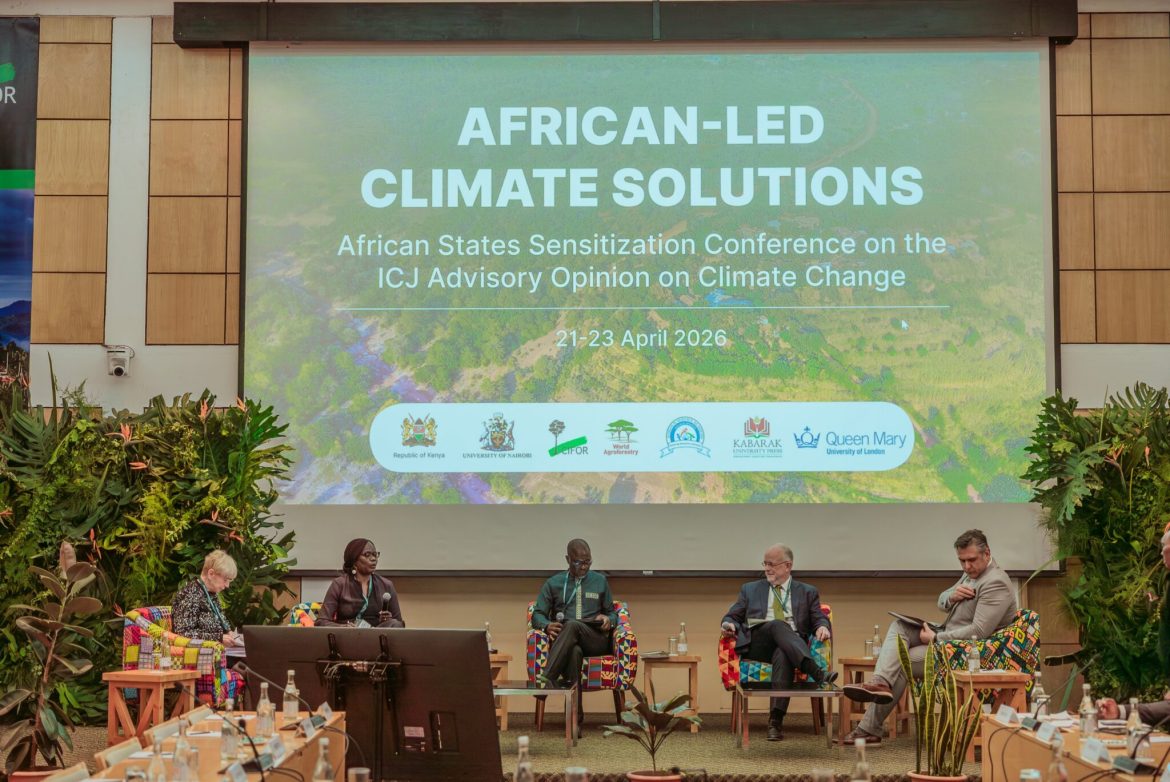
African policymakers, legal experts and development institutions convened in Kenya this week to assess the implications of a landmark climate ruling by the International Court of Justice, signaling a shift in how governments across the continent may integrate climate risk into national planning, public finance and infrastructure decisions.
The three-day conference, hosted by the Center for International Forestry Research and World Agroforestry in partnership with the Government of Kenya and academic institutions, follows an advisory opinion issued on July 23, 2025, in which the court affirmed that states have binding legal obligations to protect the climate system and could face consequences for climate-related harm.
The gathering brought together representatives from regional bodies, including the African Union Commission and the East African Community, alongside judicial officers and climate negotiators.
Officials said the ruling introduces new legal clarity into global climate governance at a time when African economies are confronting mounting climate-related fiscal pressures. According to regional development agencies, climate shocks are already increasing public spending requirements for disaster response, infrastructure repair and agricultural support, placing additional strain on budgets in countries with limited fiscal space.
Kenya’s Foreign Affairs Principal Secretary, Korir Sing’Oei, told delegates that the legal opinion effectively reframes climate policy from a voluntary commitment into a compliance issue with potential economic and legal consequences. He said governments would need to accelerate implementation of climate policies while strengthening regulatory enforcement and integrating climate considerations into national development strategies.
The legal clarification is expected to have implications beyond environmental policy, particularly for public investment decisions in sectors such as transport, water and energy infrastructure. Governments may face greater scrutiny over whether new projects adequately account for climate risks, including flooding, drought and extreme weather, which have become more frequent across parts of the continent.
Africa contributes less than four percent of global greenhouse gas emissions but remains disproportionately exposed to climate impacts, according to analyses by multilateral institutions including the African Development Bank.
Rising temperatures and recurrent droughts have already disrupted agricultural production in several countries, while severe flooding events have damaged roads, bridges and power systems, increasing maintenance costs and reducing economic productivity.
Scientists associated with the Intergovernmental Panel on Climate Change have warned that without sustained investment in adaptation and resilience, climate-related losses could undermine development gains across key sectors, including food systems and urban infrastructure. These risks are particularly acute in regions where population growth and urbanisation are increasing demand for public services.
Participants at the Nairobi meeting said the court’s opinion could strengthen Africa’s negotiating position in global climate talks by providing a legal basis for claims related to climate finance and loss and damage. The decision is expected to influence ongoing discussions about the adequacy of international funding mechanisms, including those established under recent global climate agreements.
At recent negotiations, including the United Nations Climate Change Conference COP28, governments agreed to operationalise a loss and damage fund intended to support countries facing climate-related harm. However, current financial commitments remain modest compared with projected needs.
Estimates by development agencies suggest that climate adaptation and resilience investments in developing countries could require hundreds of billions of dollars annually by the end of the decade.
According to climate finance analysts, the gap between funding commitments and actual needs is emerging as a central risk for African economies. Without predictable financing, governments may be forced to reallocate resources from education, healthcare and infrastructure to respond to climate emergencies, potentially slowing economic growth and increasing debt burdens.
Legal experts attending the conference noted that the advisory opinion may also influence domestic legal systems. Courts in several jurisdictions are increasingly being asked to adjudicate disputes related to environmental damage and climate accountability, raising the prospect of litigation against both governments and private entities that fail to meet environmental obligations.
Beyond the legal dimension, participants emphasised the importance of locally driven solutions tailored to Africa’s development realities. These include climate-smart agriculture programmes designed to stabilise food production, landscape restoration initiatives aimed at improving water security, and renewable energy investments intended to reduce reliance on imported fossil fuels.

One example frequently cited by policymakers is the continent-wide restoration effort known as the African Forest Landscape Restoration Initiative, which seeks to rehabilitate degraded land while supporting rural livelihoods. Such programmes illustrate how climate action can be integrated into economic development strategies rather than treated as a separate policy domain.
The Nairobi discussions also highlighted governance challenges associated with implementing climate commitments. Effective monitoring systems, transparent financial management and coordination across government agencies are widely viewed as prerequisites for translating international legal obligations into practical outcomes on the ground.
Development economists say the significance of the court’s opinion ultimately lies in how governments respond at the national level. While the ruling establishes a clearer legal framework, its economic impact will depend on whether countries can mobilise financing, strengthen institutions and align infrastructure planning with climate resilience objectives.