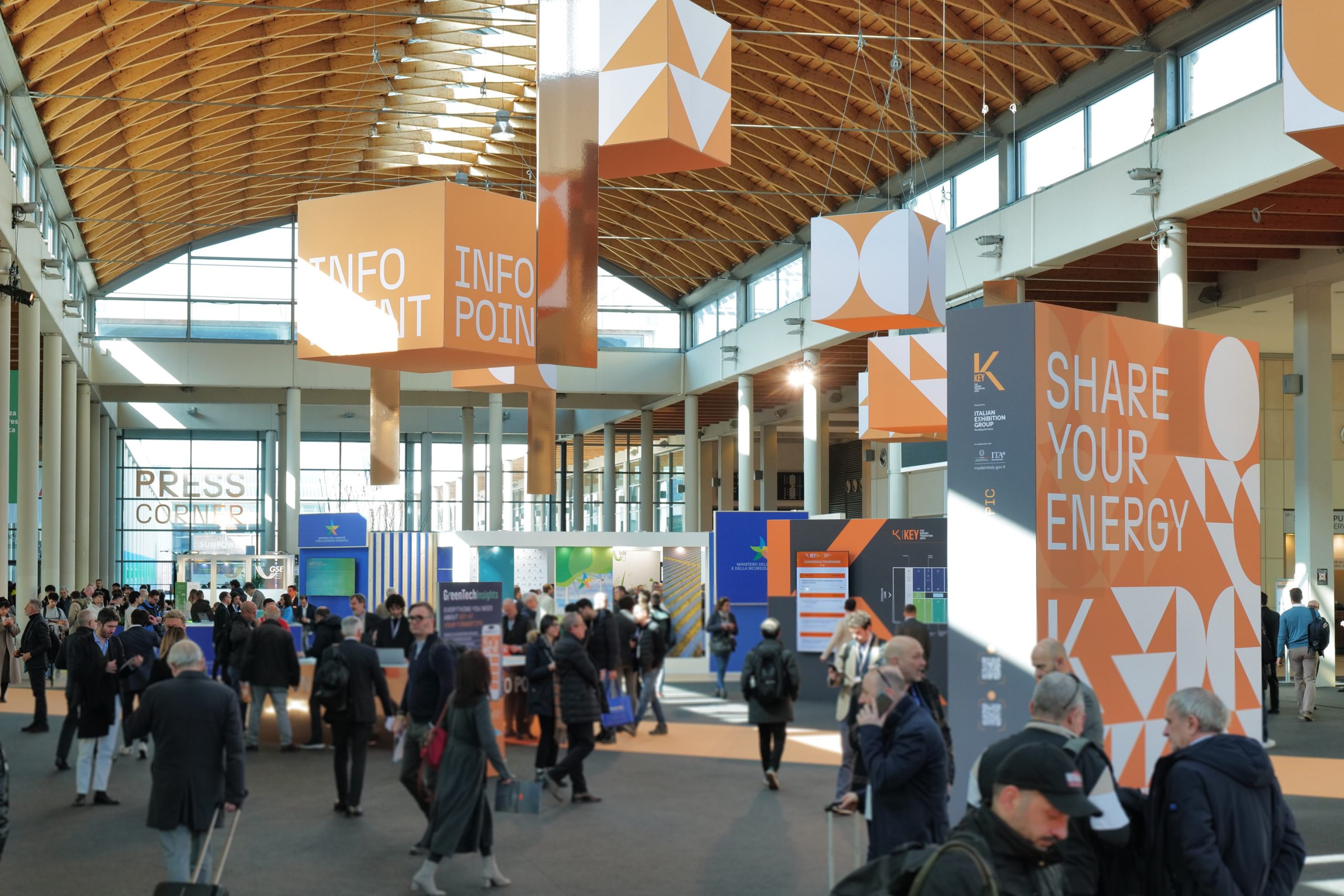

As governments and companies across Africa accelerate efforts to expand energy access and manage the fiscal risks of climate transition, an international energy trade fair in Italy next month is positioning itself as a conduit between African markets and global capital, technology providers and policymakers.
From March 4 to 6-2026, the fourth edition of KEY – The Energy Transition Expo will take place at the Rimini Expo Centre, bringing together more than 1,000 exhibiting brands, nearly a third of them from outside Italy, and delegations from around 50 countries, according to organisers.
The event, organised by Italian Exhibition Group, reflects the growing internationalisation of energy transition markets and the extent to which Africa has become central to European energy, industrial and foreign policy calculations. Organisers say markets across North Africa and sub-Saharan Africa are among the primary targets of this year’s edition, alongside Turkey and several European countries, underscoring Africa’s dual role as both a destination for clean energy investment and a partner in supply chains linked to renewables, hydrogen and energy storage.
Read also: Key highlights for Africa from Ecomondo 2024
For African governments, the relevance of such platforms lies less in exhibition scale than in what they signal about shifting financing and cooperation dynamics. Many African countries face rising electricity demand, constrained public finances and mounting pressure to decarbonise while expanding access. According to the African Development Bank, the continent still accounts for less than 4 per cent of global energy-related carbon emissions but bears disproportionate climate and adaptation costs, while an estimated 600 million people remain without access to electricity.
Against this backdrop, KEY’s decision to introduce an Africa Investment Hub within the exhibition space is a practical attempt to move beyond generic dialogue. The dedicated area will host industry associations from countries including Egypt, Algeria, Morocco, Tunisia, Côte d’Ivoire, Senegal and South Africa, creating a structured setting for business meetings with European investors, equipment suppliers and policymakers. Such engagement reflects a broader trend in which African energy projects are increasingly shaped through external capital markets, export credit agencies and blended finance structures rather than domestic balance sheets alone.
Italy’s focus on Africa at the event aligns with its wider Mattei Plan, which frames energy cooperation as part of a strategy to strengthen economic ties with the continent while supporting European energy security. For African counterparts, this raises familiar questions about balance. While access to European technology and finance can help accelerate solar, wind and storage deployment, project bankability, local content requirements and currency risk remain persistent obstacles, particularly for smaller markets with limited regulatory capacity.

The programme of international sessions also mirrors Africa’s evolving energy priorities. Discussions on scaling financing instruments for Africa’s energy future, grid-connected and off-grid solar, battery storage and micro-generation systems point to the practical challenges of moving from pilot projects to system-wide deployment.
In many African countries, utilities face weak credit profiles, high transmission losses and tariff structures that struggle to reconcile affordability with cost recovery, limiting their ability to absorb new capacity without sovereign guarantees.
Hydrogen, another prominent theme at the event, illustrates both opportunity and uncertainty for Africa. Several countries, including Namibia, Morocco and Egypt, have announced ambitions to become green hydrogen exporters, betting on renewable resource endowments and proximity to European markets.
The capital intensity of hydrogen infrastructure and the absence of established offtake agreements mean that most projects remain at an early stage, with implications for public debt and contingent liabilities if state-backed commitments expand too quickly.
Read also: Ecomondo 2025 highlights Africa’s role in global circular economy drive
Beyond large-scale infrastructure, the exhibition also highlights decentralised energy and circular economy solutions, areas with more immediate relevance for African communities. Off-grid solar, mini-grids and energy storage systems have become critical tools for extending electricity access in rural and peri-urban areas, often delivering quicker social and economic returns than centralised generation.
Similarly, recycling of solar panels and batteries, while still nascent in Africa, is emerging as a governance issue as installations scale up and waste streams grow.
The presence of African delegations at such events does not automatically translate into investment flows, but it reflects a recognition that energy transition is now inseparable from trade, industrial policy and public finance.
As African governments seek to align climate commitments with development objectives, the ability to engage on equal footing in international forums will shape not only project pipelines but also the terms under which capital is mobilised.
Engage with us on LinkedIn: Africa Sustainability Matters