


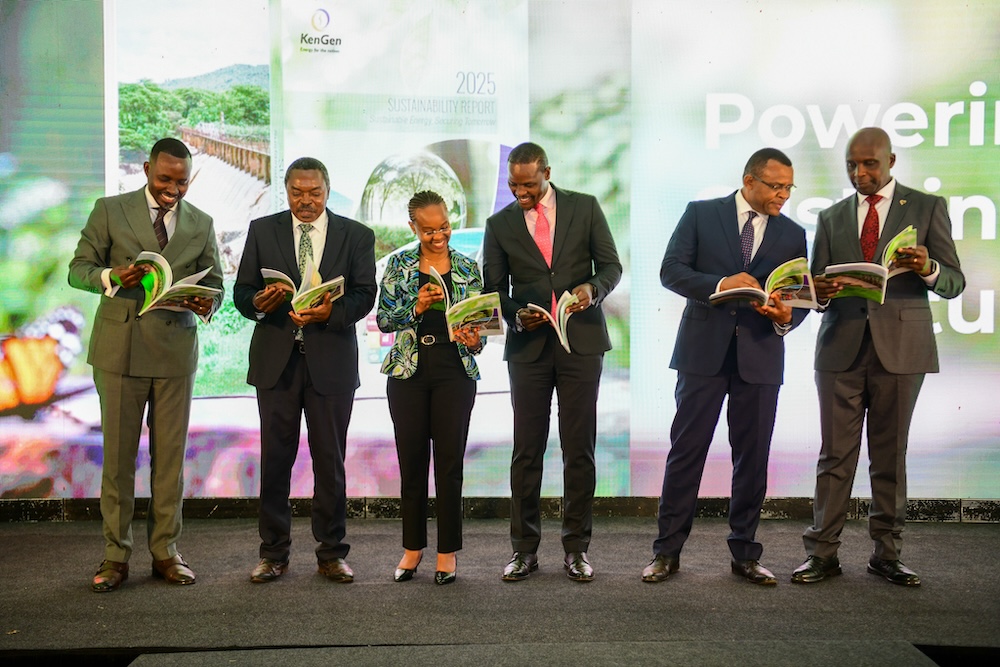
Kenya Electricity Generating Company (KenGen) has significantly expanded its long-term renewable energy development pipeline from 1,500 megawatts (MW) to 5,500MW, signalling one of the most ambitious clean energy growth strategies by an African utility as Kenya positions itself to meet rising domestic electricity demand, strengthen regional power exports and support low-carbon industrialisation. The revised target, unveiled alongside the company’s latest Sustainability Report, reflects new investments in geothermal, hydroelectric and nuclear energy, while underscoring Kenya’s broader strategy of leveraging renewable energy to drive economic transformation, manufacturing growth and climate resilience.
The recalibrated pipeline includes a planned 2 gigawatts (GW) of nuclear power generation, more than 700MW of additional hydropower capacity and expanded geothermal resource development, reflecting changing national energy priorities, increasing investor confidence in Kenya’s renewable energy sector and growing demand for clean electricity across East Africa.
KenGen, which remains Kenya’s largest electricity producer, said the revised investment pipeline aligns with the country’s long-term development agenda while responding to evolving regional energy markets that increasingly favour reliable, low-carbon electricity. The company noted that expanding renewable generation capacity would strengthen energy security, support industrial development and enhance Kenya’s competitiveness as neighbouring countries continue to experience electricity deficits.
Speaking during the launch of the Sustainability Report, Principal Secretary for Energy Alex Wachira described the expansion as evidence of Kenya’s emerging role as a regional clean energy hub. He said KenGen had created an enabling ecosystem where investors could access competitively priced renewable electricity, geothermal steam and serviced industrial land, providing the foundation for manufacturing investment and value addition.
“This is a practical demonstration of how energy can move beyond powering homes to powering factories, creating jobs, attracting investment and strengthening Kenya’s manufacturing base,” Wachira said.
The remarks reflect a growing policy shift across Africa, where governments increasingly view electricity infrastructure not only as a public utility but also as a strategic economic asset capable of attracting industrial investment, improving export competitiveness and supporting economic diversification.
KenGen Managing Director and Chief Executive Officer Eng. Peter Njenga said the Sustainability Report represents a defining milestone in the company’s long-term transformation strategy. According to Njenga, expanding the renewable energy pipeline from 1,500MW to 5,500MW demonstrates KenGen’s commitment to supporting Kenya’s sustainable economic growth while strengthening the country’s position as a regional leader in renewable energy generation.
“We have strategically recalibrated our long-term growth trajectory from 1,500MW to a 5,500MW renewable energy development pipeline, reaffirming our commitment to powering Kenya’s sustainable economic transformation,” Njenga said.
The revised strategy comes as electricity demand continues to increase across East Africa, driven by rapid urbanisation, industrialisation, digital infrastructure expansion and population growth. According to the International Energy Agency (IEA), electricity demand across Sub-Saharan Africa is expected to more than double by 2040, requiring substantial investment in generation, transmission and distribution infrastructure.
Kenya has increasingly distinguished itself as one of Africa’s clean energy leaders. According to the International Renewable Energy Agency (IRENA), more than 90% of Kenya’s electricity generation already comes from renewable sources, primarily geothermal, hydropower, wind and solar energy. This places the country among the global leaders in renewable electricity penetration and significantly ahead of many emerging economies that continue to rely heavily on fossil fuels.
Geothermal energy remains central to Kenya’s energy strategy. The country hosts one of the world’s largest geothermal resources within the Great Rift Valley and currently ranks among the top ten geothermal power producers globally. Unlike solar and wind power, geothermal provides reliable baseload electricity capable of supporting continuous industrial operations while reducing dependence on imported fossil fuels.
The inclusion of a planned 2GW nuclear programme within KenGen’s broader development pipeline also reflects Kenya’s longer-term efforts to diversify its electricity generation portfolio. The Kenya Nuclear Power and Energy Agency (NuPEA) has been advancing preparatory work for the country’s first nuclear power station as part of efforts to ensure long-term energy security while supporting industrial growth. Although nuclear development remains at the planning stage, its inclusion demonstrates Kenya’s intention to balance renewable expansion with stable large-scale electricity generation.
The Sustainability Report also highlights the environmental performance that continues to underpin KenGen’s investment strategy. During the reporting period, the company maintained a renewable energy dispatch rate of 94.4%, reinforcing its position as one of Africa’s cleanest electricity generators.
According to the report, KenGen generated approximately 6.9 million carbon credits during the reporting period, reflecting the climate value of its renewable energy portfolio. Carbon markets are becoming an increasingly important source of financing for low-carbon infrastructure across Africa as governments and companies seek additional revenue streams to support climate investments.
The company reported a carbon intensity of 0.06089 tonnes of carbon dioxide equivalent (tCO₂e) per megawatt-hour, placing it among the continent’s lowest-emitting electricity producers. According to the Intergovernmental Panel on Climate Change (IPCC), reducing the carbon intensity of electricity generation remains one of the most effective pathways for supporting national decarbonisation while enabling cleaner industrial development.
Beyond electricity generation, the report demonstrates how environmental stewardship is becoming increasingly integrated into corporate sustainability strategies. KenGen produced 887,220 tree seedlings during the reporting year, exceeding its annual target by 7%, while restoring approximately 850 hectares of degraded land. The company has now planted more than four million trees and aims to reach nine million by 2034, supporting Kenya’s national landscape restoration and climate adaptation objectives.
The environmental initiatives align with Kenya’s commitment under the African Forest Landscape Restoration Initiative (AFR100) and the Bonn Challenge, which seek to restore degraded ecosystems while improving biodiversity, water security and carbon sequestration.
The Sustainability Report also highlights the social dimension of KenGen’s operations. Through the KenGen Foundation, 237 students received educational scholarships during the reporting period, while clean water projects expanded access to safe water for more than 42,300 households in communities surrounding the company’s operations.
These investments reflect the growing importance of environmental, social and governance (ESG) performance in attracting international capital. According to the World Bank and the International Finance Corporation (IFC), investors increasingly assess infrastructure projects based not only on financial returns but also on governance standards, community engagement and long-term sustainability outcomes.
KenGen’s governance performance further reinforces this trend. The company achieved a 100% score in governance and transparency assessments during the reporting period while directing 69% of procurement opportunities, valued at approximately KSh10.01 billion, to local suppliers. Expanding local procurement strengthens domestic enterprise development, creates employment opportunities and increases the economic multiplier effect of infrastructure investments.
Principal Secretary for Environment and Climate Change Dr. Eng. Festus Ng’eno welcomed the Sustainability Report, describing KenGen’s expanded renewable energy ambitions as an example of the corporate leadership required to support Kenya’s climate commitments and long-term development goals.
According to Kenya’s updated Nationally Determined Contribution (NDC) under the Paris Agreement, the country aims to reduce greenhouse gas emissions by 35% below business-as-usual levels by 2035 while strengthening resilience to climate change. Achieving those objectives will require sustained investment in renewable energy, industrial decarbonisation and climate-resilient infrastructure.
KenGen’s expanded 5,500MW development pipeline therefore represents more than a corporate growth strategy. It reflects the increasing convergence between clean energy investment, industrial policy and sustainable economic development across Africa. As countries compete to attract manufacturing investment while meeting climate commitments, access to reliable, affordable and low-carbon electricity is emerging as a defining competitive advantage.
For Kenya, expanding renewable energy generation also strengthens its position within the Eastern Africa Power Pool, creating opportunities to export surplus clean electricity to neighbouring countries while supporting regional energy integration. As demand for sustainable industrial production grows globally, investments in renewable energy infrastructure are increasingly becoming essential components of economic competitiveness, fiscal resilience and long-term development planning.


