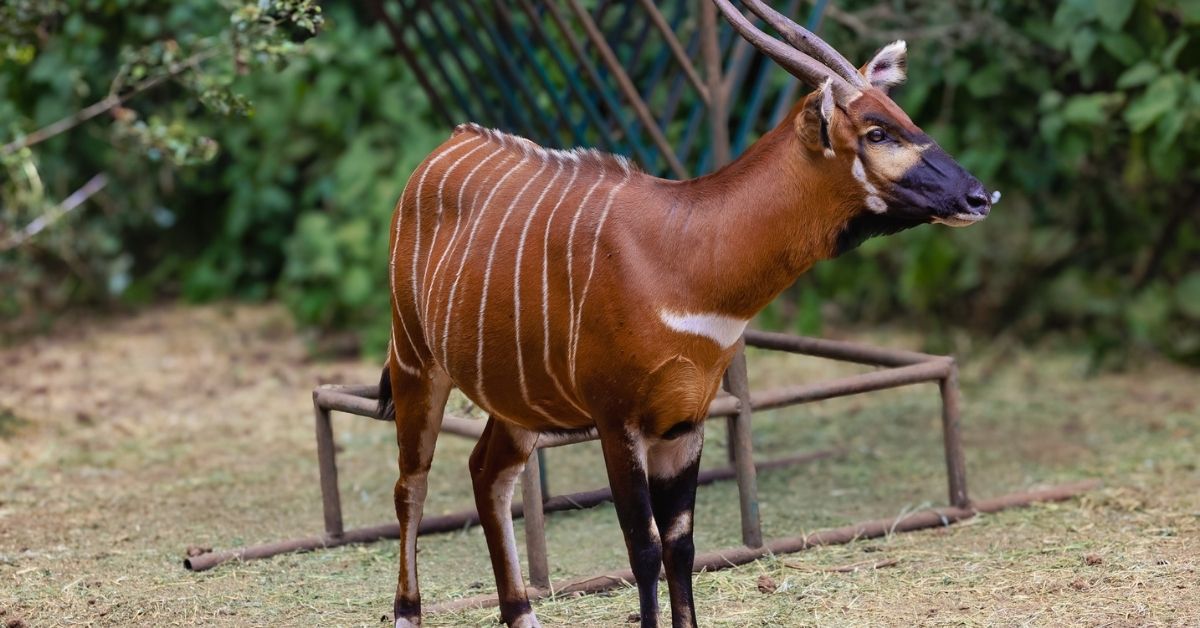

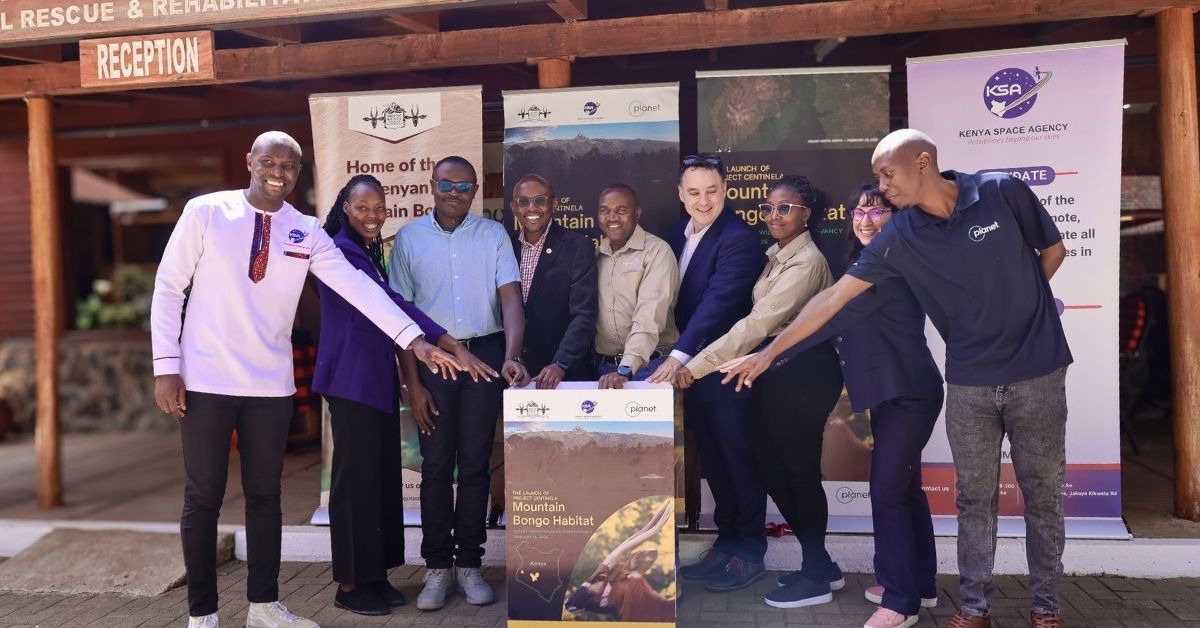
In a groundbreaking fusion of space technology and wildlife conservation, the Kenya Space Agency (KSA), in partnership with the Mount Kenya Wildlife Conservancy (MKWC) and global Earth-observation firm Planet Labs, has officially launched Project Centinela; a satellite-enabled initiative designed to protect the critically endangered mountain bongo antelope by monitoring and preserving its rapidly eroding forest habitats. The launch took place on January 16, 2026, at the Mount Kenya Wildlife Conservancy grounds in Nanyuki.
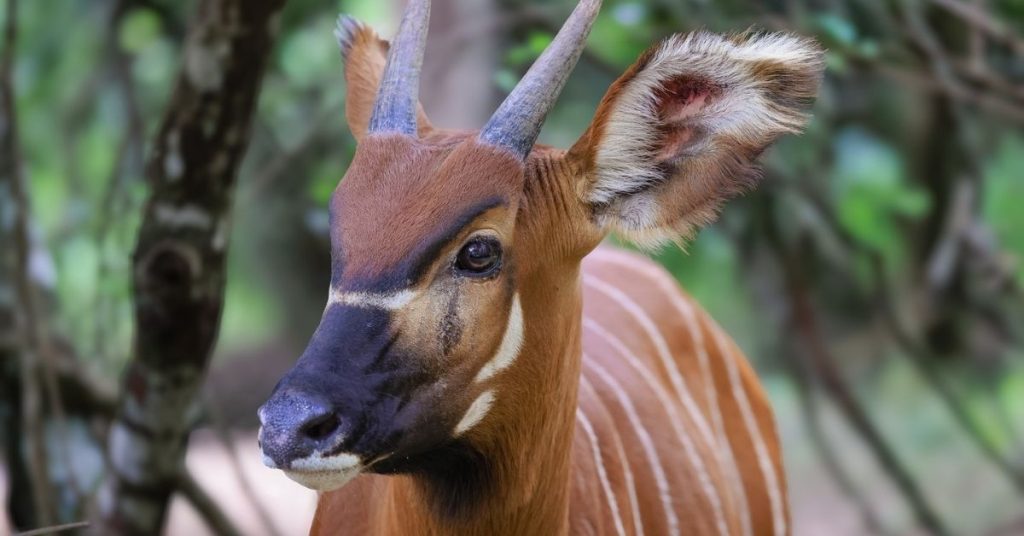
The mountain bongo (Tragelaphus eurycerus isaaci), a striking forest antelope with reddish-brown fur and spiraled horns, is listed as Critically Endangered by the International Union for Conservation of Nature. This subspecies exists only in a handful of Kenyan forest enclaves including Mount Kenya, the Aberdares, Eburu, and Mau complexes, and has seen its wild numbers fall precipitously over past decades due to habitat loss, poaching and environmental pressures. Wild populations are now estimated at fewer than 100 individuals, a steep decline from historical figures, while captive populations often outnumber those in nature.
Project Centinela leverages high-resolution satellite imagery and Earth observation data to change how conservationists track, analyse and respond to changes in forest cover, vegetation and land use across the mountain bongo’s habitat. Daily satellite data from Planet’s constellation allows for near-real-time monitoring of deforestation, illegal encroachment, fire risk and other threats that have traditionally been difficult to track in remote and rugged forest terrain.
Read also: Kenya launches review of environment policy as climate risks intensify
“Project Centinela reflects the Kenya Space Agency’s mandate to apply space-based technologies to real-world challenges,” said Charles Mwangi, Acting Director of KSA, at the launch event. “Through Earth observation data, we are supporting evidence-based environmental management and strengthening institutional capacity for biodiversity conservation.”
The initiative is rooted in a 2023 Memorandum of Understanding between KSA and MKWC, laying the groundwork for collaborative use of satellite and ground data in ecosystem protection. While traditional conservation has relied heavily on field patrols and sporadic aerial surveys, the blend of orbital data and local action marks a significant evolution in African wildlife management.
For MKWC, which has operated a long-standing mountain bongo breeding and rewilding programme, precision data is essential. “Project Centinela is crucial for us because it enables the monitoring of bongo habitats with high precision,” said Dr. Robert Aruho, Head of Conservancy at MKWC. Satellite imagery informs habitat suitability assessments, prioritises restoration areas and strengthens adaptive strategies for reintroducing captive-bred animals into the wild.
Planet Labs’ involvement brings daily global coverage to the project area, enabling conservation teams to detect ecological shifts within days rather than weeks or months. “Daily Earth observation allows partners to see change as it happens,” said Andrew Zolli, Chief Impact Officer at Planet. “Through Project Centinela, satellite imagery is supporting more informed habitat monitoring and helping translate data into practical, on-the-ground conservation outcomes.”

Beyond immediate protection of the mountain bongo, Project Centinela forms part of a broader shift towards tech-enabled conservation strategies in Africa, which face mounting threats from climate change, agricultural expansion and invasive land uses. Satellite data not only fills critical information gaps but also enhances coordination between government agencies, NGOs and local communities working on biodiversity and ecosystem restoration.
As conservation organisations worldwide grapple with the limitations of ground-level monitoring in vast or inaccessible landscapes, Project Centinela offers a replicable model for integrating earth observation data into biodiversity action plans. It also highlights how public-private partnerships, in this case between a national space agency, a wildlife conservancy and a private Earth-imaging company, can leverage science and technology to meet urgent environmental challenges.
While the mountain bongo’s survival remains far from assured, the launch of Project Centinela represents both urgency and innovation in the continent’s conservation playbook.
Engage with us on LinkedIn: Africa Sustainability Matters