


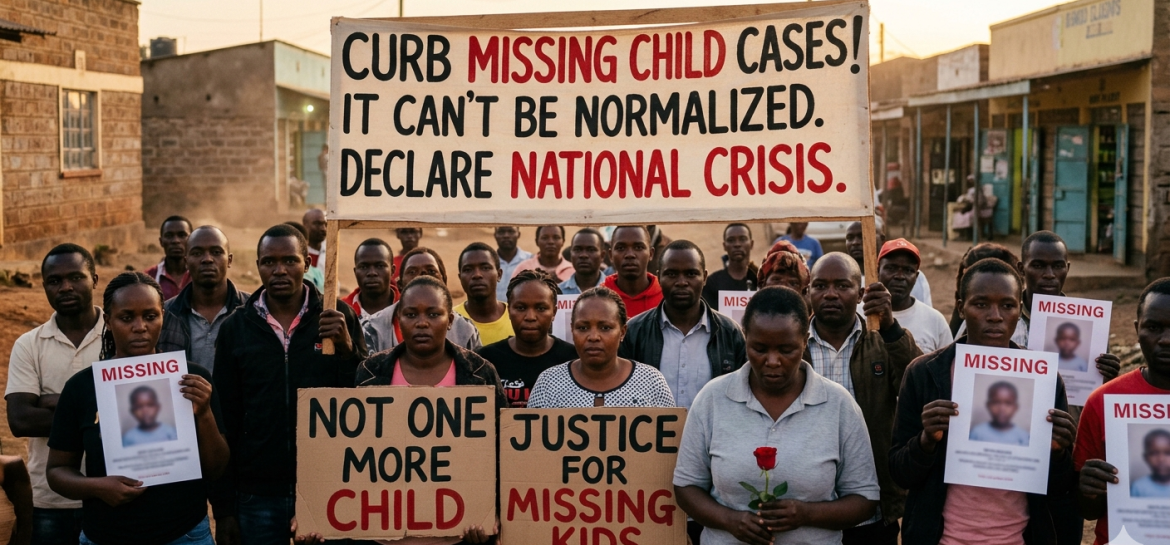
Kenya’s rising number of missing children is emerging as a significant social sustainability challenge, raising concerns over child protection systems, urban vulnerability, and the long-term implications for the country’s human capital development agenda. According to data from Kenya’s Child Protection Information Management System (CPIMS), 6,374 cases of missing children were recorded between January and May 2022, while government figures for the 2023/2024 financial year showed more than 7,000 children disappeared nationwide, with only 1,383 reunited with their families. Community-led organization Missing Child Kenya further reported that 69 of the 158 cases it handled in 2025 remain unresolved, highlighting persistent gaps in tracing, reporting, and recovery mechanisms.
The scale of the crisis is increasingly drawing attention beyond law enforcement and social welfare circles, as policymakers and development practitioners examine the broader structural drivers behind child disappearances. Analysts say the issue reflects deeper pressures linked to poverty, rapid urbanization, household instability, weak social protection systems, and uneven access to child welfare services across counties.
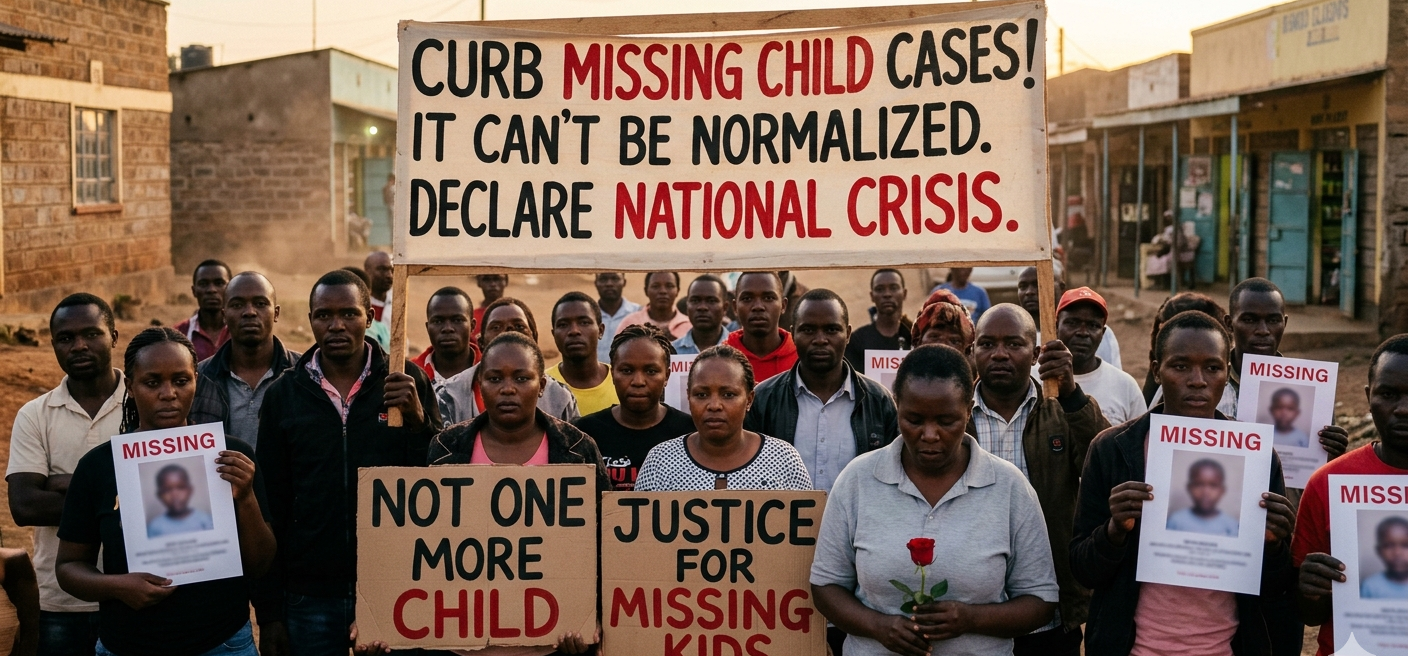 According to child protection stakeholders, the breakdown of traditional community support networks in rapidly expanding urban centeres has reduced informal safeguards that historically helped monitor and protect vulnerable children. Migration into cities such as Nairobi, Mombasa, and Nakuru has accelerated population growth and economic activity, but has also strained housing, education, healthcare, and social support systems. In low-income settlements, children are often left unsupervised while caregivers seek informal employment, increasing exposure to exploitation, trafficking, abuse, and displacement.
The issue carries broader economic implications for Kenya’s development trajectory. Children who disappear are frequently removed from education systems, healthcare access, and social support structures, weakening future workforce participation and long-term productivity. Development economists increasingly view child welfare as a core component of sustainable economic growth, particularly in countries with youthful populations and expanding labour markets.
Kenya’s demographic profile adds urgency to the challenge. According to national statistics, children and young people account for a significant share of the population, making investment in child protection closely linked to future human capital formation. Failures within social protection systems can generate long-term fiscal pressures through increased vulnerability, unemployment, crime, and reduced economic participation later in life.
The crisis also intersects with international sustainability and governance commitments. Sustainable Development Goal 16.2 calls for an end to abuse, exploitation, trafficking, and violence against children, while SDG 3 links child wellbeing to broader public health and social resilience outcomes. Development agencies note that countries unable to account for large numbers of missing children face growing risks to institutional credibility, social cohesion, and inclusive development planning.
Kenya has introduced several measures aimed at strengthening child protection oversight. The Directorate of Children’s Services has led a Technical Working Group (TWG) tasked with developing national standard operating procedures for handling missing children’s cases, while the CPIMS database has expanded national-level case reporting and monitoring capacity. Authorities have also used International Missing Children’s Day to raise public awareness about prevention and reporting.
However, implementation challenges remain significant. Reporting systems are fragmented across counties, coordination between law enforcement agencies and child welfare institutions remains inconsistent, and community organizations continue to operate with limited institutional support. Missing Child Kenya operates a toll-free reporting platform and uses digital tracing methods to coordinate search efforts, but stakeholders note that many civil society initiatives lack sustained public financing and integration into formal state systems.
According to governance and social policy experts, the absence of a nationally coordinated rapid-alert mechanism comparable to the AMBER Alert systems used in some countries reduces the speed and effectiveness of response efforts during the critical early hours after a child disappears. Delayed reporting, weak inter-agency coordination, and limited access to real-time data sharing continue to affect recovery outcomes.
Technology-based interventions are increasingly being examined as part of future response frameworks. Mobile alert systems, digital child registration tools, and integrated data-sharing platforms linking social workers, schools, police, and healthcare providers could improve case tracking and response times. Counties experiencing high rates of urbanization are expected to become priority areas for pilot programmes aimed at integrating child protection services with local administration and community health systems.
The private sector is also beginning to face questions over its role in supporting social resilience infrastructure. As environmental, social, and governance (ESG) frameworks become more prominent across African markets, investors and corporations are under increasing pressure to demonstrate measurable contributions to community wellbeing and social stability. Child protection advocates argue that investments in digital safety infrastructure, community outreach, and youth welfare programmes could increasingly form part of broader corporate sustainability strategies.

Kenya’s missing children crisis highlights how social sustainability risks are becoming increasingly interconnected with governance capacity, urban development, and economic resilience across African economies. While infrastructure expansion and economic growth remain central to national development priorities, analysts warn that weak social protection systems can undermine long-term stability if vulnerable populations remain exposed to systemic risks.
For Kenya, the challenge extends beyond locating missing children. It raises broader questions about institutional coordination, public investment priorities, and whether existing development models are adequately protecting vulnerable communities amid rapid demographic and economic change. How the country responds may shape not only child welfare outcomes, but also wider confidence in the resilience and inclusiveness of its social development systems.


