


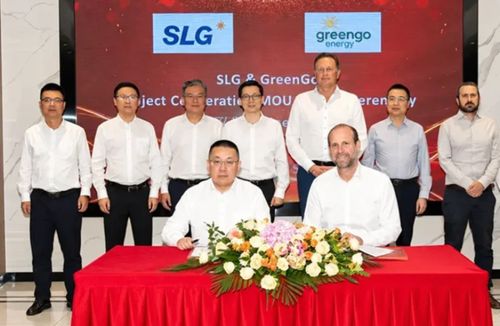
Mauritania’s ambition to develop a large-scale green hydrogen and ammonia industry has moved into another stage after Danish renewable energy developer GreenGo Energy signed a memorandum of cooperation with China’s Jiangsu Shuangliang New Energy Equipment to advance the Megaton Moon project and other large-scale green ammonia developments in Mauritania and Namibia.
The agreement brings Shuangliang’s hydrogen equipment and engineering capabilities into GreenGo Energy’s project-development platform as Megaton Moon progresses through feasibility studies and front-end engineering design (FEED). The partnership is intended to move the project from concept development towards technically and commercially viable designs that can eventually support investment decisions.
Under the memorandum, Shuangliang will contribute to feasibility and bankability studies, provide technical support for FEED and project configuration, and evaluate the potential supply of green power-to-hydrogen systems and related core equipment. The company will also provide engineering and technical services as the projects progress towards execution-ready industrial designs.
The addition of an equipment and engineering partner is significant for a project of Megaton Moon’s planned scale. Green hydrogen developments require the integration of renewable power generation, electrolysis, water systems, hydrogen production, ammonia synthesis and associated infrastructure. Moving these components from a conceptual design into a financeable project requires detailed technical studies, equipment specifications and cost assessments.
Megaton Moon is being developed by GreenGo Energy south of Mauritania’s capital, Nouakchott. The project has secured access to more than 100,000 hectares and is planned as a phased development combining renewable electricity generation with hydrogen and green ammonia production. At full scale, the project is planned around 6 gigawatts (GW) of electrolysis capacity, supported by 6.8 GW of onshore wind and 6.3 GWp of solar photovoltaic generation. GreenGo Energy’s current project information puts potential green ammonia production at about 4 million tonnes a year once the full development is reached.
The first phase is considerably smaller. It is planned around 500 megawatts (MW) of electrolysis capacity, 600 MW of wind and 600 MWp of solar photovoltaic capacity, with green ammonia production of approximately 355,000 tonnes a year. GreenGo Energy currently targets first production by mid-2031. The project’s development timeline places engineering work ahead of the investment decision. GreenGo Energy is targeting completion of FEED for the first phase in 2027, followed by a final investment decision in 2028 and production in 2031. No project financing has been announced for the development at this stage.
The financing question is important because large-scale green hydrogen projects remain difficult to move from announced capacity to construction. The International Energy Agency’s Global Hydrogen Review 2026 identifies 31 low-emissions hydrogen projects in Africa’s pipeline to 2030 that could raise production to about 1.2 million tonnes a year. However, only one of those projects had reached a final investment decision at the time of the IEA’s assessment.
The IEA identifies high financing costs, uncertain demand, infrastructure requirements and the need for stronger offtake arrangements among the challenges facing African hydrogen projects. It also notes that reducing financing costs through blended finance, credit guarantees, insurance and offtake support will be important for projects seeking to advance towards investment.
For Mauritania, Megaton Moon forms part of a wider strategy to use the country’s solar and wind resources to establish a green hydrogen industry. The government signed a framework agreement with GreenGo Energy in February 2025 granting the developer access to land near Nouakchott for the project and moving it into the development phase, including feasibility studies and technical surveys.
The project also fits within Mauritania’s broader efforts to attract international investment into renewable energy and green hydrogen. The country has positioned its renewable resources, coastal location and policy framework as potential foundations for hydrogen and derivatives production, with green ammonia among the products being considered for international markets.
GreenGo Energy has also developed a wider commercial structure around Megaton Moon. In 2025, the company entered into a strategic partnership with Germany’s SELECT Energy covering co-development, offtake, export logistics and financing options for the project. SELECT is expected to focus on ammonia marketing, offtake agreements, transshipment and distribution.
The involvement of Shuangliang adds another part of the emerging value chain. The Chinese company specialises in the research, development, design, manufacture and servicing of green power-to-hydrogen equipment and systems. Its participation gives the project access to an industrial technology supplier at a stage when developers are seeking to define the technical architecture and equipment requirements for large-scale electrolysis.
The partnership also reflects the increasingly international structure of Africa’s green hydrogen pipeline. European developers, Chinese equipment manufacturers, African governments, international financiers and potential offtakers are becoming involved in projects designed to connect Africa’s renewable resources with emerging markets for lower-carbon fuels and industrial products.
China’s role in Africa’s hydrogen sector is also broader than Megaton Moon. The IEA notes that Chinese companies have been active in financing and developing hydrogen projects across Africa as well as supplying equipment. The agency also highlights China’s leading position in committed electrolysis capacity globally, underlining the importance of Chinese manufacturing capabilities to the expansion of the sector.
For Mauritania, the potential economic significance extends beyond the production of green hydrogen and ammonia. Large renewable energy projects can create demand for engineering, construction, logistics, operations and technical services. GreenGo Energy has also described plans associated with Megaton Moon that include surplus water and electricity for green farming and local industrial development, although the scale and timing of these wider benefits will depend on project execution and subsequent investment.
Green ammonia could also provide a pathway into industrial applications beyond energy exports. Ammonia is already a major use of hydrogen globally, particularly in fertiliser production. The IEA notes that Africa’s fertiliser use is below the global average and that increased domestic production of ammonia could potentially improve access to nitrogen fertilisers while reducing exposure to international price volatility. At the same time, much of the announced ammonia capacity in Africa is intended for export markets.
This creates a policy and investment question for projects such as Megaton Moon: how much of the production should serve international markets, and how much could support domestic or regional industrial development. The answer will depend on project economics, infrastructure, offtake agreements, financing conditions and the development of reliable markets for green products.
The timing of Shuangliang’s involvement therefore comes at a critical stage for Megaton Moon. Technical readiness is necessary before major investment decisions can be made, but technical progress alone does not guarantee financial close. The project will still need to demonstrate competitive production economics, secure sufficient offtake and mobilise the capital required for renewable generation, electrolysis and downstream ammonia infrastructure.

The wider African hydrogen pipeline faces a similar challenge. The IEA says only around 6 kilotonnes of low-emissions hydrogen are currently produced in Africa, while the announced project pipeline is considerably larger. Moving projects from announcements into construction will require stronger links between renewable energy development, industrial demand, infrastructure, financing and long-term purchasing commitments.
For Mauritania, Megaton Moon offers a potential route for converting strong renewable resources into an industrial export sector, but the next milestones will be measured by development progress rather than announced capacity alone. Completion of feasibility work, FEED, commercial agreements and eventually a final investment decision will determine whether the project can move from its current development phase towards construction.
The cooperation between GreenGo Energy and Shuangliang consequently represents a further step in building the technical foundation for one of Mauritania’s largest proposed green hydrogen developments. With engineering work expected to advance through 2027 and a final investment decision targeted for 2028, the project’s next phase will test whether technical partnerships, renewable resources and emerging demand can be translated into a financeable green ammonia development at industrial scale.


