


Morocco is positioning itself at the centre of Europe’s clean energy transition through the proposed US$30 billion Sila Atlantik project, an ambitious initiative designed to generate up to 15 gigawatts (GW) of renewable electricity and transmit part of that power to Germany via a 4,800-kilometre subsea cable. While the project has the potential to become one of the largest renewable electricity corridors linking Africa and Europe, its progress now hinges less on engineering than on securing political guarantees, long-term financing arrangements and regulatory certainty capable of attracting billions of dollars in private investment.
The project, currently under development, reflects Morocco’s broader strategy of becoming a strategic energy and industrial partner for Europe rather than simply an exporter of electricity. As European countries seek to reduce dependence on fossil fuels, diversify energy imports and strengthen electricity security following recent geopolitical disruptions, Morocco is leveraging its abundant solar and wind resources to position itself as a reliable supplier of low-carbon electricity.
However, according to sources cited by Reuters, negotiations surrounding institutional guarantees and commercial arrangements have slowed progress. Moroccan authorities are seeking a formal intergovernmental agreement with Germany to underpin the project, while also advocating for a two-way electricity exchange that would allow power to flow in both directions depending on market conditions and grid requirements.
The discussions illustrate a broader reality confronting large-scale cross-border energy infrastructure. Technical feasibility and renewable resource availability are no longer the principal challenges. Instead, developers must establish governance frameworks, financing structures and long-term revenue mechanisms capable of satisfying governments, utilities, lenders and institutional investors.
Sila Atlantik would rank among the world’s most ambitious electricity interconnection projects if completed. The proposed 15GW renewable generation capacity exceeds the installed electricity generation capacity of several African countries combined. According to the International Renewable Energy Agency (IRENA), Morocco already possesses some of Africa’s most advanced renewable energy infrastructure, supported by world-class solar irradiation, strong wind resources and decades of investment in integrated energy planning.
The North African nation has consistently pursued renewable energy as a pillar of economic development. According to Morocco’s Ministry of Energy Transition and Sustainable Development, the country aims to increase renewable energy to more than 52% of installed electricity capacity, building on flagship projects such as the Noor Ouarzazate Solar Complex and expanding wind developments across multiple regions.
The proposed corridor aligns closely with Europe’s evolving energy strategy. Following the disruption of Russian gas supplies after 2022, European governments accelerated efforts to diversify energy imports while expanding renewable electricity generation and cross-border interconnections. According to the European Commission’s REPowerEU strategy, strengthening partnerships with neighbouring countries has become central to improving Europe’s long-term energy resilience and reducing greenhouse gas emissions.
Germany, Europe’s largest economy and one of its biggest electricity consumers, has significantly increased renewable deployment following its nuclear phase-out and its commitment to achieving climate neutrality by 2045. However, the rapid electrification of transport, heating and industry is expected to substantially increase electricity demand over the coming decades, reinforcing the importance of diversified clean energy imports alongside domestic generation.
For Morocco, Sila Atlantik represents more than an electricity export project. It forms part of a wider industrial strategy aimed at attracting manufacturing investment in renewable energy, green hydrogen, transmission infrastructure and associated supply chains. According to the World Bank, countries that integrate renewable generation with industrial development can capture greater economic value through job creation, technology transfer and local manufacturing rather than relying solely on commodity exports.
The negotiations currently delaying the project reflect the growing complexity of international infrastructure finance. Moroccan authorities are reportedly seeking stronger political commitments from Germany before construction advances. Long-term intergovernmental agreements could provide greater certainty for investors while supporting the project’s commercial viability over several decades.
At the same time, Rabat’s insistence on bidirectional electricity flows reflects evolving electricity market dynamics. Modern interconnected grids increasingly benefit from flexible exchanges that allow countries to import or export electricity according to seasonal demand, weather conditions and market prices. Such flexibility strengthens energy security for both suppliers and consumers.
The importance of institutional guarantees has become increasingly evident following the experience of the Xlinks Morocco-UK Power Project. That initiative proposed exporting renewable electricity from Morocco to the United Kingdom through one of the world’s longest subsea cables. Despite significant technical progress, the project encountered setbacks after the British government declined to provide the financial support sought by developers.
The Xlinks experience underscored that renewable energy potential alone is insufficient to secure financing for multi-billion-dollar infrastructure. Investors require predictable regulatory environments, long-term electricity purchase agreements and clear mechanisms for allocating commercial and political risks.
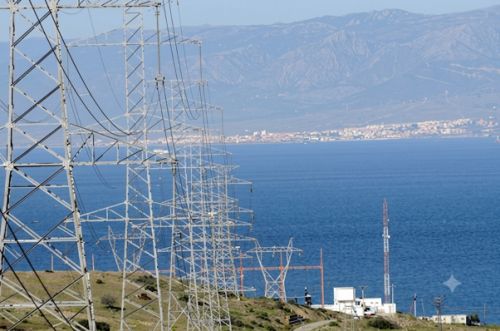
Morocco’s broader electricity interconnection strategy nevertheless continues to advance. The country already operates Africa’s only active electricity connection with Europe through two subsea interconnectors linking Morocco and Spain, providing a combined transfer capacity of approximately 1.4GW.
These connections demonstrated their strategic value during the widespread power outage affecting parts of the Iberian Peninsula in 2025, when electricity exchanges with Morocco contributed to supporting Spain’s electricity system. The incident reinforced the role of cross-border interconnections in improving grid resilience and responding to unexpected supply disruptions.
Building on that experience, Morocco and Spain are studying a third electricity interconnector with a planned capacity of 700MW, while Morocco and Portugal continue evaluating another subsea connection estimated to require investments of approximately €735 million. Discussions regarding a future electricity link with France also remain under consideration.
Beyond Morocco, North Africa is increasingly emerging as a strategic renewable energy partner for Europe. Tunisia and Italy are progressing with the ELMED interconnection project, while Egypt and Greece continue advancing the GREGY electricity corridor. Together, these initiatives reflect growing recognition that Europe’s energy transition could increasingly depend on renewable electricity generated across the Mediterranean.
According to the International Energy Agency (IEA), expanding regional electricity interconnections will become increasingly important as renewable energy assumes a larger share of electricity generation. Greater cross-border integration allows countries to balance intermittent solar and wind generation while improving overall system reliability.
For Africa, projects such as Sila Atlantik represent opportunities extending beyond electricity exports. Large-scale renewable investments can stimulate industrialisation, create skilled employment, strengthen transmission infrastructure and attract international capital into emerging clean technology sectors. According to the African Development Bank (AfDB), Africa requires between US$130 billion and US$170 billion annually in infrastructure investment, with electricity infrastructure representing one of the continent’s largest financing priorities.
Yet the experience of Sila Atlantik also illustrates that the future of Africa-Europe energy partnerships will depend as much on governance and financial innovation as on engineering capability. Developers must design investment structures capable of providing long-term certainty while balancing public and private sector interests across multiple jurisdictions.
As Europe accelerates decarbonisation and Africa expands renewable energy capacity, the strategic importance of cross-border electricity corridors is expected to grow. Whether Sila Atlantik ultimately succeeds will depend not only on Morocco’s exceptional renewable resources but also on the ability of governments, financiers and energy markets to establish the institutional foundations necessary for one of the world’s most ambitious clean energy infrastructure projects.


