


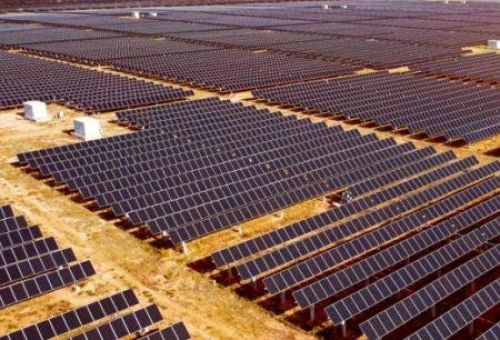
Namibia has awarded the 20-megawatt (MW) Naruchas solar power project to a consortium led by Canadian renewable energy developer JCM Power, advancing plans to expand domestic electricity generation and reduce reliance on imported power. The award forms part of a broader 120 MW solar procurement programme through which national utility NamPower intends to bring independent power producers into the country’s electricity sector.
The consortium comprises JCM Power, Broadreach Energy, Galen Group Investment and Southern Africa Group. It was selected through a competitive tender conducted by NamPower. The project’s investment value, financing arrangements and construction schedule have not been publicly disclosed.
The award comes as Namibia continues to depend heavily on electricity generated beyond its borders. Data from the Namibia Statistics Agency showed that imports accounted for 65% of the country’s electricity supply in August 2026, while domestic generation contributed the remaining 35%. During the month, Namibia received 413,762 megawatt-hours (MWh) of electricity, of which 269,137 MWh was imported and 144,625 MWh generated locally.

The figures underline the importance of expanding domestic generation capacity as Namibia seeks to improve energy security, manage supply costs and support future economic growth. Electricity imports allow the country to draw on regional power resources, but high dependence on external supply can expose consumers and businesses to changes in regional electricity availability and prices. Increasing local generation could help diversify supply, although the effect will depend on how quickly new projects are completed and integrated into the grid.
Naruchas is one of six planned solar power plants, each with a capacity of 20 MW, under NamPower’s programme to procure a combined 120 MW from independent power producers (IPPs). The programme provides a route for private developers to invest in new generation capacity alongside projects developed directly by the state-owned utility.
The project is located near the Naruchas substation in the vicinity of Rehoboth. Environmental documentation identifies JCM Power Corporation as the project proponent and describes a proposed 20 MW solar photovoltaic plant. The environmental assessment process is a separate requirement from the commercial selection of the developer, and the award should not be interpreted as confirmation that construction has been completed or that electricity is already being supplied to the grid.
The planned private-sector projects complement NamPower’s own generation investments, including the 100 MW Sores |Gaib solar photovoltaic project and the 80 MW Omburu Solar PV II project. NamPower says Sores |Gaib is intended to help reduce reliance on imported energy and lower the long-term cost of electricity supply. The project’s estimated investment is N$1.6 billion, with financing comprising a loan facilitated through Germany’s development bank KfW and NamPower’s own resources.
Omburu Solar PV II, meanwhile, is planned near the existing Omburu solar power station and substation. NamPower identifies the project as part of its least-cost generation strategy and says it is intended to reduce dependence on imported electricity and fossil-fuel-based generation. Together, these investments indicate that Namibia is pursuing a combination of utility-led development and private procurement rather than relying on a single model to expand generation.
The Naruchas award also reflects the growing importance of independent power producers across Southern Africa. Private developers can contribute project development expertise and capital, while competitive procurement can help utilities identify projects that meet defined capacity and commercial requirements. However, the success of this approach depends on clear procurement rules, bankable power-purchase agreements, access to financing and the ability to connect new generation to the electricity network.
South Africa provides a regional example through its Renewable Energy Independent Power Producer Procurement Programme, which has been used to attract private investment in wind and solar generation since 2011. The programme established a competitive process for selecting developers and has helped make IPPs an important component of the country’s electricity supply. Its experience also illustrates the importance of transmission capacity, project agreements and timely implementation in translating awarded projects into electricity delivered to consumers.
Zambia has also pursued greater private-sector participation in electricity supply, including arrangements that allow eligible producers to sell electricity directly to customers. Such market reforms can broaden the range of buyers and sellers, but they require suitable regulation, transmission access and arrangements for managing the operation of the power system. The wider regional trend points towards a more diverse electricity sector in which public utilities, private generators and large consumers can play complementary roles.
For Namibia, the immediate question is whether planned capacity can be delivered at a pace that meaningfully reduces import dependence. Solar projects can be developed in stages, but their contribution depends on construction timelines, grid connection and the ability of the electricity system to accommodate variable generation. Storage, transmission upgrades and flexible sources of supply may become increasingly important as the share of solar power grows.

The economic implications extend beyond electricity generation. More reliable domestic supply can support mining, manufacturing, commercial activity and new investment, while competitive renewable generation may help manage long-term supply costs. The benefits will depend on the price at which electricity is procured, the costs of integrating new projects and the extent to which savings are reflected in the wider power system.
The project’s financial details remain undisclosed, leaving questions about its capital structure, the terms under which electricity will be sold and the timetable for delivery. Those details will be important in assessing the project’s commercial viability and likely contribution to Namibia’s electricity mix. The development stage also matters: a contract award is an important procurement milestone, but it does not itself add generating capacity to the grid.
The Naruchas project therefore represents one part of a broader effort to diversify Namibia’s electricity supply through both public investment and private development. With imports accounting for nearly two-thirds of supply in August 2026, expanding domestic generation remains a strategic priority. Whether the 120 MW programme can help narrow that gap will depend on the pace of project execution, the reliability of grid infrastructure and the ability of Namibia’s electricity market to attract sustained investment.


