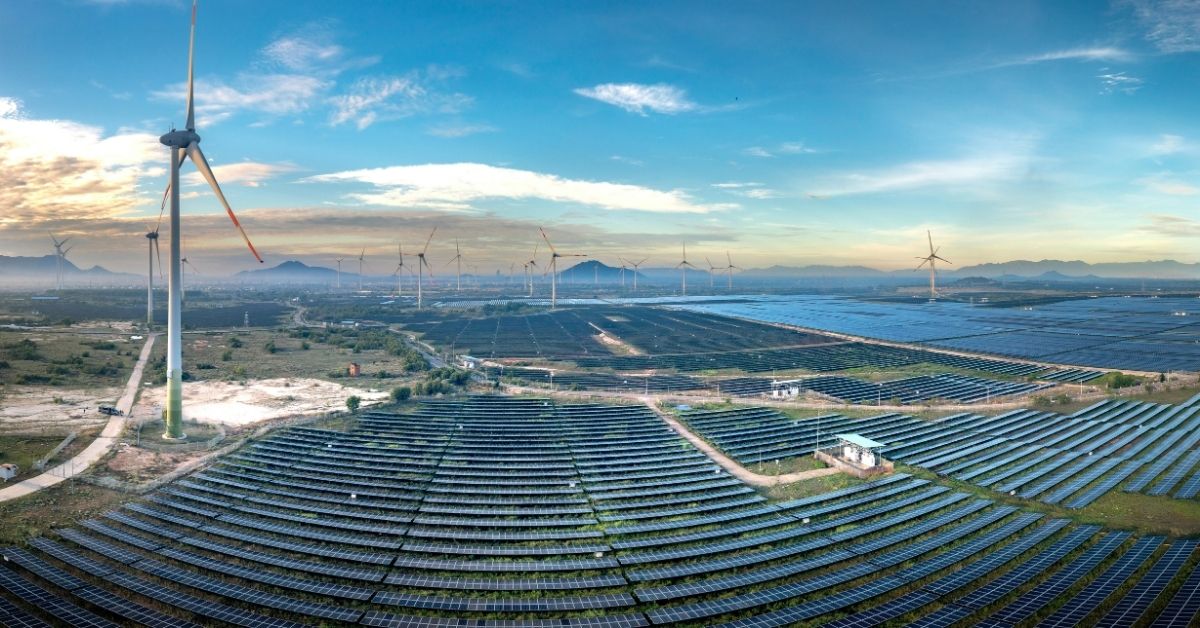

Africa’s power and energy transition investment reached $13.84 billion across 306 disclosed deals in 43 countries in 2025, but capital flowed to projects and platforms able to clear structural risk rather than to the largest headline pipelines, according to Electron Intelligence’s latest market review. The data, released on February 17, show a market defined less by announcements and more by bankability: credible offtake, currency pathways, grid access and execution readiness.
Electron Intelligence (EI) is a market-intelligence platform for Africa’s energy-electron markets, covering generation, grids, storage, access, and the regulations and policies shaping Africa’s power economy.
Clean power dominated the year. Of the total tracked value, $13.61 billion, or 98.3 per cent, went into “Clean Electrons”, spanning generation, grids, storage, access and enabling infrastructure. Generation absorbed $8.15 billion, followed by $2.41 billion for enablers such as sector reforms and utility-strengthening programmes. Grid and network investments reached $1.56 billion, while storage and flexibility remained selective at $666 million.
Read also: Madagascar cancels 21 oil permits and 21 production-sharing contracts in Hydrocarbon overhaul
The pattern underscores where investors believe Africa’s transition is most financeable. Debt totalled $9.06 billion, compared with $2.49 billion in equity, while concessional tools; $1.18 billion in grants, $657 million in guarantees and $457 million in blended finance, played a catalytic role . The tilt toward debt reflects a preference for contracted cashflows and structures able to absorb currency and payment risk at scale.
Large tickets shaped the aggregate numbers. Nigeria’s Geregu Power acquisition, Morocco’s OCP Green Investment Programme guarantee and an African Development Bank reform package for Nigeria were among the year’s anchors . The top 10 investors accounted for $7.42 billion across 112 deals in 34 markets, led by the African Development Bank at $1.77 billion, followed by the World Bank and Standard Bank . Such concentration signals a market where development finance institutions and a small cadre of commercial banks remain pivotal in crowding in private capital.
Geographically, capital clustered in markets able to clear large transactions. The top 10 countries accounted for $9.88 billion, or 73 per cent of total deal value, led by South Africa ($2.16 billion), Egypt ($1.95 billion), Nigeria ($1.78 billion) and Morocco ($1.38 billion) . West Africa and North Africa together captured more than half of regional deal value, reflecting a mix of sovereign-backed programmes, grid investments and large generation financings.

The report highlights a widening gap between pipeline ambition and delivered capacity. Electron Intelligence tracked 322 projects across 47 countries with 74,461 MW of announced capacity in 2025, but only 14,589 MW was recorded as installed capacity . Much of the announced total is skewed by a handful of mega-projects, including Inga III in the Democratic Republic of Congo and large hybrid programmes, inflating headline figures while masking the binding constraints that determine what gets built.
Those constraints are structural. According to the report, deliverability hinges on foreign exchange convertibility, grid interconnection, collections discipline, permitting readiness and import logistics . Projects that fail to secure these “permission gates” remain in the planned column, while those with clear risk allocation move into construction and operation.
For African economies, the distinction matters. Power shortages, grid congestion and unreliable supply continue to weigh on industrial output, fiscal balances and household welfare. Investment that strengthens transmission backbones, clarifies tariff frameworks and improves utility creditworthiness has spillover effects beyond megawatts, shaping the cost of capital and the competitiveness of domestic firms.
Solar continued to attract the broadest capital footprint, spanning project finance, corporate facilities and portfolio-style financing, but hydro and hybrid projects accounted for significant capacity in the pipeline . Gas-to-power retained a role as a firm-capacity hedge in constrained grids, reflecting the reality that reliability remains a political and economic priority.
Africa’s energy transition is in a build-out phase rather than a system-optimisation phase. Investors are buying capacity first, enabling infrastructure second and flexibility last. The next unlock, the report suggests, lies in networks and integrated projects, where interconnection, dispatch rules and payment security will determine whether capital can scale further .
Engage with us on LinkedIn: Africa Sustainability Matters