


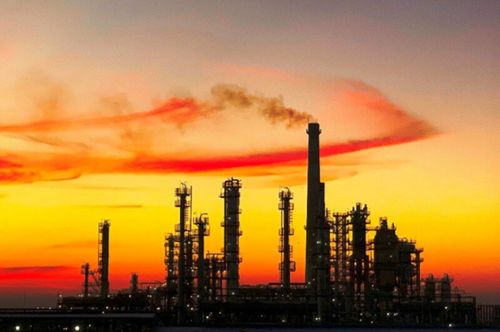
Niger has signed a $1.9 billion agreement with Canadian industrial group Zimar Inc. to develop a 100,000-barrel-per-day refinery and petrochemical complex in Dosso, in a project that could significantly reshape the landlocked West African country’s fuel supply, industrial base and role in regional energy markets. The 16-year build-operate-transfer partnership, signed on August 15, 2026, is intended to expand domestic refining, reduce dependence on imported petroleum products and create capacity to supply neighbouring countries, while giving Niger greater control over the value generated from its growing crude oil production.
Under the agreement, Zimar will finance, design, build and operate the refinery and associated petrochemical complex before transferring the assets to the Nigerien state. The contract covers three years of construction and 13 years of operations. The company has four months to secure financing and complete detailed engineering, while financial close is expected within 12 months of signing, according to Niger’s Foreign Minister Bakary Yaou Sangaré.
The project is the latest attempt by Niger to translate its emergence as an oil producer into broader domestic industrial capacity. The country began commercial crude production in 2011 and has increasingly sought to retain more value from its hydrocarbons sector rather than relying primarily on exports of raw crude. The Dosso refinery would dwarf Niger’s existing refining facility, the Société de Raffinage de Zinder, or SORAZ. The Zinder refinery has a designed capacity of about 20,000 barrels per day and began operations in 2011. Available reporting indicates that its output has at times been below nameplate capacity, while domestic demand has continued to place pressure on fuel supplies.
The scale difference is substantial. A 100,000-barrel-per-day refinery would have five times the nominal processing capacity of SORAZ, potentially allowing Niger to move from a relatively small refining market to a significant petroleum-products producer in the Sahel. That shift has become more strategically important as fuel supply conditions have tightened. Niger’s domestic market has faced shortages of products such as gasoline and diesel, while changes in fuel flows from neighbouring Nigeria have reduced an important source of informal supply. Greater domestic refining capacity could therefore reduce exposure to disruptions in regional petroleum-product markets and strengthen the country’s energy security.
The project has, however, taken time to move from concept to a definitive agreement. Niger and Zimar signed a memorandum of understanding in October 2024 for a 100,000-barrel-per-day modular refinery and petrochemical complex in Dosso. Niger subsequently reviewed the project specifications before agreeing to a conventional refinery configuration. The original memorandum confirms that the proposed development was intended to cover design, financing, construction, commissioning, operation, maintenance and eventual transfer of the facility.
The revised project also comes as Niger seeks to expand exploitation of its petroleum resources. Authorities have estimated national oil reserves at about 853 million barrels, while the Kafra basin has been identified as having substantially larger potential resources. Niger began exporting crude in January 2024, primarily towards international markets including China, increasing the economic significance of its upstream sector.

For Niger, the central development question is whether increased oil production can generate a wider industrial ecosystem. A refinery can create demand for engineering, logistics, maintenance, chemicals, storage and transport services, while a petrochemical complex could potentially support additional downstream industries. The scale of those benefits, however, will depend on the project’s financing, construction timetable, operating performance and access to reliable feedstock.
The public-private partnership structure is also significant. Rather than requiring the Nigerien government to finance the entire $1.9 billion investment upfront, the build-operate-transfer model places development and operational responsibilities with Zimar for the agreed period. This can reduce the immediate public financing requirement, but it also makes the project’s contractual structure, revenue model, risk allocation and eventual transfer conditions important considerations for Niger’s public finances.
The financing milestone will therefore be closely watched. Zimar has been given four months to arrange financing, with financial close expected within a year. Until financing is secured, the $1.9 billion figure represents the estimated investment associated with the planned project rather than capital already committed to construction.
The project also carries wider regional implications. Niger is landlocked and depends heavily on transport corridors linking it to coastal economies for imported goods and energy supplies. A larger domestic refinery could reduce some of that dependence and potentially position Niger as a supplier of refined petroleum products to neighbouring Sahelian markets.
That possibility comes as several African countries pursue domestic refining as part of a broader strategy to reduce dependence on imported fuels. Across the continent, governments have increasingly linked refinery investment with energy security, foreign-exchange management, industrialisation and efforts to capture more value from natural resources.
Niger’s experience illustrates both the opportunity and the risks of that strategy. Refining crude domestically can reduce the need to import finished products, but refineries are capital-intensive and require reliable crude supply, infrastructure, technical expertise and commercially sustainable operations. The experience of SORAZ itself shows that installed capacity does not automatically translate into uninterrupted or financially efficient production.
The petrochemical component could broaden the economic case if it succeeds in creating downstream industries rather than operating as an isolated energy facility. Petrochemicals can supply inputs for plastics, chemicals, packaging, construction materials and other manufacturing activities. For a country seeking to diversify beyond raw commodity exports, such linkages could matter more than refinery capacity alone.
There is also a strategic fiscal dimension. Niger’s ability to capture value from hydrocarbons will depend not only on production volumes but on how effectively the state manages taxes, royalties, ownership arrangements and the eventual transfer of infrastructure. A successful project could broaden the industrial tax base and reduce foreign-exchange outflows associated with fuel imports. Poor execution or weak contractual safeguards, by contrast, could limit the benefits despite the size of the investment.
The development also comes at a time when energy security is becoming increasingly important across the Sahel. Reliable supplies of diesel and gasoline are essential to transport, agriculture, construction, telecommunications and electricity generation. In Niger, where large distances and limited infrastructure increase logistics costs, disruptions in fuel supply can have consequences well beyond the petroleum sector.
The Dosso refinery therefore represents more than a new processing facility. It is part of Niger’s broader attempt to convert natural-resource production into domestic industrial capacity, strengthen energy security and potentially develop a regional role in refined petroleum markets. For Africa, the project reinforces a broader lesson about resource-based development: the economic value of oil depends not only on what is extracted, but also on how much of the associated processing, infrastructure, technology and industrial activity remains within the economy. Niger’s challenge now is to move the Dosso project from agreement to bankable financing and construction while ensuring that the resulting infrastructure supports durable industrial development rather than simply expanding petroleum capacity.
If financial close is achieved and construction proceeds as planned, the 100,000-barrel-per-day facility would represent a major expansion of Niger’s refining capabilities. Its ultimate significance, however, will be measured not simply by barrels processed, but by whether the investment can reduce fuel vulnerability, strengthen public revenues, create productive industrial linkages and help Niger capture a larger share of the economic value generated by its own energy resources.


