Angolan conglomerate Opaia Group has unveiled plans to expand its operations into Mozambique and the Democratic Republic of the Congo (DRC), signalling a broader strategy to position itself as one of Africa’s leading industrial investment platforms at a time when regional economic integration and intra-African investment are gathering momentum.
The expansion, announced on June 25, will see the diversified business group pursue investment opportunities across manufacturing, infrastructure, mining, finance and agriculture in two of Sub-Saharan Africa’s fastest-growing but infrastructure-constrained economies. The move reflects a growing trend of African companies expanding beyond their domestic markets to capitalize on opportunities created by the African Continental Free Trade Area (AfCFTA), regional infrastructure development and rising demand for industrial capacity. Founded in 2002, Opaia Group has built one of Angola’s largest privately owned industrial portfolios, operating across five core business divisions—fertiliser, automotive, engineering and construction, mining, and financial services. The company said its expansion strategy is designed to leverage African capital, local partnerships and industrial expertise to support long-term economic transformation across the continent.
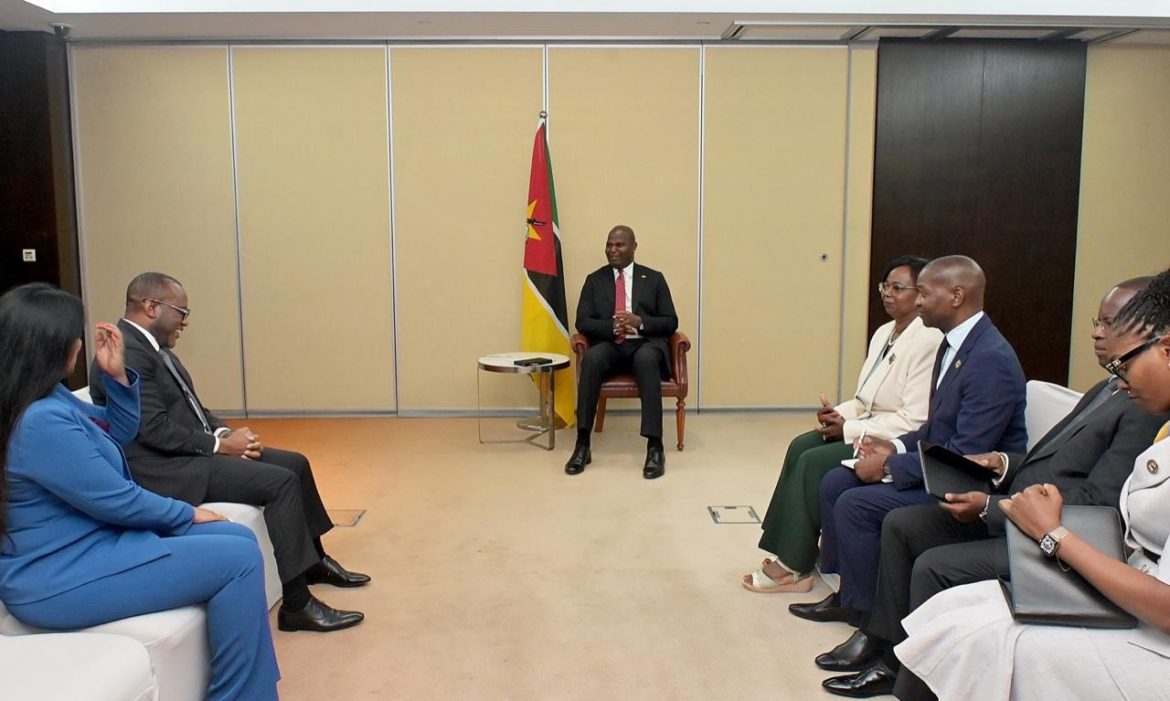
The announcement follows a meeting in Luanda between Opaia Group Chairman Dr. Agostinho Kapaia and Mozambique’s President Daniel Chapo, during which Mozambique was identified as a priority destination for the company’s next phase of investment. According to the company, discussions centred on opportunities to support industrial development through partnerships with local businesses and institutions. At the same time, Opaia confirmed that it has begun evaluating investment opportunities in the Democratic Republic of the Congo, citing the country’s vast mineral resources, growing infrastructure requirements and expanding domestic market as key drivers behind its decision.
While the company has yet to announce specific projects, executives indicated that market assessments and stakeholder engagement are already underway to identify commercially viable investments aligned with national development priorities. The expansion comes as African economies increasingly seek to diversify away from dependence on raw commodity exports by strengthening manufacturing, value addition and industrial production. According to the African Development Bank, industrialisation remains one of the continent’s most important pathways to sustainable economic growth, employment creation and economic resilience. However, investment gaps in infrastructure, logistics, access to finance and energy continue to constrain industrial competitiveness across many African countries.
Mozambique and the Democratic Republic of the Congo represent two distinct but strategically important markets within that broader landscape. Mozambique has attracted growing international investment over the past decade, driven by major natural gas discoveries, expanding port infrastructure and its strategic location along the Indian Ocean. Beyond its energy sector, the country has prioritised industrial development, agriculture, transport and logistics as part of efforts to diversify the economy and create employment opportunities. Despite periodic macroeconomic challenges and climate-related disruptions, Mozambique continues to be viewed as one of Southern Africa’s key investment destinations because of its access to regional markets through the Southern African Development Community (SADC) and its proximity to rapidly growing economies in Eastern and Southern Africa.
The Democratic Republic of the Congo offers a different investment proposition. Home to more than 110 million people and endowed with some of the world’s largest reserves of copper, cobalt, lithium, tin and other critical minerals, the DRC has become increasingly important to global energy transition supply chains. Demand for battery minerals used in electric vehicles and renewable energy technologies has significantly increased investor interest in downstream processing, infrastructure and industrial development.

However, the country continues to face substantial infrastructure deficits. Limited transport networks, electricity shortages and financing constraints have historically restricted industrial expansion despite abundant natural resources. Development finance institutions have consistently identified infrastructure investment as a prerequisite for unlocking broader economic diversification beyond mining. Analysts note that companies capable of combining industrial expertise with long-term investment capital and local partnerships are increasingly well positioned to participate in Africa’s evolving industrial landscape.
The timing of Opaia’s expansion also coincides with the gradual implementation of the African Continental Free Trade Area (AfCFTA), which aims to create the world’s largest free trade area by connecting 54 African countries into a single market. The agreement is expected to reduce trade barriers, strengthen regional value chains and encourage African companies to invest across borders rather than relying primarily on international markets.
According to the United Nations Economic Commission for Africa (UNECA), successful implementation of the AfCFTA could increase intra-African trade by more than 50% over the coming years, particularly in manufactured goods and industrial products. Private-sector investment is increasingly recognised as central to achieving those ambitions. Governments across Africa face growing fiscal pressures that limit their ability to finance large-scale industrial infrastructure independently. As a result, policymakers are encouraging greater participation by domestic and regional investors capable of mobilising long-term capital while supporting technology transfer, skills development and local enterprise growth.
https://www.aecweek-registration.com/2026/
Opaia says its expansion strategy reflects that philosophy. The company intends to pursue partnerships with local entrepreneurs, financial institutions and public-sector stakeholders, emphasising projects capable of generating measurable economic value, employment opportunities and industrial capacity rather than short-term commercial returns alone. Speaking on the expansion, Chairman Dr. Agostinho Kapaia said the company’s objective is to build “an African industrial platform with the capacity to invest, execute and partner across borders,” adding that Mozambique and the Democratic Republic of the Congo represent natural next steps because of the alignment between national development priorities, private investment opportunities and local partnerships.
Beyond its commercial activities, Opaia also operates the Opaia Foundation, which supports entrepreneurship and youth development initiatives across Africa, reflecting the group’s broader focus on inclusive economic development. For Africa, the significance of Opaia’s expansion extends beyond the growth of a single company. It highlights the emergence of African multinational enterprises that are increasingly deploying regional capital, industrial expertise and cross-border partnerships to address development challenges from within the continent. As implementation of the AfCFTA gathers pace and demand for industrial investment accelerates, the ability of African firms to scale across borders may become an increasingly important driver of economic transformation, regional integration and sustainable development.