


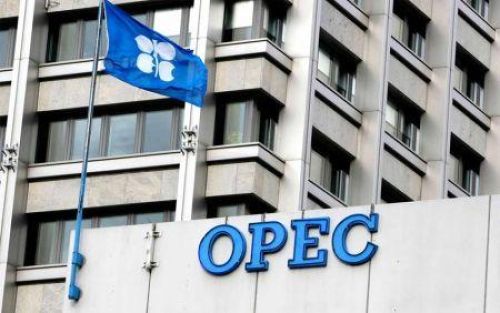
OPEC+ is considering freezing its oil production quotas from October 2026 through January 2027, potentially bringing to an end a series of monthly output increases that began earlier this year, even as actual production across the alliance remains well below planned levels because of infrastructure bottlenecks, geopolitical disruptions and export constraints. The proposal, reported by Reuters ahead of the group’s scheduled ministerial meeting on August 2, reflects a growing recognition among major producers that higher production targets alone are insufficient to increase global oil supply while several member states continue to face operational challenges.
According to sources familiar with the discussions, the alliance is expected to approve one final production increase of 188,000 barrels per day (bpd) for September before holding quotas steady through January 2027, when a revised production quota framework is due to take effect. If adopted, the move would complete the unwinding of the voluntary 1.65 million barrels per day production cut introduced in 2023, marking another significant milestone in OPEC+’s evolving strategy to balance oil market stability with changing global demand.
The discussions come at a time when energy markets remain highly sensitive to geopolitical developments, supply chain disruptions and shifting macroeconomic conditions. While production quotas have steadily increased since April, actual oil output has not kept pace, highlighting the widening gap between theoretical production capacity and the physical realities facing several producing countries.
According to official OPEC data, the alliance produced approximately 36.28 million barrels per day in June 2026, considerably below potential output levels and almost 7 million barrels per day lower than pre-war production levels. The disparity reflects persistent operational challenges affecting several member countries rather than deliberate production restraint.
Iraq continues to experience export limitations linked to infrastructure bottlenecks that have constrained its ability to increase shipments despite higher quotas. Kazakhstan has also struggled to restore production following drone attacks that damaged facilities associated with the Caspian Pipeline Consortium (CPC) export terminal on the Black Sea. Russia, meanwhile, continues to face repeated attacks on refining infrastructure that have disrupted downstream operations, while Saudi Arabia retains significant spare production capacity but remains cautious amid heightened regional security risks.
According to Reuters, these constraints mean that successive quota increases have translated into only modest additions to actual global supply, reducing the immediate market impact of OPEC+’s policy adjustments.
The proposal to freeze quotas therefore represents less a reversal of strategy than an acknowledgement that production targets cannot overcome infrastructure damage, security disruptions or export limitations. Analysts suggest the alliance is increasingly seeking to maintain market stability while preserving flexibility to respond quickly should geopolitical conditions improve.
Oil prices have remained volatile throughout July as markets reacted to renewed tensions across the Middle East and disruptions affecting maritime trade routes.
Brent crude briefly approached US$100 per barrel on July 24 following concerns over shipping disruptions in the Red Sea before retreating to around US$90 per barrel after a temporary easing of military tensions between the United States and Iran, according to market data compiled by Trading Economics. The fluctuations underscore how geopolitical developments continue to exert greater influence on oil prices than changes in formal production quotas.
According to the International Energy Agency (IEA), global oil production remains approximately 9.4 million barrels per day below pre-war levels, illustrating the continuing impact of geopolitical instability on international energy markets despite efforts by major producers to restore supply.
Investment banks also view the proposed production pause as a strategic signal rather than a restrictive measure.
Analysts at Goldman Sachs, cited by OilPrice, argue that OPEC+ is attempting to reassure consuming nations that additional supply remains available should market conditions require it, while avoiding unnecessary downward pressure on prices during a period of persistent uncertainty. Maintaining stable quotas would allow producers to retain spare capacity that could be deployed rapidly if supply disruptions worsen or demand strengthens unexpectedly.
For Africa, the implications extend beyond global price movements.
Several African economies remain heavily dependent on hydrocarbon exports to finance government budgets, foreign exchange reserves and infrastructure investment. Countries such as Nigeria, Algeria, Angola, Libya, Congo and Gabon continue to rely significantly on oil revenues despite ongoing efforts to diversify their economies. Stable oil prices therefore remain an important determinant of fiscal performance, public investment and macroeconomic stability across much of the continent.
Nigeria, Africa’s largest crude producer, continues implementing reforms aimed at increasing production while addressing oil theft, pipeline vandalism and underinvestment in upstream infrastructure. Although not all African producers participate directly in OPEC+, changes in the alliance’s production strategy influence benchmark prices that determine export earnings across the continent.
Algeria, an OPEC member, has consistently supported balanced production policies that promote market stability while encouraging continued upstream investment. Angola, which exited OPEC in late 2023 following disagreements over production quotas, nevertheless remains exposed to global pricing dynamics shaped largely by decisions taken by OPEC+.
Higher and more stable oil prices can strengthen fiscal revenues for producing nations, enabling greater investment in transport infrastructure, energy systems and economic diversification programmes. Conversely, prolonged price volatility complicates budget planning, increases borrowing costs and creates uncertainty for both governments and investors.
According to the International Monetary Fund (IMF), prudent management of commodity revenues remains essential for resource-dependent economies seeking to reduce exposure to external shocks. Many African governments are increasingly establishing fiscal frameworks designed to smooth expenditure across commodity price cycles while investing resource revenues into broader economic transformation.
The discussions within OPEC+ also highlight the growing interaction between energy security and geopolitical risk. Infrastructure resilience, export corridors and maritime shipping routes have become increasingly important determinants of global energy markets, often outweighing formal production agreements. Attacks on pipelines, export terminals and refineries have demonstrated that maintaining production capacity requires not only investment in oil fields but also protection of transport networks and critical energy infrastructure.
Meanwhile, long-term demand forecasts continue to evolve alongside the global energy transition. While renewable energy deployment is accelerating, oil remains central to transport, petrochemicals, aviation and industrial production. According to the IEA, global oil demand is expected to remain substantial throughout the coming decade, particularly in emerging economies where industrialisation and urbanisation continue driving energy consumption.
Against this backdrop, OPEC+’s deliberations illustrate the increasingly complex balancing act facing oil producers. The alliance must support market stability without encouraging excessive price volatility, while recognising that geopolitical events and infrastructure limitations increasingly determine actual supply. For African exporters, the outcome of these discussions will influence not only international oil prices but also fiscal planning, investment decisions and the pace at which energy revenues can support broader economic development and the transition towards more diversified economies.


