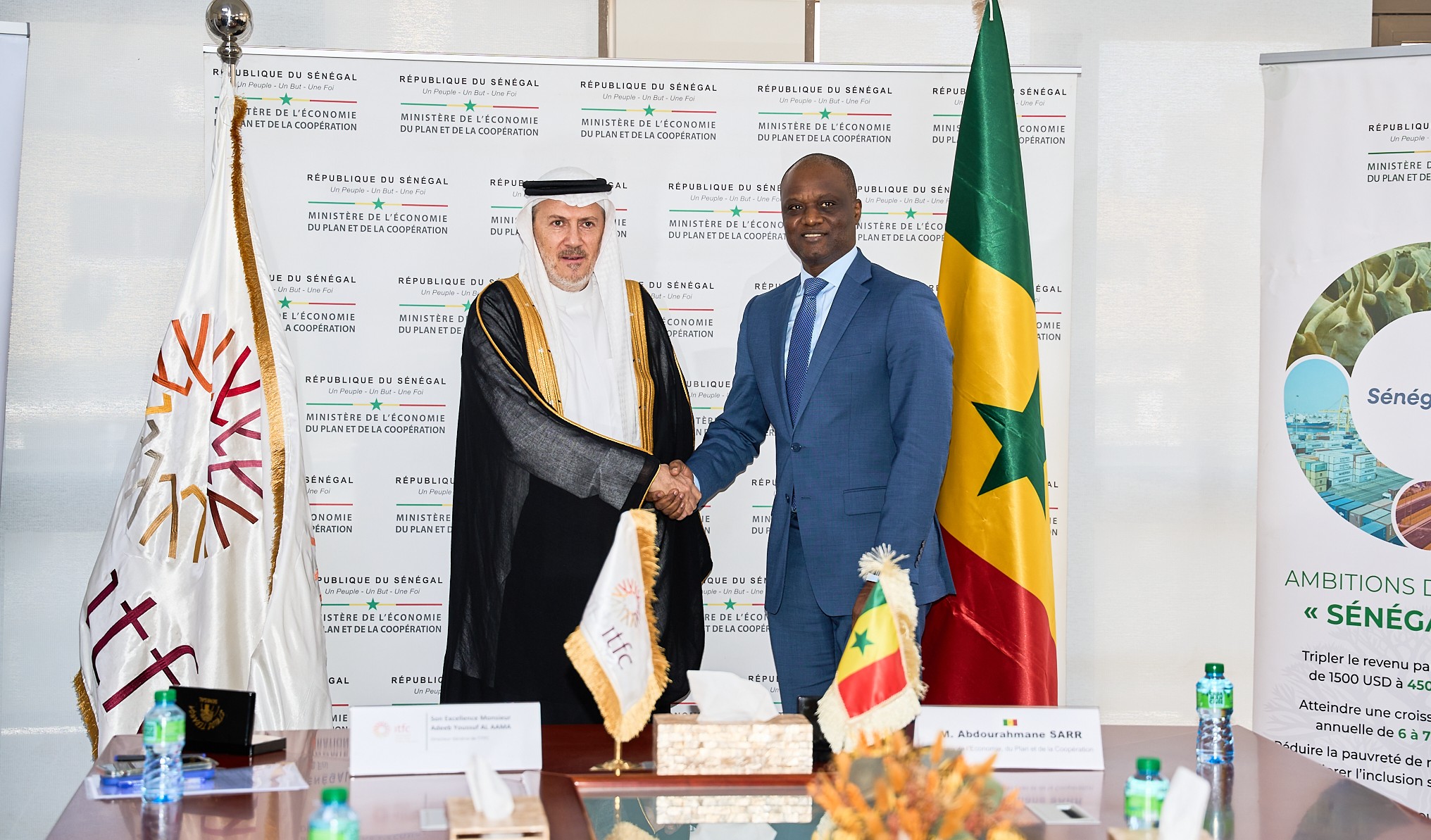

Senegal has secured a €630 million annual trade finance package from the International Islamic Trade Finance Corporation for 2026, under a broader €2 billion five-year framework agreement signed in May 2025, as the West African economy seeks to stabilise energy and food supply chains amid fiscal pressure and volatile global commodity markets.
The annual financing plan, signed in Dakar on February 11 by ITFC Chief Executive Adeeb Yousuf Al-Aama and Senegal’s Minister of Economy, Planning and Cooperation Abdourahmane Sarr, will finance the import and export of essential commodities, including petroleum products and groundnuts. According to officials involved in the agreement, the facility is designed to ensure the timely availability of strategic goods that underpin transport, electricity generation, agro-processing and rural incomes.
Read also: Senegal launches $191.7m agro-industrial zone to cut food imports and boost local processing
In Senegal, where refined petroleum products account for a significant share of the import bill and agriculture remains a major employer, trade finance has become a critical macroeconomic tool rather than a purely commercial instrument. The country’s current account and fiscal balances remain sensitive to oil price fluctuations and food import costs, particularly following successive global shocks linked to supply chain disruptions and currency volatility.
By structuring the facility under a multi-year framework, policymakers appear to be seeking predictability in access to external trade finance. According to the Ministry of Economy, the €2 billion framework provides a platform for annual mobilisation aligned with budget planning and sectoral priorities. The 2026 allocation of €630 million represents a substantial liquidity injection targeted at trade flows that directly affect domestic price stability.
Groundnuts, one of Senegal’s traditional export crops, remain central to rural livelihoods and agro-industrial value chains. Financing export transactions in this sector can help stabilise farmer incomes and foreign exchange earnings, particularly at a time when many African commodity exporters are grappling with tighter global financial conditions.
At the same time, petroleum imports are essential to transport networks, electricity generation and industrial activity, linking trade finance directly to infrastructure functionality and economic output.
Since its inception in 2008, ITFC has approved approximately $2.8 billion in financing for Senegal through Shariah-compliant trade finance instruments. The institution, a member of the Islamic Development Bank Group, positions itself as a provider of short- to medium-term facilities that bridge trade liquidity gaps for member countries.
In the African context, such facilities have increasingly been used to manage commodity import bills and support export competitiveness without immediately adding to long-term sovereign debt stock.
The structure of trade finance differs from project lending in that it is typically self-liquidating and tied to specific transactions. However, the scale of annual facilities can still influence public finance dynamics, particularly where state-owned enterprises are involved in fuel imports or commodity marketing. According to regional economists, access to predictable trade finance can reduce the risk of supply shortages and dampen inflationary pressures, but it does not substitute for broader structural reforms in energy pricing, agricultural productivity or fiscal consolidation.
For West African economies, where food and fuel imports account for a high proportion of foreign exchange usage, the availability of external trade lines has become intertwined with energy security and food system resilience. In Senegal’s case, ensuring steady petroleum imports affects transport costs and electricity reliability, while groundnut export support underpins rural employment and processing industries.
The 2026 annual plan therefore sits at the intersection of trade policy, fiscal management and social stability. Its effectiveness will depend on how efficiently funds are deployed, the transparency of commodity procurement processes and the broader macroeconomic environment, including exchange rate movements and global commodity prices.
Engage with us on LinkedIn: Africa Sustainability Matters